
Swapping dairy for plant-based alternatives risks iodine deficiency
Lancet study of 289 UK products finds only 12 percent fortified with iodine, teenage girls' deficiency would rise from 54 to 65 percent on a partial swap
Images
 Vegan milk alternatives should be fortified with vital micronutrients, particularly iodine, say researchers. Photograph: Olena Rudo/Alamy
theguardian.com
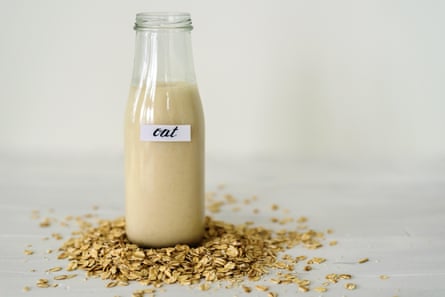 There is no formal requirement for plant-based milk alternatives to be fortified with micronutrients. Photograph: Tatyana Aksenova/Alamy
theguardian.com
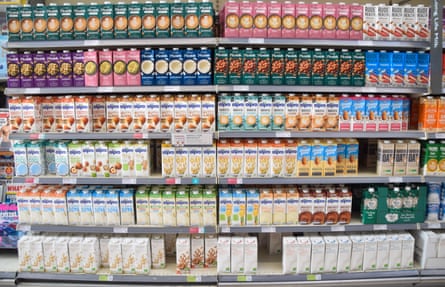 Some dairy substitutes are already fortified, including the core range of Alpro products and some Oatly drinks. Photograph: Vuk Valcic/Zuma Press/Rex/Shutterstock
theguardian.com
Replacing between a fifth and a third of Britain's dairy intake with plant-based alternatives would push iodine deficiency among adolescent girls from 54 to 65 percent, according to modelling published in the Lancet Planetary Health. A complete switch leaves 80 percent of teenage girls and 72 percent of teenage boys below adequate iodine intake.
The study, led by Dr Sarah Bath, an associate professor in public health nutrition at the University of Surrey, examined 146 non-dairy milks, 76 yoghurts and 67 cheeses on the UK market. Sixty-one percent of the products carried added calcium, 46 percent added vitamin B12 and 19 percent riboflavin. Twelve percent carried iodine.
Iodine is a trace element the thyroid gland uses to produce hormones that regulate metabolism and support healthy growth and brain development. More than half of UK teenage girls already fall short of adequate intake before any substitution begins. Under the partial-swap scenario, prevalence among women aged 19 to 49 — the group with the lowest intakes and, in Bath's words, "the key life stage where iodine is particularly important" — rises from 32 to 42 percent. Swapping a third of dairy cuts total iodine intake by 9 to 21 percent, with calcium, riboflavin and B12 falling alongside it.
There is no formal requirement in the UK for a plant-based milk to be fortified with any micronutrient. The market leaders fortify regardless: Danone's core Alpro range adds calcium, iodine and vitamins B2 and B12, and all of Oatly's unflavoured, non-organic oat drinks carry iodine, calcium, riboflavin and vitamins B12 and D, according to the companies. The Surrey modelling, though, was based on typical fortification levels across the whole market, where fewer than one product in eight contains iodine.
The researchers' remedy is mandatory fortification, iodine foremost; adding iodised salt to bread also reduced deficiency in the modelled scenarios. The study lands as the plant-based category shows its first signs of retreat, with some consumers shifting back to dairy.
British children get about half of their total iodine from dairy products. Nothing requires what replaces it to contain any.