
Hackers raise UK meat suppliers' freezer temperatures as cold-chain attacks spread from Europe
Dummy fridge controls carry fingerprints of Russia-linked operations, one firm's units climbed to 100C while sitting empty
Images
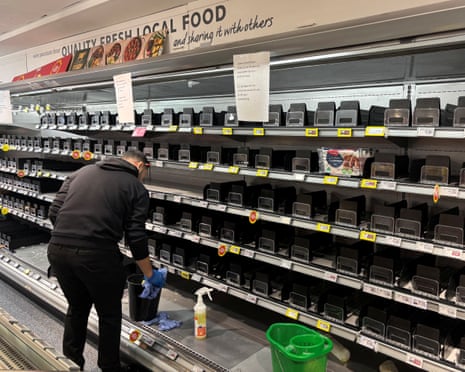 A worker cleans a refrigerated display unit at a SuperValu branch in Ireland. The first UK impacts were reported the day after cooling units in seven European countries were hacked. Photograph: Reuters
theguardian.com
 ‘It’s a form of terrorism’: fridges across Europe hit by suspected cyber-attacks – video
theguardian.com
Meat suppliers in the UK have been hit by cyber-attacks that raise the temperature of their refrigeration units, one day after cooling systems at retailers across seven European countries were hacked. The National Cyber Security Centre says it is working with the affected companies and that the national impact is, for now, minimal. The disclosure came from Paul Chichester, the NCSC's director of operations, at the launch of the agency's annual review on Tuesday.
The European campaign struck refrigeration systems in Belgium, Estonia, Ireland, Finland, Luxembourg, the Netherlands and Sweden on Monday, with some rising as high as 50C. Similar incidents were reported in France last month, where the targeted equipment was legacy technology connected to the internet and protected by default passwords. In the UK, the British Association of Independent Meat Suppliers says some of its more than 300 members were affected as "collateral": one supply company saw its cold units climb to as much as 100C, and two others reported units beginning to defrost.
No meat has been lost — the affected units were empty at the time. But the choice of target imposes the same deadline that file encryption usually does, and it enforces itself: a freezer that quietly warms destroys its contents on a schedule that does not wait for an IT department, and just-in-time cold chains carry no slack stock to absorb the loss. A ransomed database can be restored from backup; a thawed carcass cannot be restored at all.
Cybersecurity experts reported that attacks on "dummy" Danfoss fridge controls — deliberately placed online to lure would-be hackers — displayed characteristics similar to operations linked to Russia. The NCSC says it cannot comment on who might be responsible, that the attacks were not AI-enabled, and that they exploited vulnerabilities that had been "out there for a long period of time". Chief executive Richard Horne called the fridge attacks the "foothills" of an enlarged cyberthreat, arriving as AI systems expose flaws in networks that owners had neglected to patch. Chief technology officer Ollie Whitehouse said manufacturers needed to be encouraged to make their technology safer — and that consumers needed to accept paying more for safer equipment.
The Grocer reported that a fruit and vegetable wholesaler in London was affected but lost no stock. The 100C reading came from units that were empty at the time.