
Prediction markets face biggest test as US midterms open
Polymarket and Kalshi volume hit record $21 billion in October, Brazil runoff gave Lula a one-in-five price the night he won by three points
Images
 People walk past Polymarket's pop-up bar, The Situation Room, on its opening night in Washington DC on 20 March 2026. Photograph: Bryan Dozier/ZUMA Press Wire/Shutterstock
theguardian.com
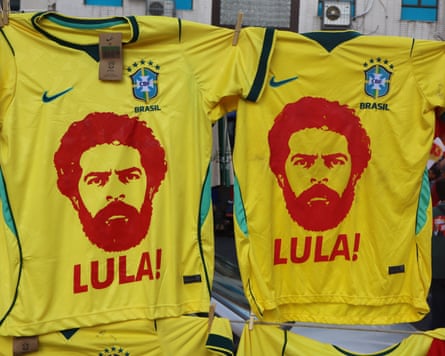 Street vendors selling a version of the Brazilian national football team shirt featuring the face of Luiz Inácio Lula da Silva. Photograph: Tiago Rogero/The Guardian
theguardian.com
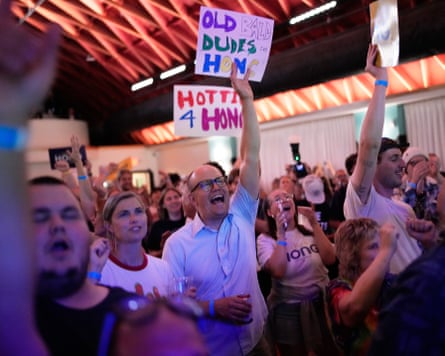 Supporters hold signs during a primary election night watch party for Francesca Hong on 11 August 2026 in Madison, Wisconsin. Photograph: Nam Y Huh/AP
theguardian.com
Polling stations across the United States opened this morning on the first midterms since prediction markets broke into the financial mainstream, with October trading volume on Polymarket and Kalshi reaching $21 billion for the month — a record, and more than five hundred times the combined volume of October 2022.
The founders of both platforms evangelise market efficiency: thousands of traders with money at stake produce, in their telling, a faster and more accurate forecast than pollsters or newsrooms. The midterms are being treated as a referendum on that claim. But the recent record is mixed in instructive ways. In Brazil's presidential runoff on 25 October, final polls showed Flávio Bolsonaro marginally ahead — a statistical tie. Polymarket priced a Bolsonaro victory at around 80 percent for three weeks, touching 84 percent on the eve of the vote, and still gave incumbent Luiz Inácio Lula da Silva roughly a one-in-five chance as polls closed. Lula won 51.8 to 48.2.
A twenty percent probability that comes true is not, strictly, a failed forecast. But it illustrates the gap between what a price communicates and what the public reads into it. Markets aggregate the judgments of traders who can tolerate being wrong; voters and commentators tend to read prices as certainties.
The industry's rise has been helped along from inside the state. Donald Trump's pick to chair the Commodity Futures Trading Commission is Mike Selig, a former lawyer for both Polymarket and Kalshi, who has spent years fighting to bring event contracts onshore. Selig has argued that event contracts help the public forecast, plan for and hedge perceptions of future outcomes — and can 'sometimes forecast outcomes'. The word 'sometimes' carries weight: a separate report found that 'privileged' users on Polymarket made millions betting on war strikes and diplomatic strategy, raising the question of what they knew beforehand.
That is the structural problem that scale sharpens. When combined monthly volume runs from $4 million in 2022 to $90 million in 2024 to $21 billion now, the money available to anyone who can move a price — or who knows something the crowd does not — grows in proportion. One trader stands to collect $3 million if Republicans defy the current odds, according to the Guardian. Whether that bet reflects insight, liquidity, or the confidence of someone with access remains indistinguishable from the outside.
The polls, for their part, have their own incentive structure: drama and coverage. The Public Policy Institute of California watched support for that state's billionaire wealth tax swing from 52 percent yes to 52 percent no between September and October, a reminder that the instruments being arbitraged against each other are all measuring a public that changes its mind late.
Tonight's results will settle control of Congress. They will also settle, contract by contract, whether the $21 billion crowd knew what it was talking about.