
Chinese firms run Bolivian Amazon gold boom in Mayaya
20 open-pit mines and 12 dredge boats employ 2,000 Bolivians and 200 Chinese, mining laws that forbid the arrangement remain on paper
Images
 Chang Yuequan with a photo of the gold haul from one of his mines the previous day worth £20,000 Photograph: Benjamin Swift/The Guardian
theguardian.com
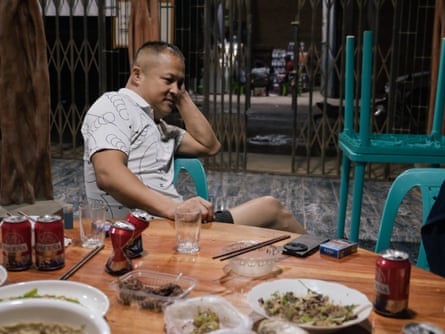 Zhang Changchun, a Chinese chef and mine investor, at dinner in Mayaya, Bolivia. Photograph: Benjamin Swift/The Guardian
theguardian.com
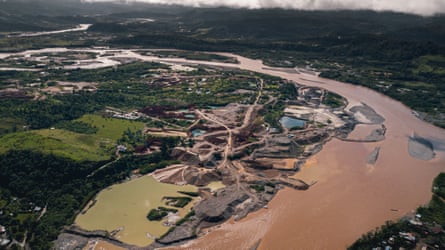 The River Kaka, near Mayaya, has been severely affected by mining in recent years. Photograph: Benjamin Swift/The Guardian
theguardian.com
 A dredge boat in the Kaka River.Mayaya, Bolivia. Video: Benjamin Swift/The Guardian
theguardian.com
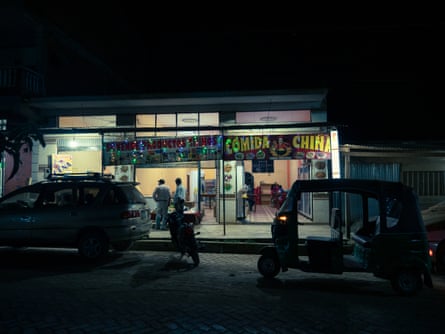 One of the many Chinese restaurants in Mayaya. Photograph: Benjamin Swift/The Guardian
theguardian.com
A Chinese mine operator in Mayaya keeps a photograph of the previous day's haul from one of his mines: gold worth £20,000. Chinese-run operations now control most of the small Amazonian town's mining — roughly 20 open-pit mines and 12 dredge boats, employing about 2,000 Bolivian and 200 Chinese workers.
In less than a decade, private Chinese mining companies have turned Mayaya from a once-remote town into a hub of gold speculation. Mining equipment stores, hotels and Chinese restaurants line the main street. Zhang Changchun, a chef and mine investor from China's Heilongjiang province, told the Guardian: "Without the Chinese, there would be no Mayaya today."
Bolivian law takes a different view of the arrangement. A 2014 statute limits mining rights to cooperatives and independent miners, state-controlled firms, and domestic and foreign private companies registered in Bolivia and operating in their own name; joint ventures with foreign firms are permitted only through public-private contracts in which the state is a shareholder. A 2016 law exposes cooperatives that contract, lease or share mining-concession risks with foreign firms to expropriation. Chinese firms operating outside this framework act unlawfully under Bolivian law — a designation that has not visibly interrupted the dredges.
The workforce arrived as a matter of Chinese policy. In 2017, China's national development and reform commission banned domestic small-scale gold mining, citing environmental and national defence concerns, sending miners and investors abroad; several companies hired workers from mines closed in China for newly opened operations in Bolivia. Chinese goldminers first reached Mayaya in 2005, with a major wave following in 2017.
Opacity surrounds the corporate structure. Shenzhen Vicstar Import and Export, a firm operating in Bolivia since at least 2011, officially carries out no mining operations, listing only print materials and manufacturing. Critics accuse the companies of exploitation and illegal exports. Record gold prices are driving Amazonian deforestation and violent conflict, and the region has absorbed foreign capital before — rubber, timber, and North American mining companies in the 1950s.
Most nights, half a dozen Chinese men gather in a small Mayaya restaurant to eat, drink and play mahjong over high-end Chinese cigarettes and Bolivian beer. Almost every conversation, the Guardian's reporters found after five days in the town, revolves around money.