
US strikes Iran's Qeshm Island on midterm eve, first publicly known attack in weeks hits air defences while Trump insists no war is raging
Undisclosed small-scale strikes have continued throughout the Doha talks
Images
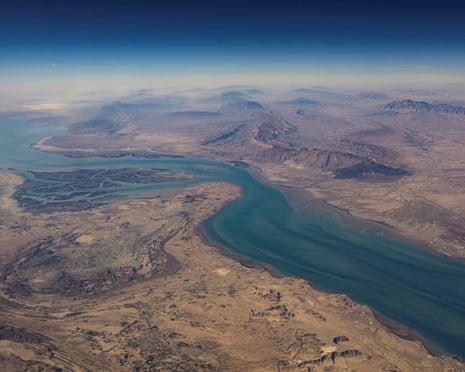 An aerial view of the Iranian shores and the island of Qeshm in the strait of Hormuz. Photograph: Nicolas Economou/Reuters
theguardian.com
The United States launched strikes on Iran's Qeshm Island late on Monday, according to US media, hitting surface-to-air missiles that had been used against American assets. Iranian state media reported several explosions on the island, which sits at the mouth of the Strait of Hormuz and has served as a launch point for attacks on shipping. The attack landed on the eve of the US midterm elections.
The strikes were described as "defensive" and, according to the Wall Street Journal, which first reported them, do not signal a return to full hostilities. The Journal's more consequential finding was what surrounded the attack: it belongs to a series of smaller-scale strikes carried out against Iran in recent weeks that the Trump administration has deliberately kept secret, so as not to signal any intent of resuming the military campaign.
The timing is difficult to reconcile with the public messaging. Hours before the strikes, vice-president JD Vance told reporters he and Trump felt "pretty good" about the prospects for a negotiated settlement. Tehran confirmed it was engaged in indirect negotiations with Washington through intermediaries. Asked earlier on Monday whether he had considered resuming strikes after Tuesday's vote, Trump replied "no."
Speaking to Fox News as polls opened, Trump offered his own summary: "There's no war raging. It could happen if they don't make a deal, but they want to make a deal very badly and there's a very good chance we make a deal." On the same day, American ordnance was falling on an Iranian island.
The domestic calculation is not subtle. Rising petrol prices, driven by Iran's continued enforcement of the Hormuz closure against tankers and container vessels, became a signature issue of the campaign, and polls showed voters prepared to punish Republicans over the war's effect on the cost of living. In his closing message, Trump hailed a sharp drop in oil prices as his administration touted renewed diplomatic efforts. A war conducted publicly through deniable, unannounced strikes serves that narrative better than either a visible campaign or an open ceasefire.
For Iran, the arrangement has its own logic. Iranian attacks on shipping had ceased in recent weeks before Monday's strike, and Tehran has spent the closing stretch of the campaign signalling flexibility — its negotiators in Doha reportedly working against a shrinking timeline. Both governments are, in effect, holding fire while holding talks, and both are describing the result to their domestic audiences in terms those audiences can accept.
Central Command did not respond to requests for comment from Reuters. The Qeshm strikes, if confirmed, would be the first publicly known American attack on Iran in weeks — a category that, by the Journal's account, excludes an undisclosed number of others.