
Bird flu kills Yakima County resident exposed to dairy cattle
Third human case in Washington dairy country also traces to infected herds, testing a herd still costs its owner more than silence does
Images
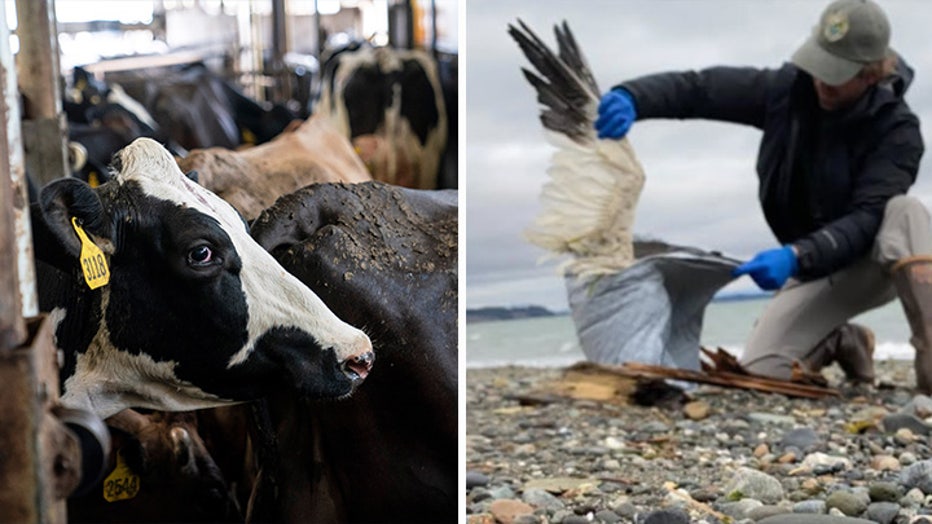 A Yakima County resident with underlying health conditions has died from bird flu following exposure at a dairy facility with infected cattle. State health officials confirmed a third human case in the county involving a separate individual who experienced milder illness without needing hospitalization. Gov. Bob Ferguson and public health leaders emphasized that while agricultural workers should take precautions, the overall risk to the general public remains low.
fox13seattle.com
A resident of Yakima County, Washington, has died in hospital from avian influenza after exposure to infected dairy cattle, the Yakima Health District announced. The person had underlying health conditions, and the district says the risk to the general public remains low.
The death lands in the heart of Washington's dairy country, where H5N1 has circulated in American milk herds since the outbreak of 2024. The district has separately confirmed a third human case in the county, also traced to cattle — a patient never ill enough to need hospital care. That asymmetry is the epidemiological problem in miniature. In poultry, avian influenza kills a barn within days and is impossible to miss. In cattle it produces weeks of mild symptoms and reduced milk yield, which makes not looking the rational business decision: a farmer who finds the virus faces quarantine, interrupted sales and anxious neighbours, while a farmer who does not test faces none of that. Federal monitoring of the dairy outbreak has rested largely on voluntary reporting, and the surveillance machinery — designed for poultry's barn-level die-offs — was never rebuilt for a host that mostly shrugs.
For the virus, the arrangement is close to ideal: a vast mammalian reservoir, constant human contact, and nobody with an incentive to count. Human-to-human transmission has never been documented in the United States. Among the human H5N1 infections recorded globally over two decades, roughly half have been fatal — a figure almost certainly inflated by mild cases that never reached a clinic, but high enough that every spillover reads as a signal rather than noise.
The Washington Department of Fish and Wildlife reports numerous confirmations of highly pathogenic avian influenza across western Washington and expects cases to spread statewide as migratory birds travel this autumn. Governor Bob Ferguson said workers at affected farms should take safety precautions. Dave Atteberry, the district's health officer, offered condolences and repeated that the risk to the public remains low.
The wildlife department asks anyone who finds a sick or dead bird to report it immediately and leave it untouched. The herds, where the same virus spends weeks looking like almost nothing, are monitored on a volunteer basis.