
Investors assume the man beside her owns the company
Four African businesswomen describe prejudice at the bank, World Bank data shows female entrepreneurs denied loans at triple the rate of men, recycling founder Runsewe built a 62-person tyre factory nobody expected her to fund
Images
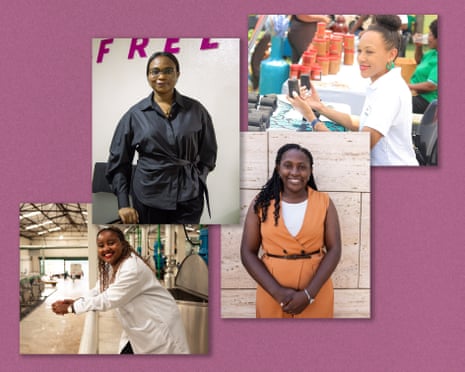 From left: Wawira Njiru in Kenya, Ifedolapo Runsewe in Nigeria, Shine Kyokushaba in Uganda and Chifuno Stevensin Malawi. Composite: Edwin Ndeke/ Valentine Benjamin/Stefanie Glinski
theguardian.com
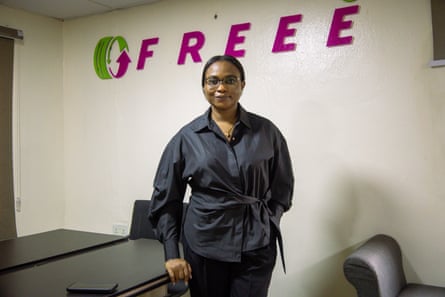 Ifedolapo Runsewe set up her tyre recycling business after 12 years in banking. Photograph: Valentine Benjamin
theguardian.com
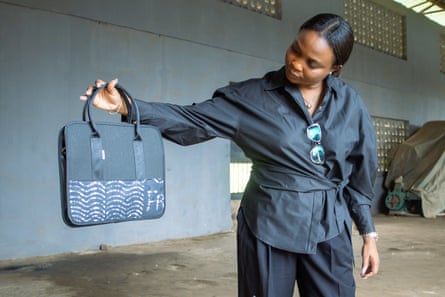 Runsewe displays a bag made from recycled tyres. Photograph: Valentine Benjamin
theguardian.com
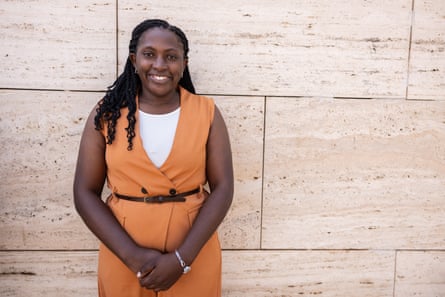 Shine Kyokushaba wants to ensure farmers have reliable access to water. Photograph: Stefanie Glinski
theguardian.com
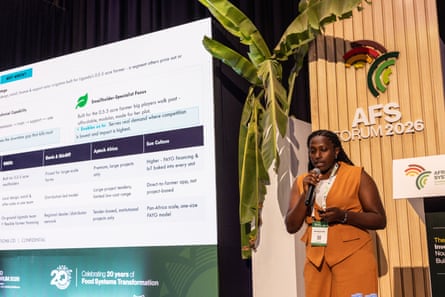 Kyokushaba pitches her business idea to potential funders at the African Food Systems Forum. Photograph: Stefanie Glinski
theguardian.com
Four women running businesses across Nigeria, Uganda, Kenya and Malawi share a common experience: walking into a bank or boardroom and watching investors assume the man beside them is the owner. The Guardian profiled Ifedolapo Runsewe, who recycles tyres on the outskirts of Ibadan, alongside business leaders from Uganda, Kenya and Malawi, in a continent thought to have a higher proportion of female entrepreneurs than any other.
The numbers behind the anecdotes are blunt. In Nigeria, women own about 40 per cent of small businesses, yet 56 per cent of female entrepreneurs' last loan applications were denied, against 17 per cent for men, according to the World Bank. Runsewe spent more than twelve years in banking before founding Freee Recycle in 2020, a factory that now employs about 62 people and collects discarded tyres from four Nigerian states — Oyo, Lagos, Osun and Kwara. Nigeria produces millions of waste tyres each year, most of them dumped or burned to recover scrap metal, a practice Oladele Ogunseitan, a presidential chair at the University of California, Irvine, calls a direct public health threat rather than mere pollution.
Runsewe saw the burning first-hand and concluded that almost every part of a tyre can be recovered and reused — rubber granules become playground surfaces, gym flooring, paving blocks and interlocking tiles. The capital requirements are heavy: shredding tyres is one business, converting recovered rubber into finished products demands separate machinery, expertise and investment. It is the kind of operation that cannot be run informally, which is precisely why the assumptions in the bank meeting matter. "Investors would assume the man next to me is the owner," she said. "As soon as I spoke, the question came up: why should we give a woman millions, hundreds of millions?"
What is notable is what she does not claim. Asked whether clients choose her firm because it is female-owned, she answers no: "They see a brand that is good, transparent, credible and ethical." In economies where formal credit is rationed by prejudice and paperwork alike, the women who do break through tend to be the ones who make reputation itself the collateral. Runsewe's answer to the boardroom was not a grant application — it was a factory that turns waste tyres into playgrounds, staffed by 62 people, on the strength of a brand no one assumed she owned.