
Daily peanuts change insulin response in memory regions of older brains
31-person trial finds 4 per cent blood flow increase after 16 weeks, Alzheimer's protection remains an extrapolation from a biomarker
Images
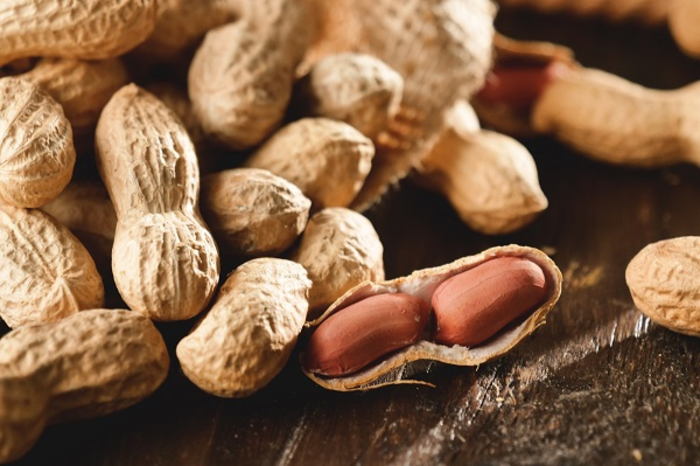 Peanuts found to have potential brain health benefits (University of Barcelona)
University of Barcelona
A daily dose of unsalted, skin-roasted peanuts changed how the memory-forming regions of older brains respond to insulin, according to a new study published in the journal Food & Function. Thirty-one healthy adults aged 60 to 75 ate 60 grams of peanuts each day for 16 weeks while researchers at — among others — the University of Barcelona took MRI scans of their brains. The study, led by author Peter Joris, compared the peanut-eating period against a control phase in which participants avoided peanuts entirely. Over the 16 weeks of consumption, overall blood flow in the brain rose by about 4 per cent, and the insulin response strengthened in regions involved in memory — including the hippocampus. Insulin, best known for regulating blood sugar, also supports nerve cell growth and communication in the brain, and weakened brain insulin responsiveness has previously been linked to age-related cognitive decline. The study's own authors are careful about mechanism. "Multiple nutrients present in peanuts, including unsaturated fats, dietary fibre, vitamins and minerals and bioactive phytochemicals, could potentially contribute to the observed brain benefits," Joris said. Peanuts are also rich in L-arginine, a precursor of nitric oxide, which has been reported to facilitate learning and memory. What the study does not show is Alzheimer's protection. No participant had the disease; no cognitive outcomes were measured over a meaningful horizon; and 31 people over 16 weeks is a signal, not a verdict. The headline claim — that a common nut could protect against Alzheimer's — is an extrapolation from insulin responsiveness in memory regions, a plausible but unproven link. Four decades of nutrition journalism have produced a graveyard of similar extrapolations, each resting on a small trial and a plausible pathway. Still, the design is more honest than most. Participants received premeasured packets, ate on their own schedules, and served under both dietary conditions — peanut and no-peanut — so each brain acted as its own control. That is a stronger arrangement than the population correlations that dominate food-science coverage. The pathway is also worth watching: if brain insulin resistance is genuinely a lever in Alzheimer's, peanuts are one of many ways to pull it, and cheaper ones will follow. For now, the study suggests that 60 grams of unsalted, skin-roasted peanuts daily for 16 weeks measurably changed one biomarker in 31 older adults.