
Brief Red Cross ceasefire evacuates 180 civilians from Kherson's riverside kill zone
FPV drones have made old rules of civilian passage worthless, both armies honoured the only truce that still functions because both wanted the civilians gone
Images
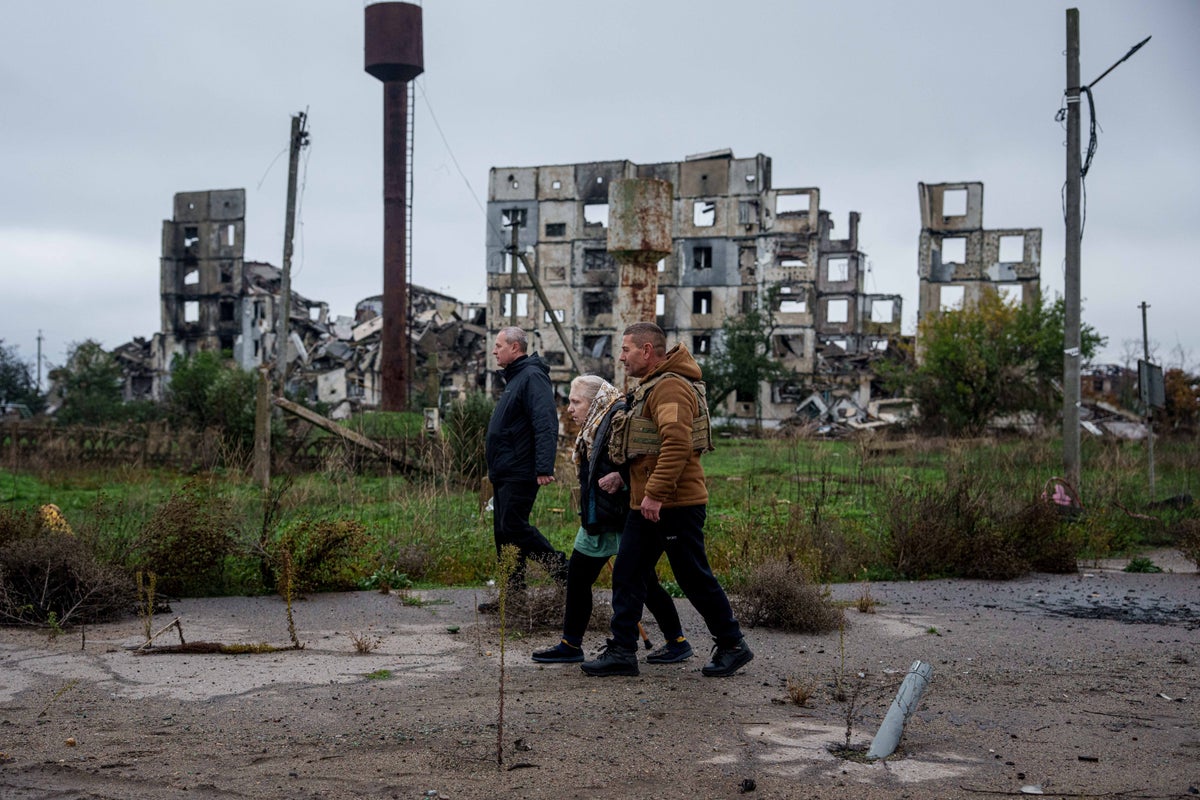 A brief ceasefire opens a perilous escape window from Kherson’s riverside kill zone
independent.co.uk
A brief ceasefire began on Oct. 27 in Ukraine's Kherson region, opening a narrow window for the Red Cross to reach civilians trapped along the Dnipro river — the only truce in the war that both sides kept. By the time it ended Sunday night, 180 people, including 23 children, had been evacuated from riverside communities that had been cut off for nearly two years.
The AP gained rare access to the so-called red zone during the pause, tied to a humanitarian mission to Russian-occupied Oleshky across the river. What the visit showed is that the war's grand diplomacy is dead while its local, transactional version still functions: both armies had an interest in getting civilians out of the line of fire, and for a few days, they did.
In Kozatske, a village less than two kilometres from Russian-held territory, 53-year-old Nataliia Diadiuk stayed behind with a handful of others. She hangs a white towel on her gate and carries a white rag in her hand so drone operators can see she is a civilian. She drinks rainwater strained through gauze, treated with chlorine and boiled — water she describes as more or less all right, in a village where dead lie in the houses. Humanitarian aid had not reached her for two years until the ceasefire.
The old rules of civilian passage no longer apply. FPV drones make every river crossing a gamble, and the roads into Kozatske are marked by burned-out cars left where they were hit and wrecked ground robots Ukrainians send down routes too dangerous for people. A peacetime sign reading 'Thank you for keeping the roadside clean' still stands. Mines dropped from drones lie throughout the village — some petal-shaped, others improvised and wrapped in foil or plastic.
About 140,000 people remain in the Ukrainian-held part of a region that had roughly a million residents before the war and is now nearly 70 percent under Russian control. Some refuse to leave because they cannot afford to start over. Diadiuk says the hardest thing to bear is the howling of dogs left behind in the houses; she shares her food with the strays that stay close to her. Now that the truce is over, the drones, artillery, glide bombs and airdropped mines have resumed over the people who stayed.