
Arab parties win 19 Knesset seats as Bedouin women triple turnout
Netanyahu left at 53 seats alleges fraud without evidence while court frees bribery suspects, Herzog's open heart meets two blocs that both ruled out the kingmakers
Images
 Hanan Alsanah and Amira Habdoubi from Abu Talul at a meeting of the women’s group Alashniat. Photograph: Quique Kierszenbaum/The Guardian
theguardian.com
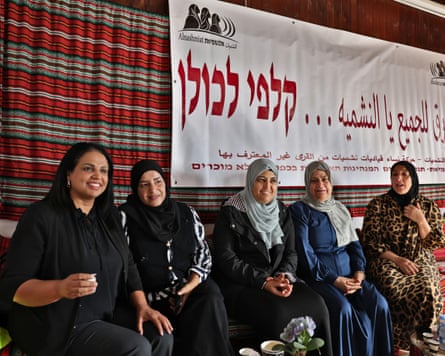 Hanan Alsanah, Amira Habdoubi, Fatmeh Abu Khweder, Umm Khaled Fatoun and Mayada Abu Khweida. Photograph: Quique Kierszenbaum/The Guardian
theguardian.com
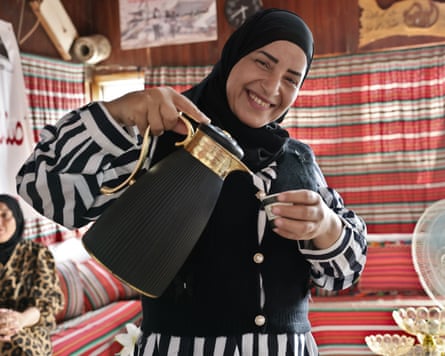 Amira Habdoubi from Abu Talul serves coffee for the women at a meeting. Photograph: Quique Kierszenbaum/The Guardian
theguardian.com
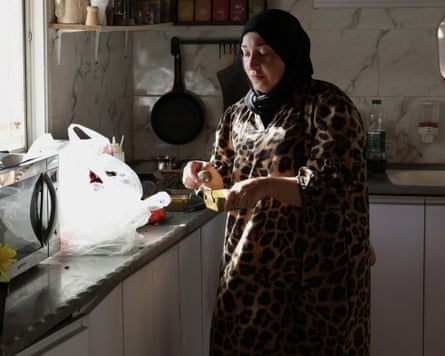 ‘Stop the hatred, stop the war’: Mayada Abu Khweida prepares breakfast for a meeting. Photograph: Quique Kierszenbaum/The Guardian
theguardian.com
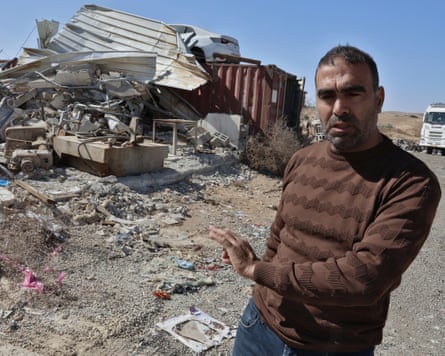 Mohammed Abu Khweida outside his cousin’s demolished house in the unrecognised village of Azzarnug. Photograph: Quique Kierszenbaum/The Guardian
theguardian.com
 nbcnews.com
 Israeli officials say elections won’t be undermined, and suspects in bribery case are freed – WTOP News
wtop.com
Palestinian-led parties won 19 seats in Israel's Knesset this week — nearly double their previous representation — with the surge powered by a grassroots campaign among Bedouin women in the Negev, where turnout tripled in some villages and ranged from 62 to more than 93 percent. The result stripped Benjamin Netanyahu's bloc, at 53 of 120 seats, of its governing majority, and left the Arab parties holding the balance of power.
The Guardian's Emma Graham-Harrison reported from the Bedouin village of Azzarnug, where Umm Khaled Fatoun returned last year from volunteering in a Jewish-Arab support centre for war victims to find bulldozers demolishing her son's house under police escort — the family was not allowed to remove the furniture or the solar panels. "There isn't a single family in the Bedouin community that hasn't been hurt by his campaign against us," she said of national security minister Itamar Ben-Gvir. Hanan Alsanah, a lawyer who founded the Alnashmiat network that ran the voter education programme, put it plainly: even if all the men vote, it is only half the community.
Netanyahu's response was to allege fraud. He posted an AI-generated image purporting to show crowded polling stations in Palestinian areas and accused Arab parties of using foreign backing to "steal" the election, without evidence. Shin Bet is investigating possible foreign interference; a court released the bribery suspects after finding no substantiation, and the election committee head, the attorney general and the Shin Bet chief jointly stated the vote would stand even if interference claims were proven.
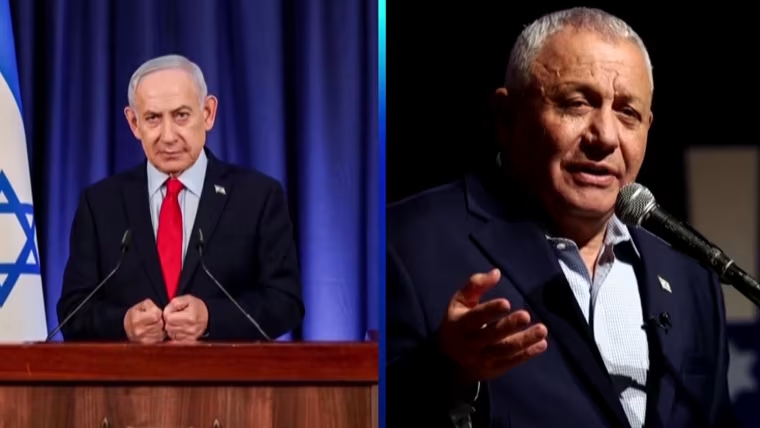
President Isaac Herzog now holds consultations on Wednesday to decide who gets first shot at forming a government — Netanyahu at 53 seats or his rival Gadi Eisenkot at 48. Both men had ruled out working with Arab parties before the vote; Netanyahu declared on Sunday it was "forbidden" to form a government with Ra'am's Mansour Abbas, citing an old party platform. Eisenkot has set four conditions, including mandatory military service for all citizens, and says every Knesset member who signs them is a potential partner.
The coalition arithmetic is now demographic. A bloc whose voters are mobilizing at record rates against his police escorts faces a prime minister whose own base was told, via AI video, that his rival would ride into power inside a Trojan horse.