
Bulgaria's acting president Yotova leads runoff exit polls with 52 per cent
Moscow-friendly ruling party set to keep the presidency it already administers, winner campaigned for peace talks with Russia on 29 per cent
Images
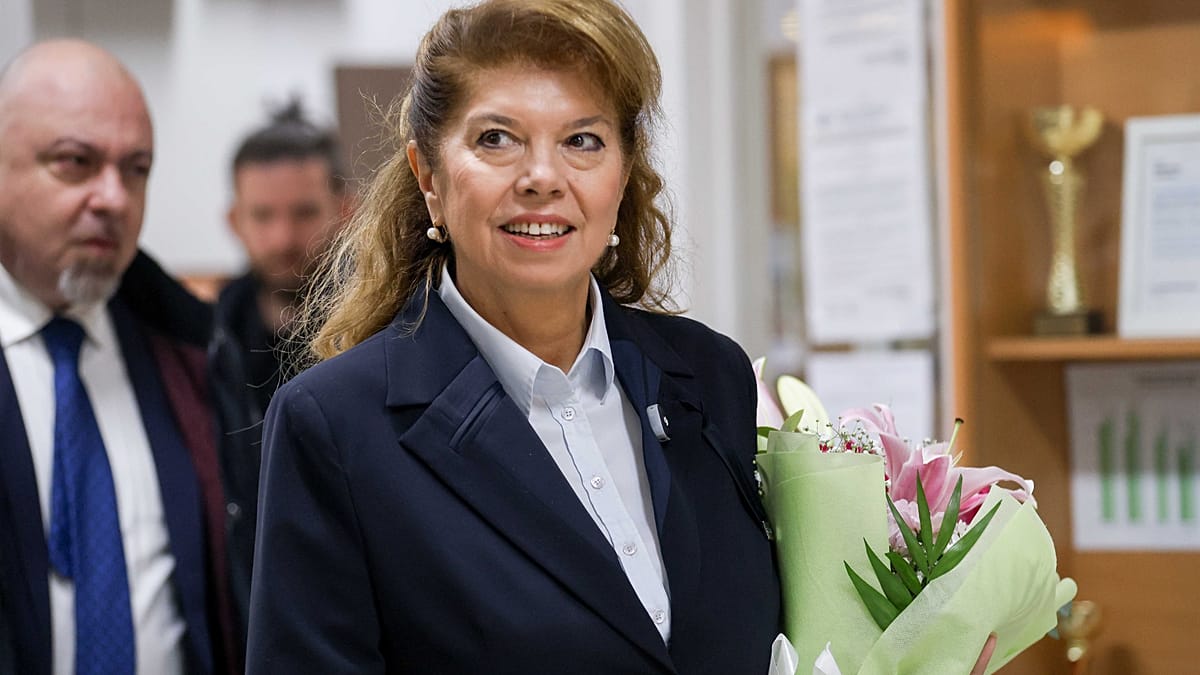 Bulgaria's acting President Yotova leads in exit polls
euronews.com
Exit polls from Bulgaria's presidential runoff give acting president Ilijana Yotova 52 per cent of the vote against around 45 per cent for challenger Andrey Gyurov, Euronews reports. If the projections hold, Yotova — who has run the presidency on an acting basis since January — becomes Bulgaria's first elected female head of state. Turnout stood at 29 per cent.
Yotova, 62, inherited the office when Rumen Radev stepped down to run for parliament; Radev is now prime minister, and his Progressive Bulgaria, the ruling Moscow-friendly centre-left party, endorsed her candidacy. The runoff was the first major electoral test for the party that currently leads the country's government, and the administration's own candidate finished first in the exit polls.
The campaign split on the war in Ukraine. Yotova campaigned as a Bulgarian "President of Peace," advocating a negotiated settlement with Russia; she is expected to keep Bulgaria on its European path while supporting better relations with Moscow and the lifting of sanctions. Gyurov, a former interim prime minister backed by reformist pro-Western opposition parties, ran on closer alignment with Western partners and stronger support for Ukraine, and trails by a considerable margin.
The office she would hold is primarily ceremonial. The Bulgarian head of state has no executive powers, and all major policy requires parliamentary approval — in a country where repeat elections have followed one another for years without a government completing a full term. The president nonetheless leads the armed forces, can veto legislation, signs international treaties and appoints ambassadors, for a five-year term with a two-term limit.
On NATO's eastern flank those powers carry practical weight. Drone attacks on merchant ships have become increasingly frequent in the Bulgarian economic zone of the Black Sea, and in neighbouring Romania's. The candidate advocating negotiations with Moscow is now set to command the armed forces of a NATO member whose waters are seeing those attacks — on a day when 71 per cent of the electorate stayed home.
Fifty-two per cent of a 29 per cent turnout gives the incoming head of state the backing of roughly one Bulgarian voter in seven.