
Australia's most hated bird arrived as a pest controller
Myna released near Ingham and Townsville in 1883 to control locusts now faces Queensland eradication drives, peer-reviewed research on its effects began only in the late 1990s
Images
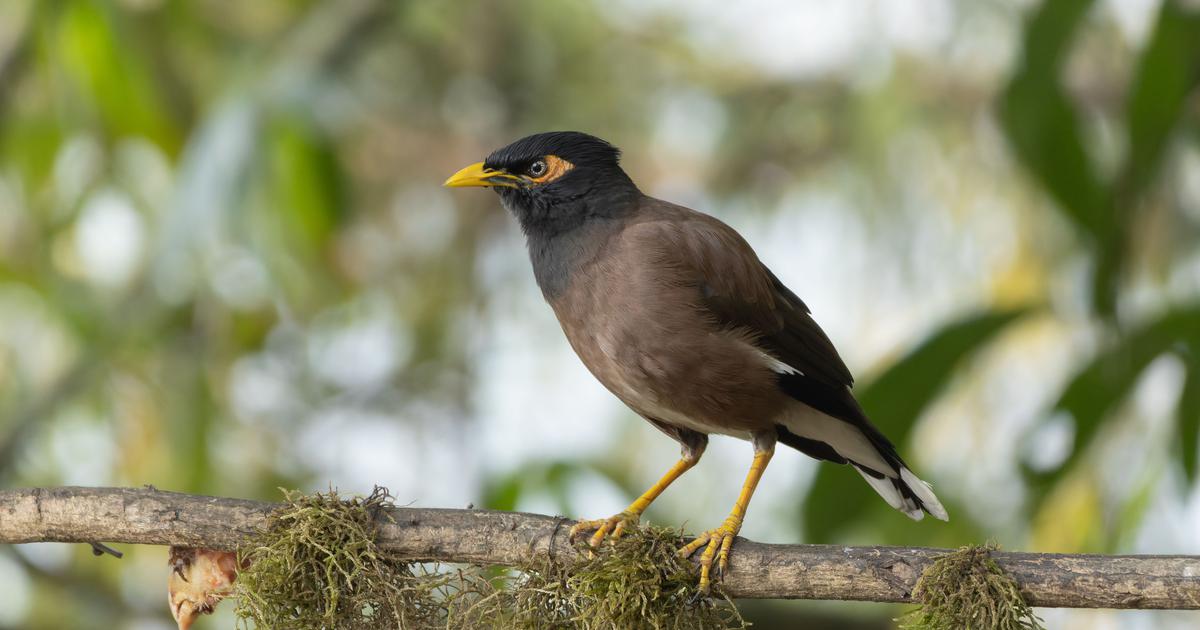 Tisha Mukherjee, CC BY-SA 4.0, via Wikimedia Commons
scroll.in
Queensland communities are once again trying to exterminate the common myna, an introduced Asian starling that spent most of its 164 years on the continent being described as an entertainer — and that now carries the label of Australia's most hated bird. The birds were released around Ingham and Townsville in 1883 in the hope of controlling locusts and other insects, an introduction Scroll compares to the later arrival of the cane toad. Victoria's mynas date from 1862.
The historical record reads oddly against the current campaigns. An anonymous writer in Sydney's Globe described mynas in 1886 as "dear, gentle, sprightly, and highly amusing". The naturalist Charles Barrett found Melbourne's mynas "extremely spruce and graceful" in 1906. In 1971, Alec Chisholm — perhaps Australia's most revered birdwatcher — wrote in the Sydney Morning Herald that the bird from India was now part of the Australian landscape, did no economic damage, and was regarded as an entertainer for its assured strutting and hearty chatter. Acceptance ran furthest in the north: a 1949 amateur naturalist declared the myna "may be foreign in origin — but he's Aussie here". Crop damage had been recognised as early as 1868, and weighed against the bird's value as an insect eater.
Opinion turned in the 1970s and hardened through the 1980s and 1990s as part of a broader backlash against species increasingly called invasive. The once "cheerful" and "dapper" bird became "bold, arrogant and fiercely aggressive". A 1988 Canberra Times piece described a stand of old native trees as "housing commission flats for mynahs" in a neighbourhood "swamped and dominated" by migrants — "a metaphor for the worst fears of those opposed to 'Asian' migration". Two years later the same writer called the mynas "invaders" and "foreign bullies". The International Union for Conservation of Nature added the common myna to its list of the 100 worst invasive species worldwide in 2000; Canberra residents launched grassroots trapping in 2012.
The control efforts run in a documented loop: people notice mynas are abundant, community organisations distribute traps, bounties are offered, numbers appear to fall, people become complacent, and the bird bounces back. It is not even established whether myna numbers are soaring in Queensland or whether residents are simply noticing them more. Peer-reviewed research on what the bird actually does to native wildlife only began appearing in the late 1990s — more than a century after the first releases.
The research behind the history suggests introduced birds come under more scrutiny at moments of anxiety about national identity. An earlier panic over the red-whiskered bulbul, openly called the "immigrant bird", ran the same pattern. Mynas thrive everywhere they have been introduced — Taiwan, Mauritius, Florida — and outlast every trap drive.
The essay's author, a fifth-generation settler Australian, notes that the ancestors of the mynas in their suburb were probably in Australia before the author's own family.