
Delhi turns into fortress as opposition marches to oust India's election chief
Voter list purge struck 130 million names including 30 million untraceable, ruling party and election commission now defend the same list
Images
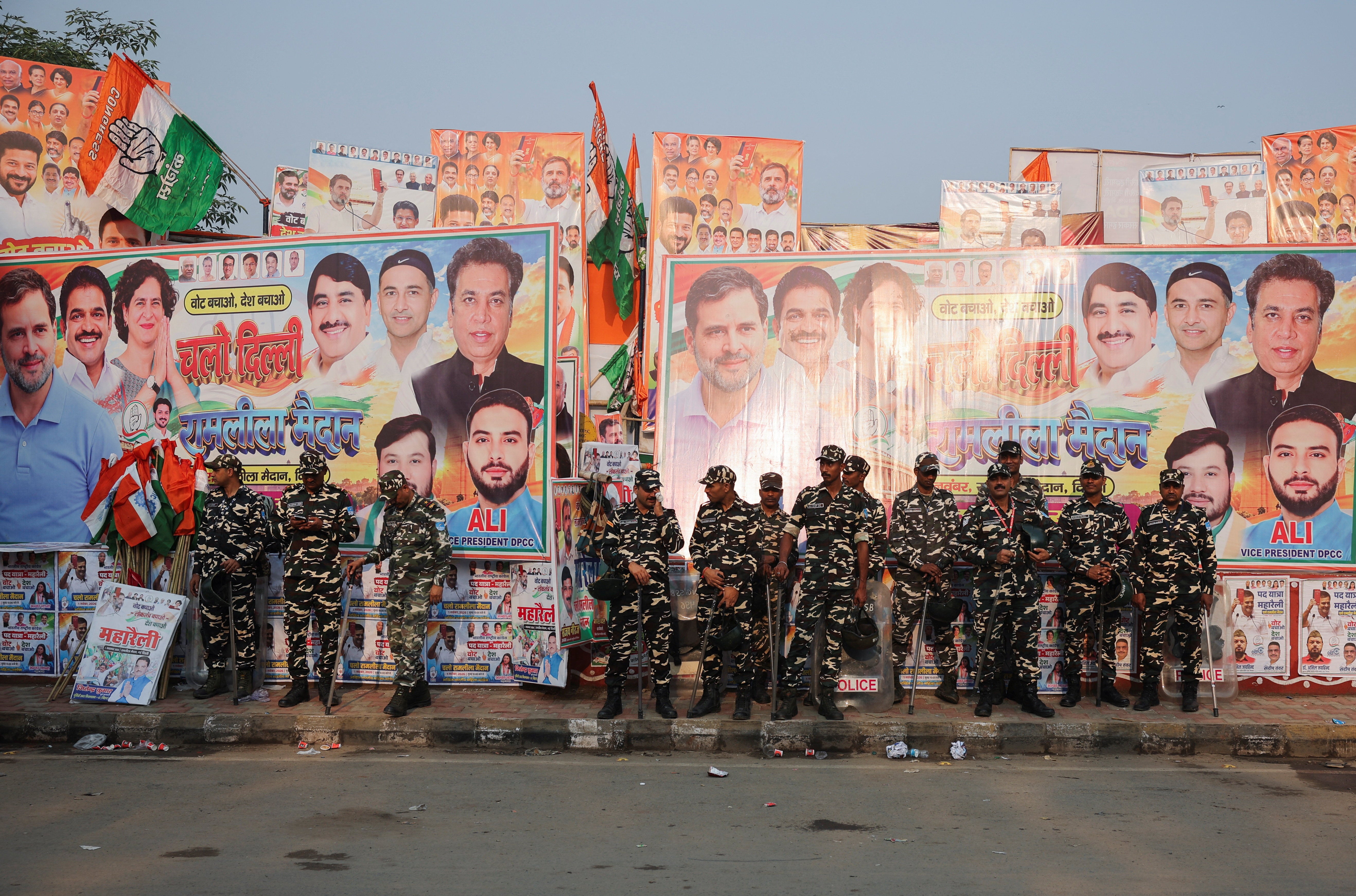 Security personnel stand outside of Ramlila Maidan, ahead of a "Save Democracy" march led by Indian opposition leader Rahul Gandhi (Reuters)
Reuters
 Reuters
 Rape-Accused Flees Police Custody on Way to Jail in Ahmedabad, Escorting Cop Also Absconding
timesnownews.com
Riot-control vehicles and hundreds of barricades sealed central Delhi on Sunday as thousands marched behind Congress leader Rahul Gandhi to demand the resignation of India's chief election commissioner. Organisers predicted the "Delhi Chalo" march to Ram Leela Maidan could draw a million people, mobilised by an opposition alliance formed in 2023 to unseat Narendra Modi.
The march is the latest escalation in a dispute over a voter-list revision that removed more than 130 million names — 28 million belonging to people who had died, 63 million who had relocated, and 30 million who could not be traced. Opposition parties allege the deletions fall disproportionately on Muslim and minority voters unlikely to support Modi's Bharatiya Janata Party. The election commission says the exercise purges the dead and the departed. The BJP says the opposition is smearing the panel because it keeps losing elections.
The protests erupted after the Indian Express reported in September that commissioner Gyanesh Kumar's own two deputies had raised internal concerns about the voter-list revisions, registration procedures and digital systems. On 31 October, opposition parties staged a symbolic "public impeachment," levelling six charges against Kumar. Student organisations and the youth-led Cockroach Janta Party, which earlier forced the resignation of education minister Dharmendra Pradhan through a month of sustained protests, have held near-daily demonstrations demanding he step down, calling him "a threat to Indian democracy."
The state's response has grown with the movement. Police have detained students, protest leaders, politicians and journalists; last month, authorities withdrew Jantar Mantar — the capital's traditional protest site — from the list of officially designated venues for demonstrations. Observers describe the youth protests and the opposition mobilisation as the worst crisis for Modi since he came to power in 2014, though his government remains stable and the next general election is not due until 2029.
The BJP staged its own march through West Delhi on Sunday, led by union minister Hardeep Singh Puri, demanding that Congress apologise for the 1984 anti-Sikh violence in which 2,733 Sikhs were killed in the capital. Speakers criticised the opposition for rallying on the anniversary of the killings.
The next general election is due in 2029. The commission that will administer it spent Sunday behind barricades.