
North Korea tests cluster bomb warheads for ballistic missiles
Type 2 warhead covers 12 hectares and four variants reach army units by year-end, sanctions since 2006 do not slow a factory built to export
Images
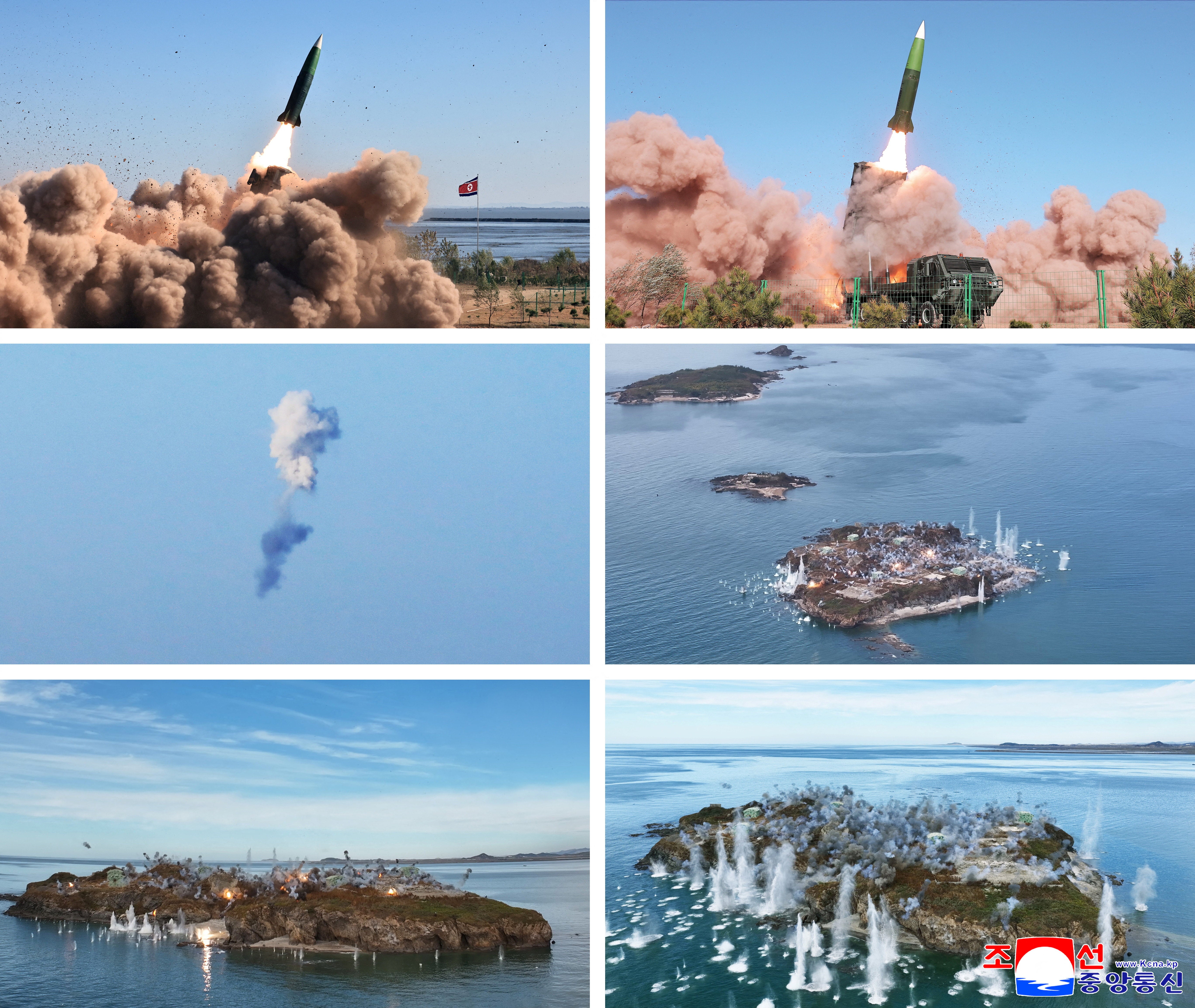 A combination picture shows what KCNA says is a test to evaluate the effectiveness of a major weapon system, in this handout released by North Korea's Korean Central News Agency (Reuters)
Reuters
North Korea's defence science institute has tested a cluster bomb warhead designed to be mounted on tactical ballistic missiles, with state media reporting that a standard Type 2 warhead can destroy a target area of 12 to 13 hectares at its highest density. The general director of the Missile Administration said the warheads are classified into four categories by purpose and that military units would be able to "select and use all those types according to operational aims" by the end of the year.
The test, reported by KCNA a day after it took place, comes amid an unusually busy stretch for Pyongyang: around ten ballistic missiles fired from the east coast on Thursday toward the sea — a launch that coincided with German Chancellor Friedrich Merz's visit to South Korea for a summit — and a drone exhibition showcasing a weapon type now central to the wars in Ukraine and the Middle East. South Korea's Joint Chiefs of Staff said it tracked the Chongju-area launch toward the Yellow Sea in coordination with Washington before it happened.
Cluster munitions scatter dozens or hundreds of bomblets over wide areas, making them effective against dispersed infantry, trenches and unarmoured vehicles — precisely the targets that define the drone-and-trench warfare North Korea's artillery and munitions exports are built around. Pyongyang has already sent troops to fight alongside Russia in Ukraine, and the tests arrive as Western officials repeatedly describe North Korean shells and missiles turning up on Ukrainian battlefields.
The country has been under UN sanctions since 2006, a regime intended to halt its nuclear and ballistic missile programmes. On more than ten test occasions this year alone, those sanctions have not prevented the manufacturing, the testing, or the export lines that keep both funded. Analysts told the Independent the tests may serve military modernisation; KCNA released a handout image showing the warhead effectiveness evaluation.
By the end of 2026, the director promised, every category will be in the field.