
Drought shrinks the white truffle harvest from Alba to Zagreb
Five or six years of hotter summers and erratic rain yield smaller truffles and prices up to 30 percent higher, Alba's hotels sell out for the fair while hunters return empty-handed
Images
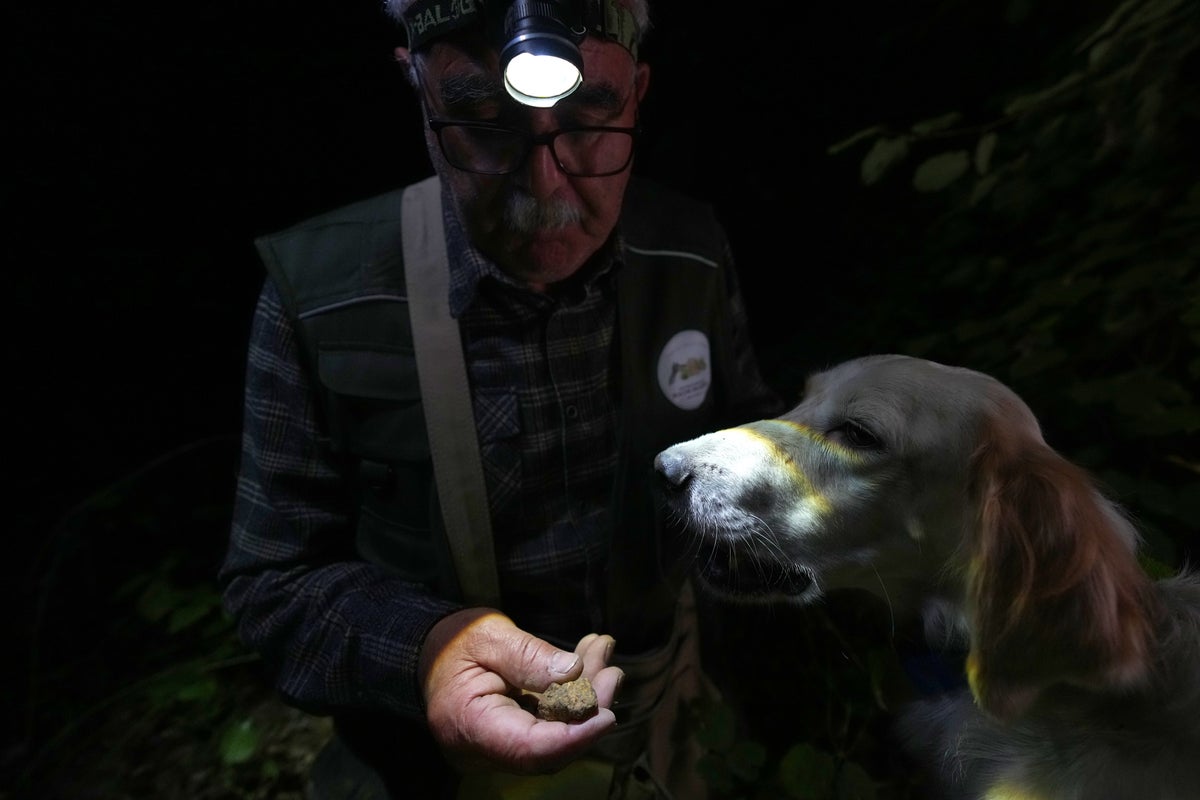 From Italy to Croatia, a warming climate threatens prized white truffles
independent.co.uk
The white truffle season around Alba opened with smaller specimens than usual after a summer of heat and drought, and prices at the town's truffle market are running 20 to 30 percent higher than last year, according to Axel Iberti, president of the International White Truffle Fair. The fair, one of Italy's best-known food events, opened on Oct. 10 and runs until Dec. 6. Hotels across the Langhe hills have largely sold out for the duration.
The fungus needs cool, moist soil and a delicate relationship with tree roots — conditions this year's weather did not provide. Antonio Degiacomi, president of Italy's National Centre for Truffle Studies, said the whole of October was marked by the lack of rain in July and August and by high temperatures, leaving production poor and shelf life short. Dry, compacted soils have yielded smaller truffles. This season, he said, stands out from a trend running five or six years: hotter summers and increasingly erratic rainfall.
The pattern repeats on the other side of the Adriatic. Petar Alebic, who hunts oak forests outside Zagreb, says each of the past seven or eight years has been worse than the last, with this year's harvest about 30 percent below normal; he increasingly makes up the shortfall by selling truffle-hunting tours to tourists. Armin Mesic, a mycologist at the Rudjer Boskovic Institute, says drought, scarce rainfall and high temperatures are hitting both the quantity and the quality of Croatia's roughly dozen truffle species — and that the area where white truffles grow is shrinking. The white truffle fetches as much as 4,000 euros a kilogram.
Researchers are now testing ways to rebuild what the woods once did on their own: improved forest management and experimental irrigation during prolonged droughts. "We're trying to do what nature does, and do it artificially," Degiacomi said. In Alba, the fair's answer is restoration and protection of forests, with Iberti expanding the event beyond tourism into environmental education and conservation.
Degiacomi does not consider the fungus doomed. "I don't think we're facing extinction; we're facing a challenge," he said. Tino Marolo, who works the Piedmont woodlands at night by flashlight with his dog Stella, put the season more plainly: "You certainly come home empty-handed more often than you do with a truffle."