
Syria's revised textbooks add hijabs and delete women's images
Photoshop edits drop the Mona Lisa and recast Ottoman-era martyrs as agents of Britain and France, debate turns on regime-cleanup or reshaping of society itself
Images
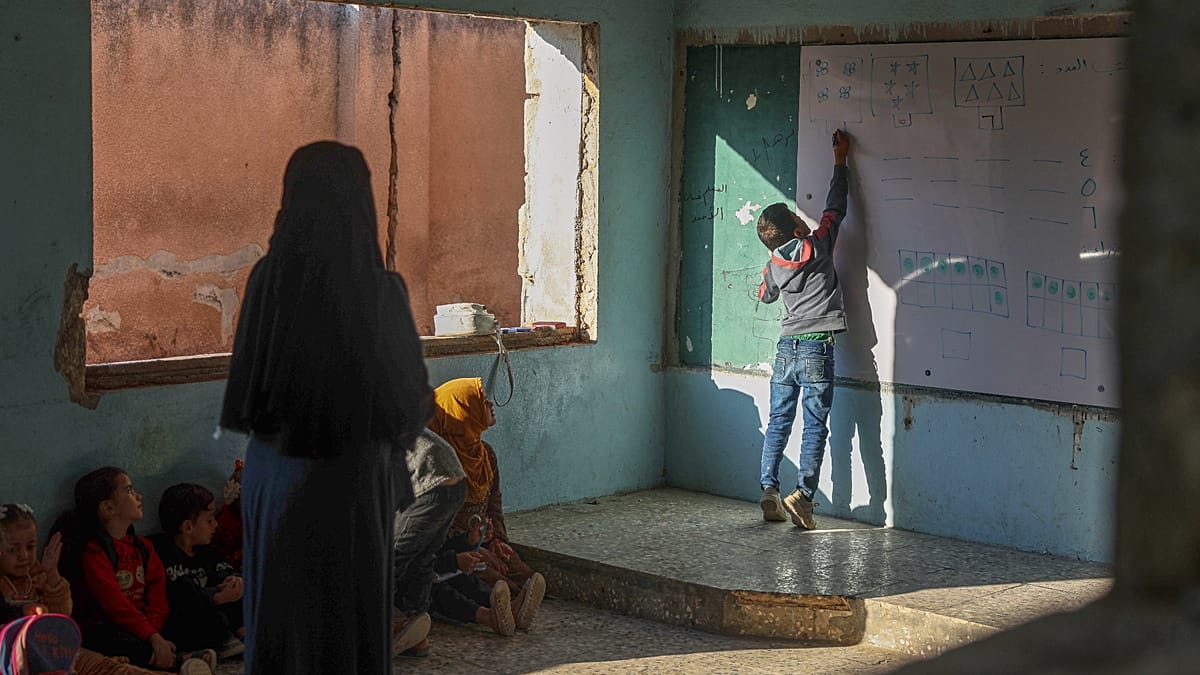 Syrian curriculum changes spark debate over removal of images and historical figures
euronews.com
Syria's textbook review committees added hijabs to drawn female figures, deleted photographs of women and covered statues, Euronews reports, after comparisons between old and new editions posted on social media drew a wave of criticism. The changes were not limited to texts: images and illustrations were edited in Photoshop, with long robes added in some cases, and paintings and artworks removed or replaced.
The Mona Lisa was dropped from books for the youngest pupils, together with a drawing of a girl skipping rope beside two children. The Phoenician princess Elissar, founder of Carthage, lost her hunting-trip portrait; the replacement image was digitally modified to cover her chin and neck, a step critics read as imposing contemporary ideological standards on an ancient era. In one widely shared example, a pharaonic statue acquired a striped shirt, which users likened to a prison uniform.
The content changed with the pictures. The sixth-grade "Social Studies" book, reissued for the current academic year and originally dating to 2012–2013, was stripped of material linked to the former regime, with lessons altered on local administration, political life, citizenship, the media and democratic participation. New history editions remove prominent national and pan-Arab figures: the picture of Sultan Pasha al-Atrash was deleted and replaced with that of Sheikh Saleh al-Ali, a swap that raised fears of exclusion on sectarian grounds. The passage on the martyrs executed on 6 May by the Ottoman governor Jamal Pasha, known as the Butcher, now describes them as "agents of Britain and France" rather than as symbols of the national movement resisting Ottoman colonial rule — a change activists called a blatant falsification of history.
The amendments have reopened debate over the Ministry of Education's review standards and how far they take account of Syria's social and cultural diversity: whether they amount to a review of content linked to the former regime, or go further towards reshaping how society is represented in school books.
In the new books for Syria's youngest pupils, the Mona Lisa is gone and the statues wear shirts.