
Bangka slow loris resurfaces after 90 years
Rediscovery rests on a decade of rescue centre intake records, survivors released into unprotected forest as tin mining clears the island
Images
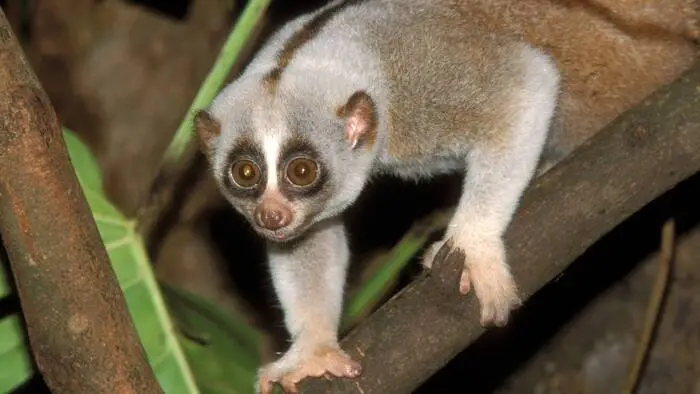 Plumploris sind die einzige Primatengattung mit giftigem Biss
kleinezeitung.at
The Bangka slow loris, a venomous primate unrecorded by researchers since the early 1930s, has been confirmed alive on its Indonesian island — through the intake log of a wildlife rescue centre rather than a field expedition. A study published in the journal Spixiana documents more than 90 encounters over the past ten years, most of them severely injured animals found in houses and gardens, on roads and near power lines.
The IUCN lists Nycticebus bancanus as possibly extinct, and the organisation Re:wild had placed the species on its 'Lost Primates' list of animals being sought worldwide. The study's own title describes the situation more bluntly: 'Neglected but still alive'. Scientists involved now assume the species not only survived the silent decades but may still be relatively widespread across Bangka, an island of roughly one million people.
The records were assembled by the Alobi Wildlife Rescue Centre near the island capital Pangkal Pinang, working with Vienna's Haus des Meeres — a collaboration that began by chance, when conservationist Jochen Menner mentioned the animals to biologist Timon Glaw during a conversation about lorises on Java. The centre cared for the injured animals and released the 86 that survived back into the wild. The release sites were simply the island's largest forest areas, because Bangka has no designated protected areas for the species at all. In the centre's description, those forests are disappearing under tin mining, palm oil plantations and expanding settlement.
Slow lorises are the only known venomous primate genus, carrying toxin-producing glands on the insides of their upper arms; a threatened animal raises its arms, licks the glands and delivers the mixture through a bite that causes painful swelling in humans. In parts of Asia the animals are popular pets, illegally caught and sold, with their teeth forcibly broken out so owners avoid being bitten, as Spektrum reports. The magazine also notes that the species' protection status may now need revision.
Timon Glaw of the Haus des Meeres calls the species' return to view only a first step. 'We now know the species survived in various regions of Bangka,' he says. 'Now we have to prevent it from actually going extinct.' The 86 survivors were released into the largest forests the island had left — the closest thing to protection Bangka offers them.