
Houdini centenary reopens fight over death date and cause
No autopsy was performed and theories range from a Montreal punch to poison by circus performers, seances in Chicago and Frederick keep alive the man who spent his career exposing seances
Images
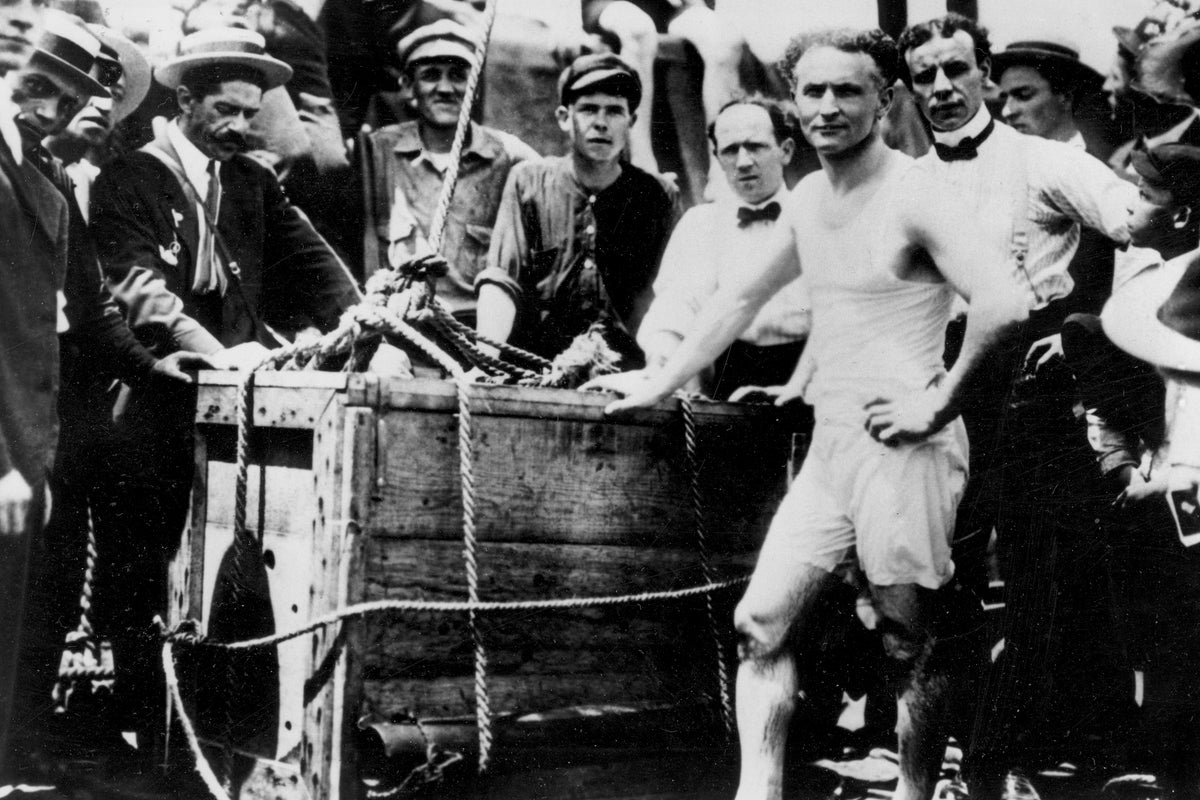 Houdini’s centennial spotlight: A newly published essay and a fresh fight over when and how he died
independent.co.uk
A hundred years after Harry Houdini was pronounced dead at Grace Hospital in Detroit, the anniversary has become an argument. Contemporary media accounts dated his death to October 31, 1926 — Halloween — and attributed it to diffuse peritonitis following appendicitis, possibly aggravated days earlier when a college student in Montreal tested the legendary strongman's abdominals with a punch. No autopsy was performed, and alternative theories have thrived ever since, including one that he was poisoned by a cabal of circus performers. Some have noted that dying on Halloween fit the mystique a little too neatly.
The centennial has produced a burst of Houdini material. The Strand Magazine has published a previously unseen essay by Houdini, titled "An Interesting Scrapbook", in which he pays tribute to magicians who preceded him and laments that so little about them was ever recorded. In the essay, Houdini wrote that American magicians "never were thought of enough to be placed in books or chronicle lists". A book by Eric Colleary, curator of Theatre and Performing Arts at the Harry Ransom Center at the University of Texas at Austin, documents Houdini's vast personal library, published in September. Colleary notes Houdini's interest ran so deep that he personally paid to have other magicians' graves maintained, receiving scrapbooks and playbills from their families in return.
The weekend's events stretch from a "Grand Houdini Centenarium" in Budapest — the city of his birth, as Erik Weisz in 1874, the son of a rabbi whose family emigrated to escape the antisemitism of then Austria-Hungary — to a memorabilia auction in Hollywood and seances in cities Houdini visited, including Chicago and Frederick, Maryland. His burial site at Machpelah Cemetery in New York City has long drawn Halloween crowds.
Matthew Solomon, a film history professor at the University of Michigan, observes that most people who know the name could not describe what Houdini actually did on stage — only that the name means an ability to do the impossible, or get out of a tight spot. For those who know more, Solomon says, he is "the epitome of the self-made man and immigrant success story", and the reported Halloween death "certainly enhanced his mystique".
The man who built his career on exposing fraudulent spirit mediums now draws seances in his own name each year at his graveside.