
Canada targets first EU associate membership by June 2027
Carney announces deadline after Montréal summit, category exists nowhere in EU treaties while Germany fights the name
Images
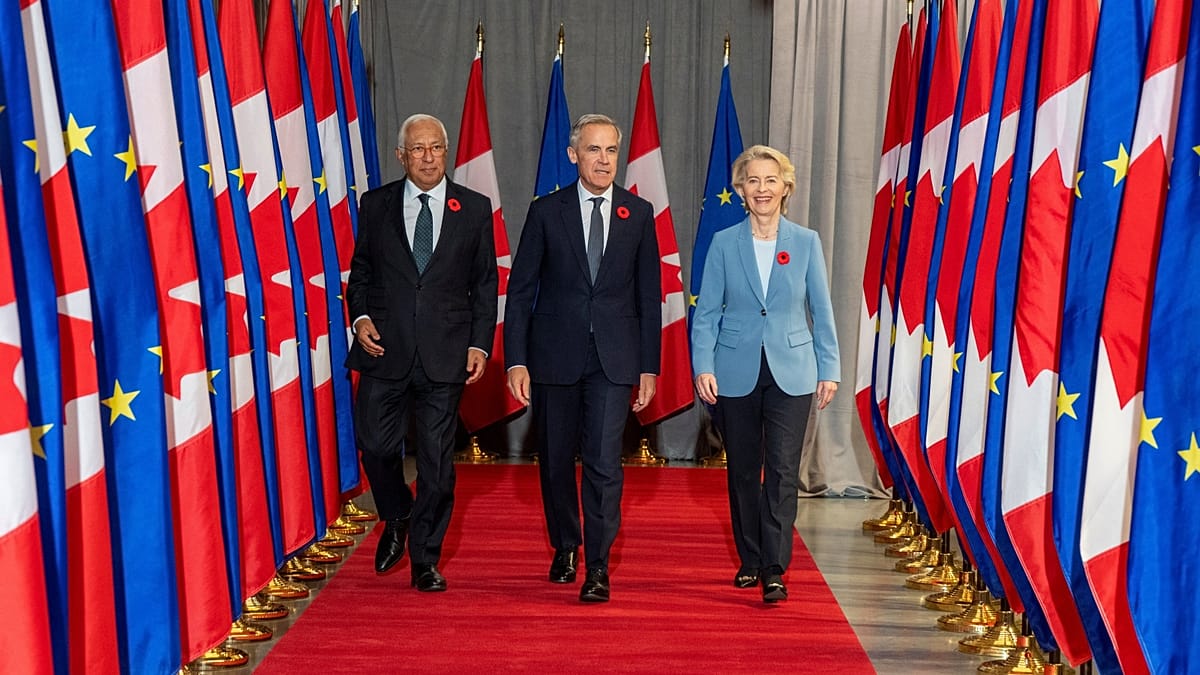 Canada aims to become EU's 'associate member' by June 2027: Carney
euronews.com
Mark Carney has set June 2027 as the deadline for Canada to become the European Union's first "associate member," announced Friday after a bilateral summit in Montréal with European Commission President Ursula von der Leyen. The proposed status has no basis in the EU treaties, which reserve full membership for European states — and no precedent of any kind.
The term itself has already survived a fight. Germany fiercely opposed "associate member" during negotiations over the joint summit declaration, and the final text referred only to an "ever closer association." Von der Leyen first floated the idea in September without consulting member states broadly; Carney initially appeared reluctant over implications for Canadian sovereignty. On Friday he defended it anyway: Canada is aiming for "the deepest possible partnership short of accession" across policy, programmes, and governance.
The substance is considerable either way. Von der Leyen pointed to full Canadian integration into Horizon and Erasmus, and cited the €90 billion support loan for Ukraine as an immediate benefit of deeper coordination. The summit expanded cooperation on digital trade, energy, critical raw materials, supercomputing, artificial intelligence, and satellite technology — a resource-rich G7 economy plugging itself into European research infrastructure and supply chains without the migration or deficit baggage that accompanies actual enlargement. For Ottawa, it functions as insurance against Washington's volatility; for Brussels, it imports scale in exactly the sectors where both sides claim to want strategic autonomy.
The institutional friction is as revealing as the ambition. Von der Leyen sidestepped questions about Germany's opposition by claiming "broad support" among member states; commission officials privately suspect Berlin's resistance stems from Chancellor Friedrich Merz considering the concept his own — he first floated "associate member" in the context of Ukraine's EU aspirations, which Kyiv rejected out of hand in favour of full membership. European Council President António Costa avoided the term entirely. Ratification across Europe remains unclear, and Carney has pledged to put the proposal to a vote in the Canadian parliament.
The next steps are a commission-to-cabinet meeting in the spring, and Carney's attendance at an EU leaders' summit in June to conclude negotiations. A college-to-cabinet meeting and a summit date do not amount to a treaty amendment — and the whole arrangement currently rests on a word Germany refuses to say.