
North Korea's elite hacking unit blamed for record Binance heist
TRM and Chainalysis attribute 6.3 billion dollar theft with high confidence, Binance has frozen 3 billion and given no update on the remaining 3.3 billion
Images
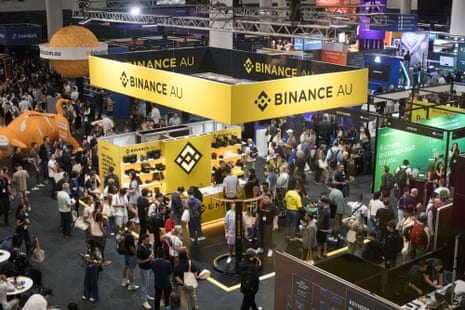 A Binance booth during the Australian Crypto Convention in Sydney in 2025. Photograph: Brent Lewin/Bloomberg via Getty Images
theguardian.com
 The incident could be the world's biggest crypto heist (Getty)
Getty
 Binance said it worked with partners to freeze the affected assets worth about $3 billion (Reuters)
Reuters
 Binance founder Changpeng Zhao (Reuters)
Reuters
Two blockchain analysis firms have attributed the Binance breach to TraderTraitor, North Korea's elite hacking unit — a judgment TRM Labs says it makes 'with high confidence'. The affected amount is $6.3 billion, taken from Binance wallets across ten blockchains, with most of the funds siphoned out within twenty minutes. Chainalysis says that if confirmed, the incident would be the biggest crypto heist on record; Aravind Srinivasan of market maker GSR skipped the conditional: 'It's the biggest hack in history.'
TRM notes that the breach mirrors earlier North Korean operations, including the 2025 raid on the Bybit exchange, which the FBI linked to Pyongyang. North Korea's mission in Geneva and its embassy in China did not respond to requests for comment.
Binance, which counts 335 million registered users and held $162.8 billion in custody at its last annual report, has located and frozen about $3 billion with industry and law enforcement partners. It has given no update on the remaining $3.3 billion. All deposits and withdrawals are suspended, with withdrawals expected to resume within 48 hours, and a reserve fund held entirely in bitcoin exists for precisely this contingency. Co-founder Yi He has promised to cover 'all hacking losses'; co-chief executive Richard Teng put it more briskly: 'Bottom line — your money is safe, and we're covering every loss.'
The entry point, according to Binance's initial investigation, may have been a compromised laptop belonging to one of its own engineers, which gave an attacker access to internal systems and the ability to make unauthorised withdrawals. The company says only that the incident 'stems from multiple factors' and has never explicitly confirmed that funds were stolen; the $6.3 billion figure comes from the analysis firms, which leaves the exchange's own damage accounting the least verifiable number in the story.
Markets repriced at once. Bitcoin fell more than 3 percent to $76,368, a six-week low; ether dropped to a two-month low of $2,178; Coinbase shares slid 4.8 percent and bitcoin buyer Strategy nearly 6. Tim Sun of HashKey Group expects investors to reassess 'counterparty, solvency and liquidity risks' on centralised exchanges, and Bernardo Brites of Trace Finance points to the likely beneficiary of that flight: users will abandon smaller and medium-sized exchanges because it is 'becoming too risky to park your money somewhere that couldn't cover a hack of meaningful size.'
The loudest reassurance came from Changpeng Zhao, who founded Binance in 2017, pleaded guilty in 2023 to failing to prevent money laundering on the platform, stepped down as chief executive and was pardoned by Donald Trump in 2025. 'User funds are safe!' he posted, adding that 'as a shareholder, I expect all user funds will be fully covered.' Business Insider reports that Polymarket was investigating a potential breach of its own the same day.
The previous record — roughly $1.5 billion, taken from a Tokyo exchange and attributed by the FBI to the same regime — was set last year.