
El Salvador sends 2 000 more troops to Haiti after ambush on technicians
Bukele threatens gangs with his domestic playbook, deployment runs parallel to UN mission with US support and opaque chain of command
Images
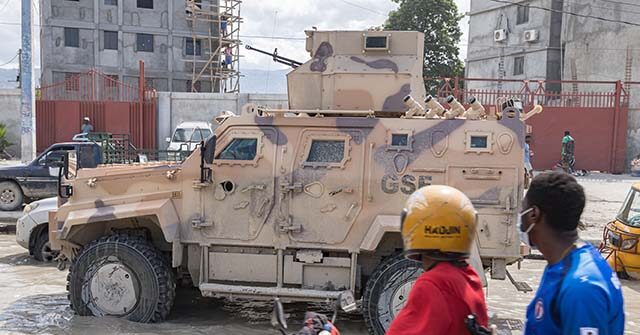 El Salvador Pledges 2,000 Troops to Restore Order in Haiti
breitbart.com
President Nayib Bukele has pledged more than 2,000 additional Salvadoran troops to Haiti, days after four Salvadoran technicians went missing there when their vehicle was ambushed with explosives near a gang stronghold. The soldiers apparently escaped their damaged armored vehicle and have not been heard from since. Several burned bodies recovered in the area could not be easily identified; Bukele said they were not his men.
Bukele's response was characteristically blunt. "I want you, the gang leaders, to understand one thing very clearly: today's attack is nothing compared to what is coming if we do not get all four hostages back alive," he said, adding: "We have already finished with the gangs in El Salvador, and we can finish with you too." Several hundred Salvadoran special forces were sent to attempt a rescue. Then came the phone call to Haitian Prime Minister Alix Didier Fils-Aime, and the pledge of 2,000 more troops. Fils-Aime's office confirmed the call and raised no objection, indicating a preference for "bilateral coordination" within the framework of the UN-authorized Gang Suppression Force.
That framework was built for a different kind of deployment. The GSF replaced the several hundred Kenyan police sent in 2024 and was meant to field around 5,500 foreign police officers supporting the Haitian National Police. It never reached half that number — until El Salvador began sending soldiers rather than police. The Salvadoran foreign ministry says the new "large-scale operation" will be "supported by various countries and international organizations," but named none.
Romain Le Cour, who heads the Haiti Observatory at the Global Initiative Against Transnational Organized Crime, told the Associated Press that details of the Salvadoran deployment "remain opaque," including its chain of command, and asked whether it represents "yet another model of deployment, parallel to the multilateral framework." He also flagged the role of the United States, which he said supported and facilitated the deployment, as deserving scrutiny.
Humanitarian groups warn the risks are practical. Davina Hayles, Doctors Without Borders' head of mission for Haiti, noted that roads and bridges are blocked and travel is extremely risky in a capital where the health system has collapsed — meaning poorly coordinated operations could leave casualties with nowhere to go.
Haiti's provisional government has announced elections for July 18 with a second round in October — the first in over a decade, if they happen. The previous date was scrapped because of gang violence. The candidate list closes in mid-January.
The Kenyan police were meant to restore Haiti's government. The Salvadoran soldiers arrive with their own mission, their own target list, and their own commander in San Salvador.