
Justice Department subpoenas California election officials over noncitizen voting claims
Courts twice reject ballot segregation while administration sues 30 states for voter data, counties warned to cooperate or face investigations themselves
Images
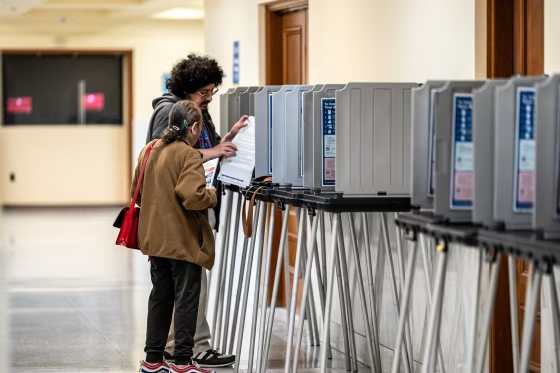 Early Voting In California Ahead Of Midterm Election
nbcnews.com
Days before the midterm elections, the US Justice Department has opened a criminal investigation in California over claims that as many as 20,000 noncitizens sit on the state's voter rolls. Federal grand jury subpoenas have gone out to local election officials across the state, a US official confirmed on October 29 — the New York Times first reported them. How many were sent, and to whom, remains unclear.
The subpoenas are one strand of a wider campaign. Last week the department sent letters to 57 of California's 58 counties warning local election officials to cooperate with federal investigations into illegal voting — or face investigations themselves. This week similar letters reached Washington state, along with a demand to review 400 registrants the department believes are noncitizens and to sequester any ballots they cast. Separately, the administration has sued 30 states and the District of Columbia for refusing to hand over their voter registration data.
The courts have so far declined to assist. On Monday an appeals court denied the administration's request to stop California counting mail ballots from the alleged noncitizens; on Wednesday a federal judge rejected the request to segregate those 20,000 ballots, in a ruling that called into question the accuracy of the administration's process for identifying them. "At every step, the U.S. Department of Justice has taken a confrontational, adversarial approach," said Dean Logan, Los Angeles County's registrar-recorder, adding that rulings by the federal judge and the appeals court had confirmed that election officials act in accordance with state and federal law.
The department declined to comment on "leaks about alleged grand jury subpoenas," while noting that federal courts have said voting unlawfully carries criminal exposure. A US official stressed that receiving a subpoena does not make a person a target, and that the department rarely subpoenas those it intends to charge.
The underlying record is thin. Noncitizens do appear on voter rolls, but rarely, and election experts note that newly naturalized citizens are frequently misflagged — the United States keeps no comprehensive list of its own citizens. The same experts describe the lawsuits as resting on flimsy legal arguments, and point out that the Justice Department has no legal authority to intervene in election certification at all.
The letters to 57 of California's 58 counties set out the terms: help the department investigate illegal voting, or be investigated.