
Spain mourns 69 dead in Toledo train crash
Government-released audio shows Madrid controller told Renfe driver to proceed under normal operations, Iryo train halted by same signal failure stayed put
Images
 Seville residents hold five minutes’ silence for the crash victims at Santa Justa train station in Seville. Photograph: Marcelo del Pozo/Reuters
theguardian.com
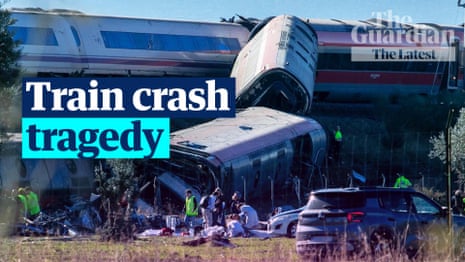 Survivors shell-shocked after deadly Spain train crash - The Latest
theguardian.com
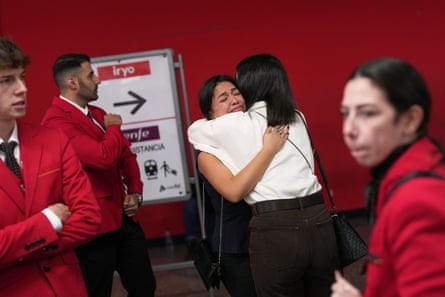 Iryo employees in Madrid embrace after observing a minute’s silence for the victims of the train crash. Photograph: Bernat Armangué/AP
theguardian.com
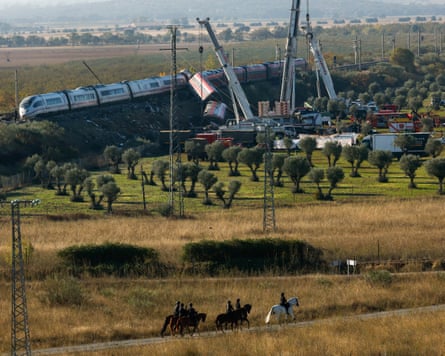 The crash scene on Wednesday. Photograph: Óscar del Pozo/AFP/Getty Images
theguardian.com
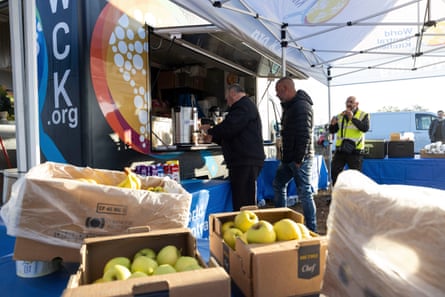 World Central Kitchen delivers meals to emergency services and security forces at the scene of the train collision. Photograph: Angeles Visdomine/EPA
theguardian.com
 Investigators walking among debris at the site of the crash near Toledo. Accident investigations typically yield rare, if not unprecedented, combinations of technical failure and human error. Photograph: Guardia Civil/AFP/Getty Images
theguardian.com
 ‘People were thrown in the air’: passenger recounts moment train crashed in Spain – video
theguardian.com
Spain began three days of national mourning on Thursday for at least 69 people killed when a state-owned Renfe high-speed train drove into the rear of a stationary private service near Urda, in the Castilla-La Mancha region. The collision took place shortly before nine on Wednesday morning as both trains ran from Madrid towards Andalucía, and knocked several carriages off the track. An audio file released to Spanish media by the government captures a controller in Madrid telling the halted Renfe driver to proceed "con marcha normal" — under normal operations, rather than at low speed.
Both trains had already been stopped by a failure in the line's signalling system. The Renfe AVE was told to restart its journey; the privately operated Iryo service stood ahead of it on the same track. The AVE's front carriages and the rear of the Iryo train were destroyed on impact. Transport minister Óscar Puente, who has suggested human error as a possible cause, has called the instruction to proceed "an inexplicable decision."
High-speed lines carry multiple automatic safeguards, including forms of automatic train operation designed to make it impossible for two trains to come close on a single track. What none of them covers is the interval after the signalling itself fails, when the decision passes to signallers, who are increasingly based in remote computer centres. The control system in use on the line is German-designed and is being phased out; the Iryo CEO told a senate inquiry recently that disconnection of the train control system was "a frequent issue" there. What caused Wednesday's initial failure remains unclear.
Forty-two foreign citizens from seven countries were involved in the crash; one was killed and at least seven injured. Fifty people taken to hospitals in Castilla-La Mancha were still being treated, the regional leader, Emiliano García-Page, said, adding that rescue teams did not expect to find more bodies in a damaged, overturned carriage. Emergency crews worked with cranes and drones over the wreckage.
Wednesday's collision came ten months after a crash near Adamuz, on the same line, killed 46 people. The nearest comparable disaster abroad was in Wenzhou, China, in 2011, when a high-speed train ran into a stationary express, killing 40. In Britain this year a rear-end collision between two trains in Bedford — the first fatal crash of its kind there in 40 years — happened on a stretch of track without automatic train operation.
The Iryo train, halted by the same failed signalling, stayed where it was.