
Taiz governor declares famine under Houthi siege
Rights groups say rebels dynamite the last supply road and use starvation as a weapon, Saudi strike kills 13 as a million residents run out of gas and oxygen
Images
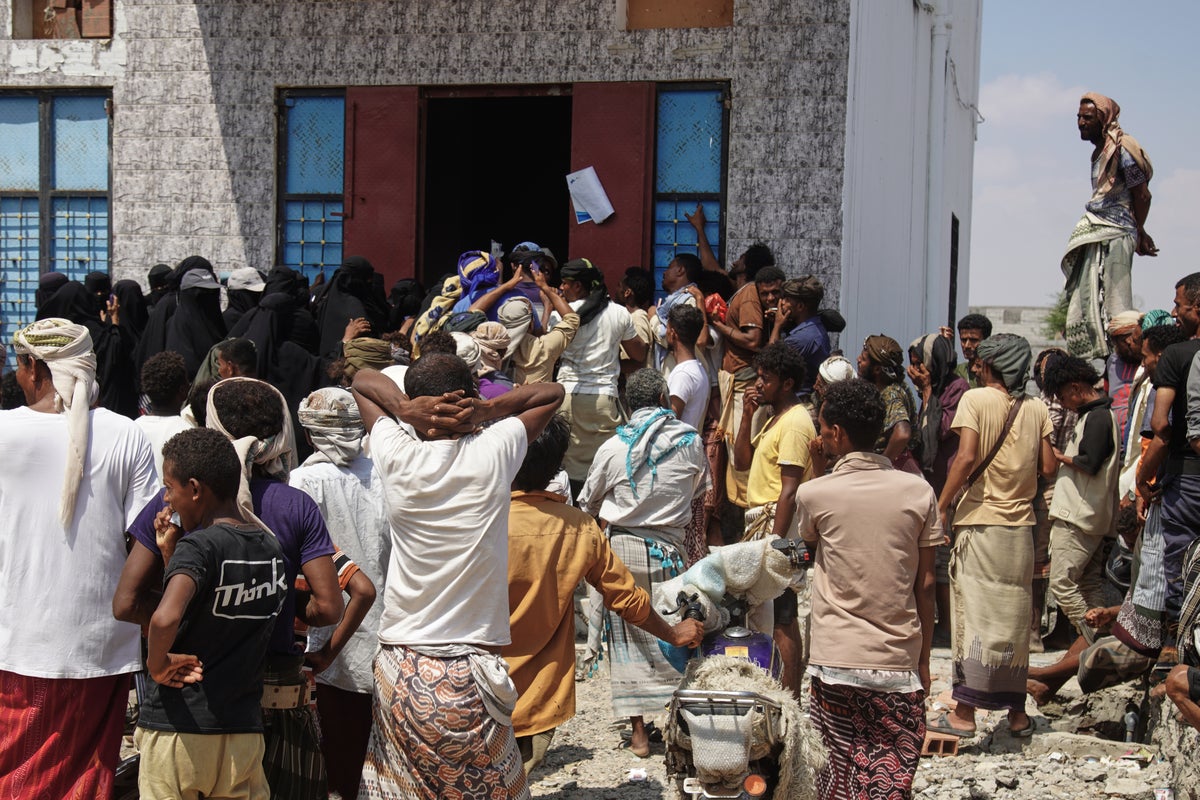 Yemen’s besieged Taiz is in famine, governor says, as 13 are killed by Saudi airstrike
independent.co.uk
The governor of Taiz, Nabil Shamsan, has declared the besieged Yemeni city to be in famine — not approaching it — speaking at a briefing delivered from a location one mile from the front line. His statement came the same day a Saudi airstrike in western Taiz killed at least 13 people, according to the Houthi-run health ministry. Around one million people live in the city.
Taiz has been a focal point of fighting since Yemen's civil war began in 2014, when the Houthis seized the north and forced the internationally recognized government into exile. Government forces hold the city center; the Houthis control the roads around it. The current siege began in early October, and the tactics now documented by Human Rights Watch are blunt. The group reviewed photographs, videos and satellite imagery and found that damage to a culvert on the city's last commercial route was consistent with a subsurface detonation — the Houthis had dynamited the road. The organisation concluded the blockade could amount to the war crime of using starvation as a method of warfare.
The arithmetic of the siege is simple and visible. Governor Shamsan said 271 people have been killed and 1,129 wounded since the offensive began this month, and that those attempting rescues are shelled or hit by snipers. A civilian car pressed into service as an ambulance was itself hit. Houthi forces seized the city's last outside water source; cooking gas is entirely blocked, forcing restaurants to close and families to burn wood. Hospitals report they have nearly run out of oxygen. The World Food Program says it can no longer reach over 600,000 Taiz residents who depend on aid, and that wheat flour stocks are nearly exhausted. The UN migration agency says the city has absorbed roughly 124,000 displaced people since August.
Houthi leader Abdul Malik al-Houthi, in a televised speech on Al-Masirah, dismissed the siege reports as "Saudi-fabricated claims" and insisted that on food and humanitarian needs "the way is open" — his forces, he said, are only cutting off weapons supplies to what he calls Saudi-backed militias. Human Rights Watch researcher Niku Jafarnia's assessment is narrower: the Houthis cannot use the siege to justify the humanitarian catastrophe they are inflicting on civilians.
The parallel casualty count grows on the other side of the line. The day before the famine declaration, the Houthis reported at least 14 dead in coalition airstrikes on Al Jawf in the northwest, including strikes on residential areas, a market and a gas station. Government officials counter that some civilian deaths come from the Houthis' own failed missile launches and indiscriminate artillery, and accuse the rebels of storing weapons in populated areas.
With flour nearly gone, water trucking costs tripled, and oxygen monitors falling toward zero, the starvation of Taiz is being administered by both sides in a war that has outlasted three American presidencies.