Netherlands locks all poultry indoors after three bird flu outbreaks
Outbreaks in Groningen and Noord-Holland trigger shelter order as migrating wild birds carry the virus, biosecurity becomes a permanent annual cost the price of eggs quietly absorbs
Images
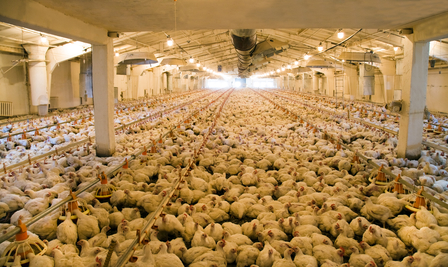 A factory farm
dutchnews.nl
The Netherlands has ordered all poultry kept indoors after three new outbreaks of bird flu, with two in Groningen and one in Noord-Holland. Agriculture secretary Silvio Erkens told broadcaster NOS the measure would limit contact between kept birds and infected wild birds now migrating south. Non-essential visitors are banned from premises where birds are kept, and hobbyists must shield their birds in aviaries.
The order is the latest rotation in a cycle that has become routine for the world's second-largest agricultural exporter: outbreak, culling, quarantine, transport shutdown, export restrictions, and then a return to something approaching normal — until the next migration season. The virus is not eliminated between rounds; it merely waits in the wild population. The result is that biosecurity has shifted from emergency measure to permanent operating cost, priced into every flock, every year.
The question is who ultimately pays it. So far, according to the Dutch reporting, poultry prices and availability have remained relatively stable. Babak Sadeghi, who owns the Chris Kip stall at Amsterdam's Albert Cuyp Market, says prices have been high enough for months that consumers notice little, though increased transport and petrol costs have hit suppliers. That stability is doing a lot of quiet work: it means the costs of culling, lockdowns and lost export volumes are being absorbed somewhere in the chain — by farmers, insurers, or the same consumers who are told nothing has changed.
The outbreaks are not a Dutch peculiarity. Bird flu has been detected in Denmark, Germany, the United Kingdom and elsewhere. Erkens is now pushing for mandatory vaccination of egg-laying hens — which would convert a recurring crisis response into a fixed annual input cost, and raise the same distributional question one level up: whether the vaccine bill lands on the farmer, the treasury or the shelf price.
In the meantime, the Dutch flock spends another season indoors. The wild birds fly south regardless, and the order to shut the barn doors costs exactly as much as it did last year, and buys exactly as much time.