
Machete mob kills Ebola nurse in eastern Congo
Health workers shelter under police guard in Bafwasende, village chief lost four relatives who refused the hospital that saved eleven others
Images
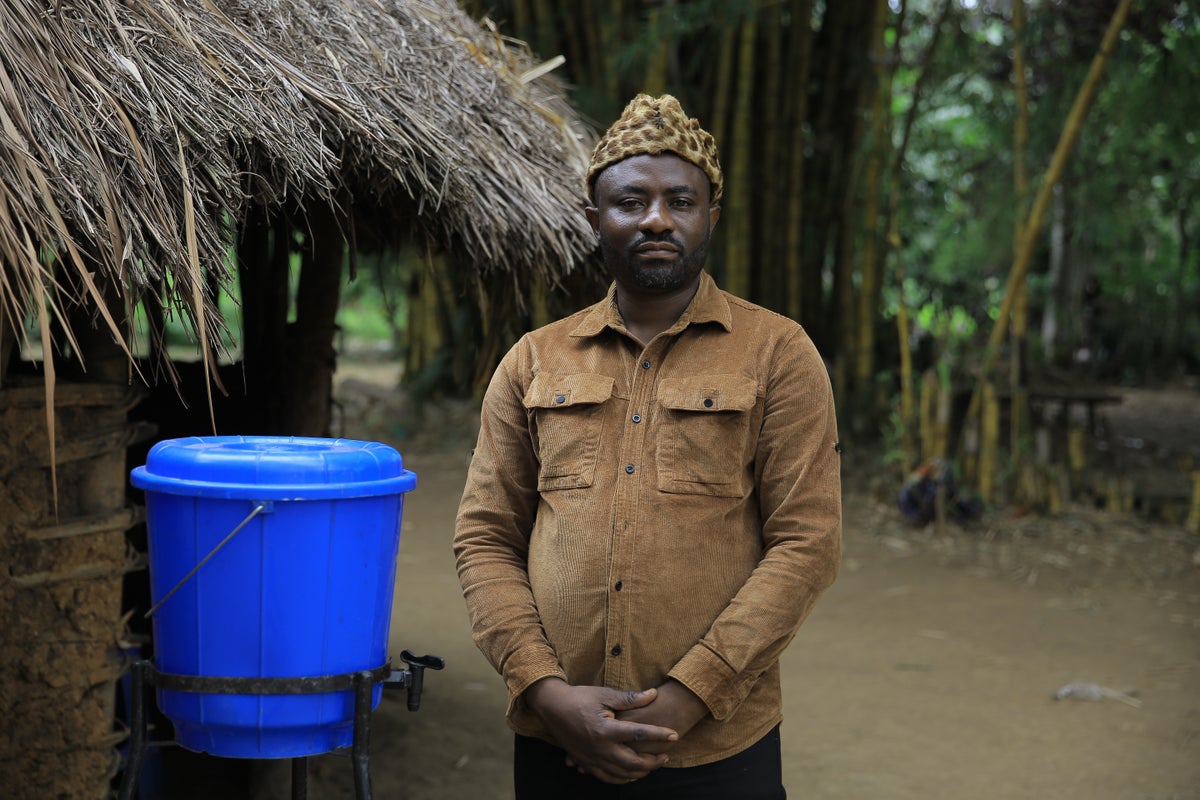 A village chief in Congo works to overcome Ebola prejudice even as the disease kills his relatives
independent.co.uk
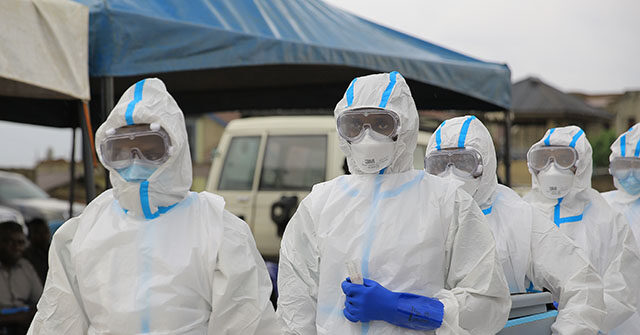 Ebola Workers in Congo Attacked by Machete Mob as Cases Pass 10,000
breitbart.com
A machete-wielding mob killed a well-known nurse in Bafwasende, in eastern Congo's Tshopo province, last Saturday and seriously injured the teacher who was with him. According to local officials, the two were inspecting a plot of land when residents building a house nearby confronted them, shouting that they were "the people that are spreading the Ebola virus through people's toilets and rivers." Youths armed with clubs and machetes were summoned, and the nurse died at the scene.
The nurse was no stranger to his killers. "It is impossible to believe that he was mistaken for a stranger," a local health official said. Doctors and nurses in Bafwasende are now sleeping at the hospital under police guard, afraid to go home.
The killing follows a pattern. Days earlier, another community worker in the area was attacked by a mob and escaped; the mob then set fire to his house. In late September, a senior politician, Marie-Celestin Karondwa, was robbed and beaten to death near his home after appearing on a radio program to discuss the outbreak, and his house was burned too. Mobs have turned violent when hospitals refuse to release infected bodies for traditional burial. Some residents believe doctors deliberately inject patients with Ebola. Others do not believe the disease exists.
Health officials blame superstition and deliberate disinformation spread by insurgents and jihadis in the region, where dozens of militia groups operate — among them the Islamic State-linked Allied Democratic Forces — and insecurity has cut responders off from affected communities. Experts also point to corruption and mismanagement during earlier outbreaks, and to front-line workers who have protested unpaid wages. No vaccine or treatment has been approved for the Bundibugyo strain behind the outbreak.
In North Kivu, that mistrust is playing out inside one family. Alphonse bin Kitobi Achou Taibo, chief of the village of Bapakombe-Bakondo on the outskirts of Beni, tried to take his sick relatives to the nearest hospital; they accused him of taking them there to die and refused to go, and he lost four family members to Ebola. Eleven others from his extended family contracted the virus and survived after he brought them to Beni's General Reference Hospital. When a cousin died in August, a traditional medicine clinic blamed poisoning; when another cousin, 27-year-old Zawadi Kavira Musubao, fell ill during the funeral, the clinic blamed poisoning again, and a healer prepared a potion he claimed would expel it. The potion worsened her condition. She later recovered from Ebola. Young people in the village have set fire to homes, accusing residents of witchcraft.
The mistrust now shows in the epidemiology. Government data from early October showed more than 70 percent of new cases appearing outside known contact lists, and at least 60 percent of deaths occurring outside treatment centers. An outbreak is not considered under control until 95 percent of infections can be traced to known contacts. The UN's senior Ebola coordinator, Julien Harneis, called the nurse's killing "a loss to the Ebola response and an even greater loss to patients."
The outbreak, the fastest-spreading in the disease's history, passed 10,000 confirmed cases this week, with more than 4,800 deaths. In Bapakombe-Bakondo, relatives who accused their chief of taking them to the hospital to die stayed home. Four family members died of Ebola. The eleven he brought to the hospital survived.