
Indonesia's worst fire season in a decade chokes Kalimantan and sparks Jakarta protests
Nearly two million hectares have burned and four volunteer firefighters died this month, the cheapest way to clear land loads the bill onto everyone who breathes
Images
 Protesters light flares during a rally in Jakarta on Wednesday marking the second year since Indonesian president Prabowo Subianto took office. Photograph: Achmad Ibrahim/AP
theguardian.com
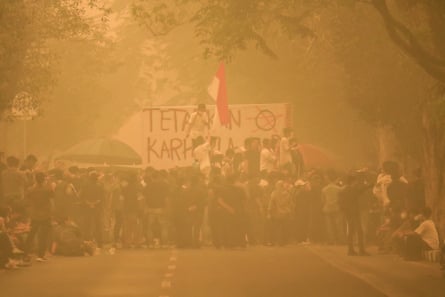 Demonstrators gather amid heavy haze during a protest demanding action over forest and land fires outside the Central Kalimantan governor’s office in Palangkaraya on 23 October. Photograph: Reina/AFP/Getty Images
theguardian.com
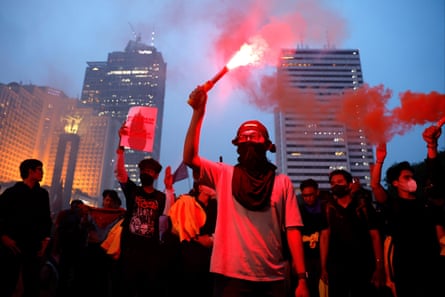 Indonesian protesters light flares during an anti-government protest in Jakarta on Wednesday. Photograph: Mast Irham/EPA
theguardian.com
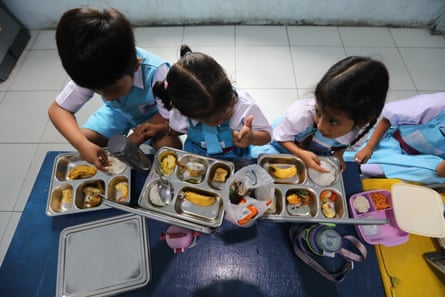 The government’s free nutritious meals program continues despite food poisoning cases reported in some parts of the country. Photograph: Hotli Simanjuntak/EPA
theguardian.com
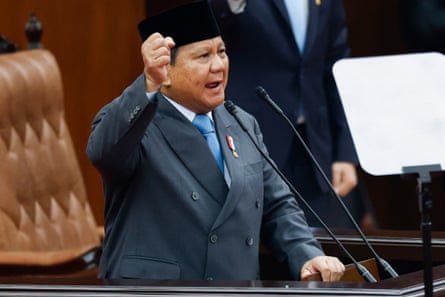 Prabowo has developed a reputation for being reluctant to accept advice, say some analysts. Photograph: Ajeng Dinar Ulfiana/EPA
theguardian.com
Indonesia is enduring its worst fire season in a decade, with almost two million hectares burned and toxic haze still blanketing Kalimantan, and the smoke has done what years of policy papers could not: put people on the street. Hundreds demonstrated in Jakarta on Wednesday — the second protest in a week — with a chief demand that President Prabowo Subianto declare the fires a national disaster.
The protesters gathered on the second anniversary of Prabowo taking office, and the fire crisis has become the focal point for broader anger. Analysts describe a confluence of policy blunders, economic stress and a government seen as increasingly out of touch that is pushing Indonesia into its most volatile period in decades. Civil society groups accuse the presidency of wasteful programs, militarisation, deepening patronage, attacks on the press and a weakened judiciary. The free meals program that anchored Prabowo's 2024 campaign has been riddled with controversy — its national nutrition agency head was arrested on corruption allegations in June, and thousands of schoolchildren have been poisoned by tainted meals.
Nurul Amalia, a 33-year-old university researcher who joined the Jakarta protest, says the government claims to be continuously increasing firefighting personnel but she has yet to see significant progress. Ika Anastasia, a Jakartan mother of three, puts it more bluntly: there has been no progress and it feels like the country has gone backwards. Four volunteer firefighters were killed battling blazes this month.
The economics of the crisis remain unchanged. Burning peatland is the cheapest way to clear ground, and the costs — respiratory illness, closed schools, diplomatic friction with neighbours whose skies share the smoke — fall on people who never struck the match. The government says some 70,000 firefighting personnel have been deployed and that it is investigating corporations and individuals allegedly involved in starting the fires. A government communications agency welcomed the protesters' aspirations as part of nurturing democracy.
Yanuar Nugroho, a former presidential staffer, offers the verdict that may outlast the haze: the government is strong at agenda-setting but very weak at delivery.