
Apple ships first touchscreen MacBook Pro
OLED display ends a decade of refusing touch on laptops, fully loaded 16-inch model tops out at 14 549 dollars
Images
 Image Credits:Apple
techcrunch.com
 Lauren Forristal
techcrunch.com
 techcrunch.com
 Apple MacBook Pro
techcrunch.com
 techcrunch.com
 Retirement Income Source partner Jeffrey Small breaks down how megacap tech stocks like Nvidia, Amazon, Meta, and Microsoft are cushioning market losses on 'The Claman Countdown.'
foxbusiness.com
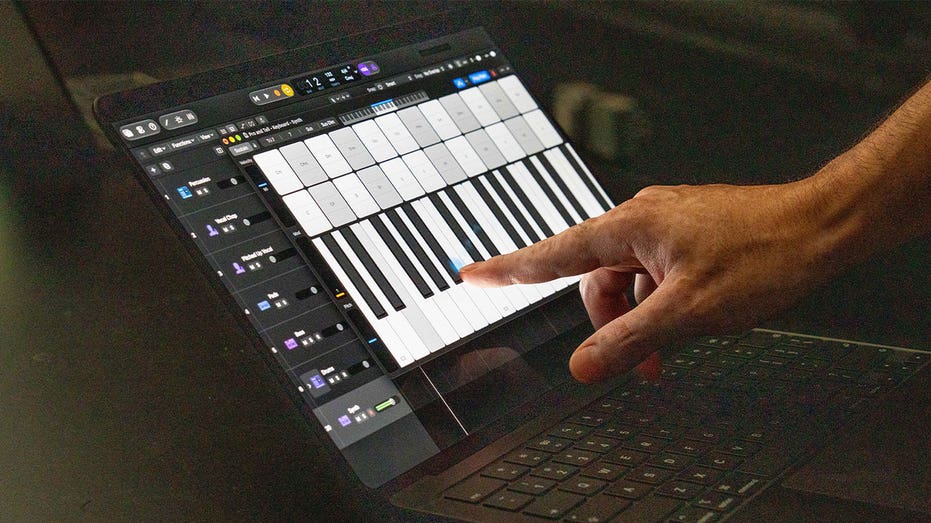 A person touches a virtual piano keyboard on the display of Apple's new touchscreen MacBook Pro
foxbusiness.com
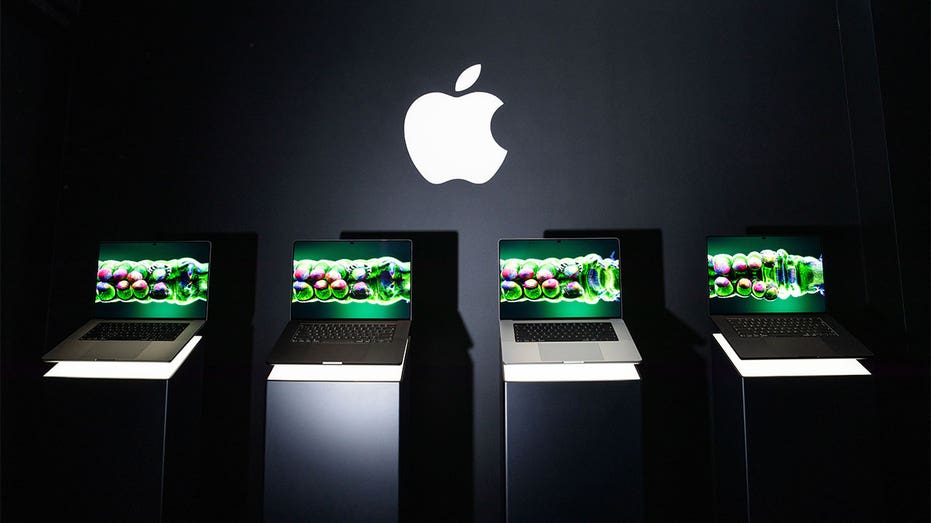 Four Apple MacBook Pro laptops displayed on illuminated stands beneath a large Apple logo
foxbusiness.com
Apple on Wednesday introduced its first touchscreen MacBook Pro, ending a design dogma the company defended for nearly a decade, and lifted the laptop line's price ceiling by more than four thousand dollars in the same motion. The redesigned 14-inch model starts at $2,899; a fully configured 16-inch model with the new M5 Max chip, 128GB of memory and 16TB of storage reaches $14,549 — against a previous generation maximum of $10,149.
The breakdown of that ceiling is a study in the new economics of memory. The 16TB SSD option alone adds $7,000, and upgrading memory to 128GB adds $2,000 — prices Apple attributes to the ongoing memory shortage, which is itself driven by AI datacenter demand. The M5 Max carries an 18-core CPU and 40-core GPU, and the new OLED screens promise improved brightness, contrast and colour accuracy. Battery life, at up to 24 hours, matches the previous generation's advertised maximum. The laptops also gain the iPhone's Dynamic Island, now floating above a MacBook keyboard.
Apple has long kept touch on the iPhone and iPad while insisting that keyboards and trackpads were correct for Macs — a position it maintained even after the 2016 Touch Bar experiment, and one Steve Jobs famously articulated against vertical touchscreens. The reversal is priced like a pivot rather than a concession: buyers who want the old arrangement can still get a 14-inch MacBook Pro with an M6 processor for $1,999, without the touchscreen or OLED. Anyone who wants the future pays a $700 to $900 premium at every tier of the new lineup.
The launch continues a pattern visible across Cupertino this autumn. The folding iPhone sold out on launch day this week and immediately commanded double its list price on secondary markets, with resale orders pushed to January. Apple's product strategy is less a series of new categories than a steady migration of the entire price pyramid upward — each dogma dropped along the way (no touch, no OLED, no folding) arrives bundled with a higher sticker.
Preorders open October 30; general availability begins November 6. In Apple's product video, the touchscreen's flagship demonstration was playing a virtual piano keyboard in a music app — on a machine whose cheapest configuration costs $900 more than the laptop it replaces.