
UN condemns US embargo on Cuba for 34th consecutive year
Germany Italy and Latvia abstain for first time after Trump administration pressure, support falls from 165 to 130 as US envoy tells Cuban foreign minister to back up
Images
 UN condemns US economic embargo of Cuba though more nations sit out after Trump administration push – WTOP News
wtop.com
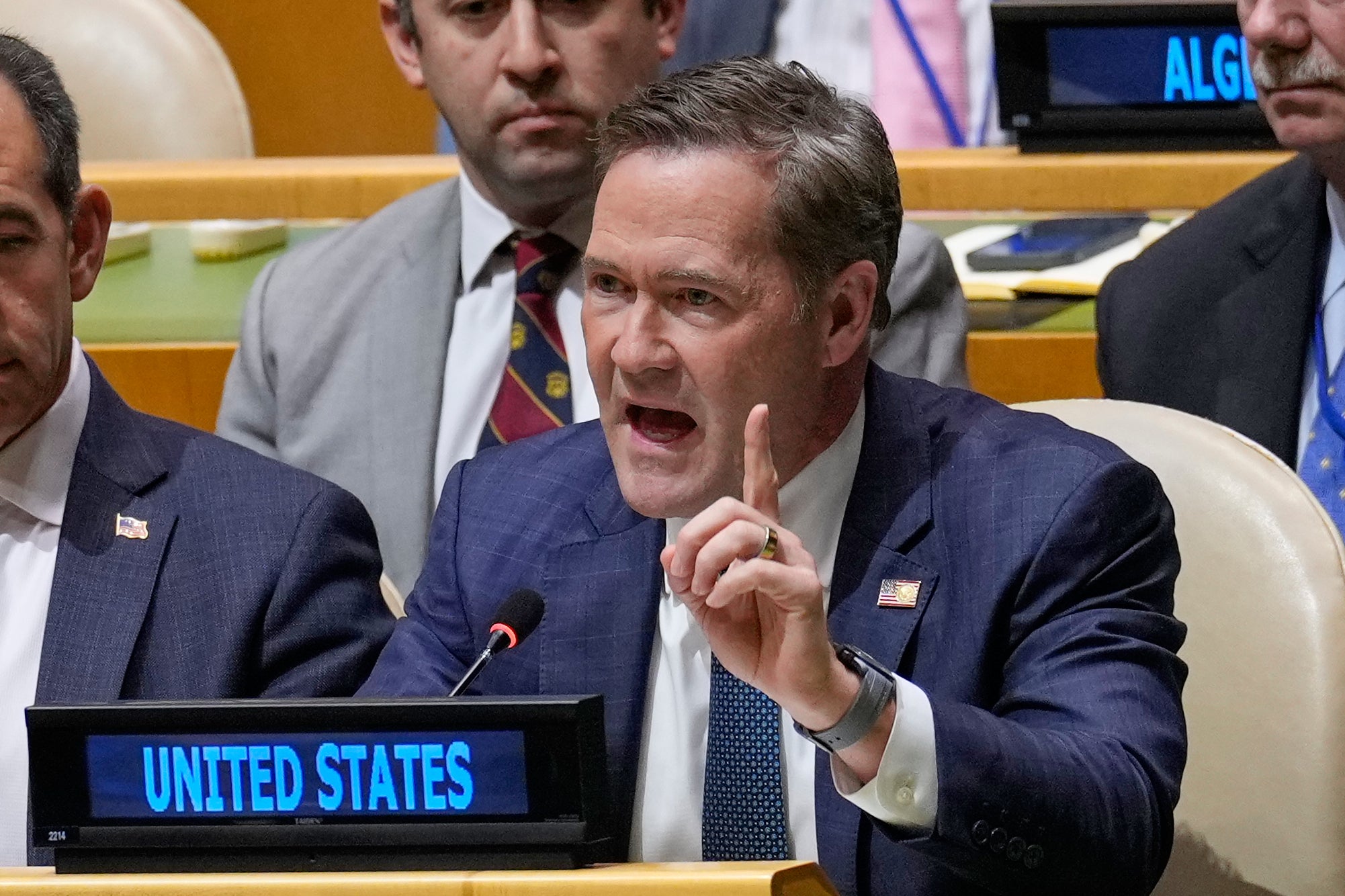 Mike Waltz, U.S. ambassador to the United Nations, speaks at U.N. headquarters on Wednesday, a day after he got into a shouting match with Cuban officials (AP)
independent.co.uk
The UN General Assembly voted on Wednesday to condemn the US economic embargo on Cuba for the 34th consecutive year, 130 votes to 17 with 25 abstentions. The annual consensus, however, cracked for the first time. Germany, Italy and Latvia abstained — their first abstention in the vote's history — and Bosnia, Colombia, Costa Rica, Ecuador, Lithuania, Morocco, North Macedonia, Paraguay, Slovenia and the United Arab Emirates voted no. Chile, Honduras and Trinidad and Tobago, long counted among the resolution's supporters, moved to oppose it or abstain.
Washington had campaigned for exactly this outcome, and the instruments are on the record. In late January, Trump announced tariffs on any country that sells or provides oil to Cuba; the warning has effectively cut off the island's fuel, and outages now reach water supply, cooking, internet and telephone service. Last week he raised the possibility of military intervention, saying American warships could stop over in Cuba on their way back from the Iran war.
US Ambassador Mike Waltz told member states that "your vote today is the only thing standing between the corrupt, kleptocratic communist regime and using this body and your vote for another propaganda victory at the expense of the Cuban people." Cuba's foreign minister, Bruno Rodríguez, told the Assembly that "a great power is attacking through economic war a member state of this organization," adding: "Cuba is not a threat. The blockade is a threat."
A day before the vote, the two men had already produced the week's confrontation at the podium. As Waltz denounced the Cuban government, Rodríguez walked down to the platform, called him a liar and tried to raise a point of order with the presiding official. "This individual needs to back away from this podium," Waltz said. "He's not going to intimidate me in the United States of America." And: "You understand who you're dealing with? This is America. Back up." UN security personnel tried to intervene. Rodríguez later posted that Waltz appeared to think he was at a White House security meeting rather than the United Nations, accusing him of "crude lies" in service of "economic aggression" and a "criminal energy blockade." A week earlier, Waltz and the Cuban diplomat Ernesto Soberón Guzmán had exchanged words outside a US-hosted panel featuring Cuban dissidents and former prisoners.
The embargo dates from 1960, imposed after Fidel Castro's revolution toppled Fulgencio Batista and nationalized American-owned property. General Assembly resolutions on it are not legally binding; they are watched as an annual measure of world opinion. A year ago, that measure read 165 to 7.