
Surgeons now fracture ribs for an hourglass waist
RibXcar technique born in 2017 spreads to Colombia Korea and France, patients wear the corset 23 hours a day and call recovery like being hit by a bus
Images
 Illustration: Michelle Thompson/The Guardian
theguardian.com
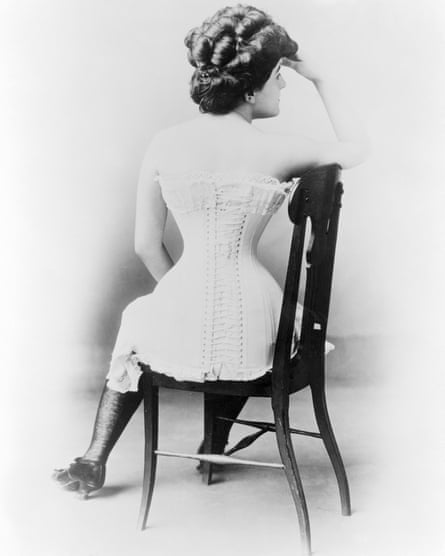 ‘Between the 16th and 19th centuries, corset wearing became a symbol of beauty for the leisure class.’ Photograph: Bettmann Archive
theguardian.com
 Kim Kardashian at the 2022 Met Gala. Photograph: Evan Agostini/Invision/AP
theguardian.com
 Making a comeback … Marilyn Monroe circa 1958. Photograph: Keystone Features/Getty Images
theguardian.com
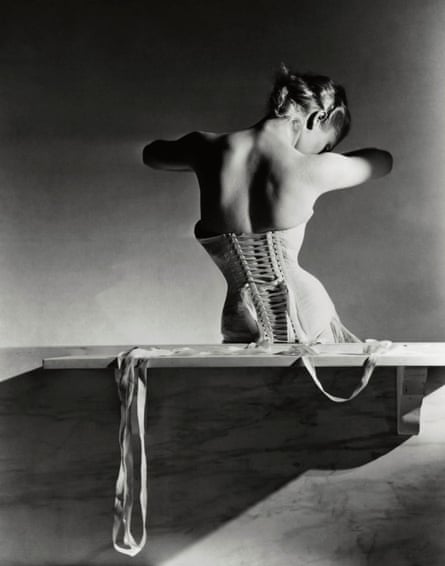 ‘We have always done very demanding things for beauty.’ Photograph: Horst P Horst/Conde Nast/Getty Images
theguardian.com
Daniela Cesin had already booked her flights from Miami to her native Venezuela, taken three weeks off from her job as a sales director, and gone under anaesthesia once before — breast augmentation a decade ago, nose and eyelid surgery two years ago — when her surgeon made a discovery. She did not have enough fat for the liposuction and hip fat transfer she had travelled for. He offered an alternative: RibXcar, a procedure in which three lower ribs on each side are fractured and bound in a corset for three months so they heal in a new position, producing a wasp-like waist.
She had never heard of it. She went ahead anyway. "I wanted that hourglass shape," she tells the Guardian.
The technique is younger than most of its patients. A Russian plastic surgeon, Kazbek Kudzaev, realised in 2017 that he could get the aesthetic result of the older, riskier rib-removal operations — which strip the liver and spleen of their bony protection — by drilling the ribs until they crack in incomplete greenstick fractures, then letting a corset do the orthopaedics. Surgeons in Colombia, Korea and France have since refined it. The procedure now takes about an hour under general anaesthesia and is marketed as noninvasive day surgery.
The women interviewed describe recovery in less clinical terms: many felt as though they had been hit by a bus. Cesin could not stand or lie down without help, woke every hour for a week, and must wear the corset 23 hours a day — eating in it gives her acid reflux. Six weeks on, she is pleased with the eight centimetres the operation shaved from her waist.
The risks include the standard surgical catalogue — anaesthetic reactions, clots, wound infections, fluid pockets under the skin — plus one specific to the anatomy: a collapsed lung. Corsets were a symbol of beauty for the leisure class from the 16th to the 19th century; the difference is that the corset now comes after the fractures rather than before them.
Demand arrives through the same channel as the ideal itself: social media feeds showing the waist, surgeons selling the procedure, and a market that has replaced the leisure class with anyone who can book three weeks off.