
Russian satellites circled targets before all 40 Houthi and militia strikes on Saudi Arabia
Geneva firm finds 100 percent match between Cosmos flybys and attacks, Houthis now claim direct hits on defense ministry and Ras Tanura refinery
Images
 Russian satellites help Iran's allies strike Saudi Arabia, data and officials say
independent.co.uk
 via Nesa Center
zerohedge.com
 zerohedge.com
Russian government and military satellites passed over Saudi targets for days before and after every one of 40 missile and drone strikes examined by a private geospatial intelligence firm, which found the same pattern in each attack between July 1 and October 19. "What we found is a 100% match," said Nawaf Obaid, founder of Geneva-based AURORAH Geosignal Intelligence, a fellow at King's College's Department of War Studies who advised Saudi officials from 2004 to 2016.
On the morning of September 10, drones launched from Iraq struck three pumping stations along the East-West Pipeline, immediately interrupting the flow of oil through the 1,200-kilometre line that crosses the Najd Plateau to the Red Sea — the route Saudi crude has relied on while Iran attacks shipping in the Strait of Hormuz. Obaid's firm had watched 11 of Russia's Cosmos 2600-series satellites concentrate on precisely the three pipeline sections that were struck, beginning in July, with flybys increasing in the weeks before the attack. A week later, the Houthis hit King Fahd Air Base in Taif with multiple projectiles, damaging an Italian Eurofighter Typhoon inside its hangar, as confirmed by the Italian Defense Ministry. Around both strikes, the firm recorded a 50 percent increase in Russian satellite passes during the 72-hour windows before and after, compared with July.
Three officials — one from Saudi Arabia, another in the top ranks of the Houthis — and a private intelligence analyst told the Associated Press that the Houthis and other Iranian allies have benefited from Russian intelligence and Chinese capabilities, with Iranian advisers in the field analyzing and transferring the material. Saudi deputy foreign minister Rayed Krimly, the ministry's deputy for public diplomacy, said Iran and the Houthis receive intelligence from "elements in Russia and China, even commercial elements sometimes," adding: "We do discuss these matters regularly with China and Russia, and we will continue to do so." Russian officials had no immediate comment. Russia and Iran have a longstanding military cooperation arrangement that includes drone technology, and US and European officials have previously said Moscow shares intelligence with Tehran.
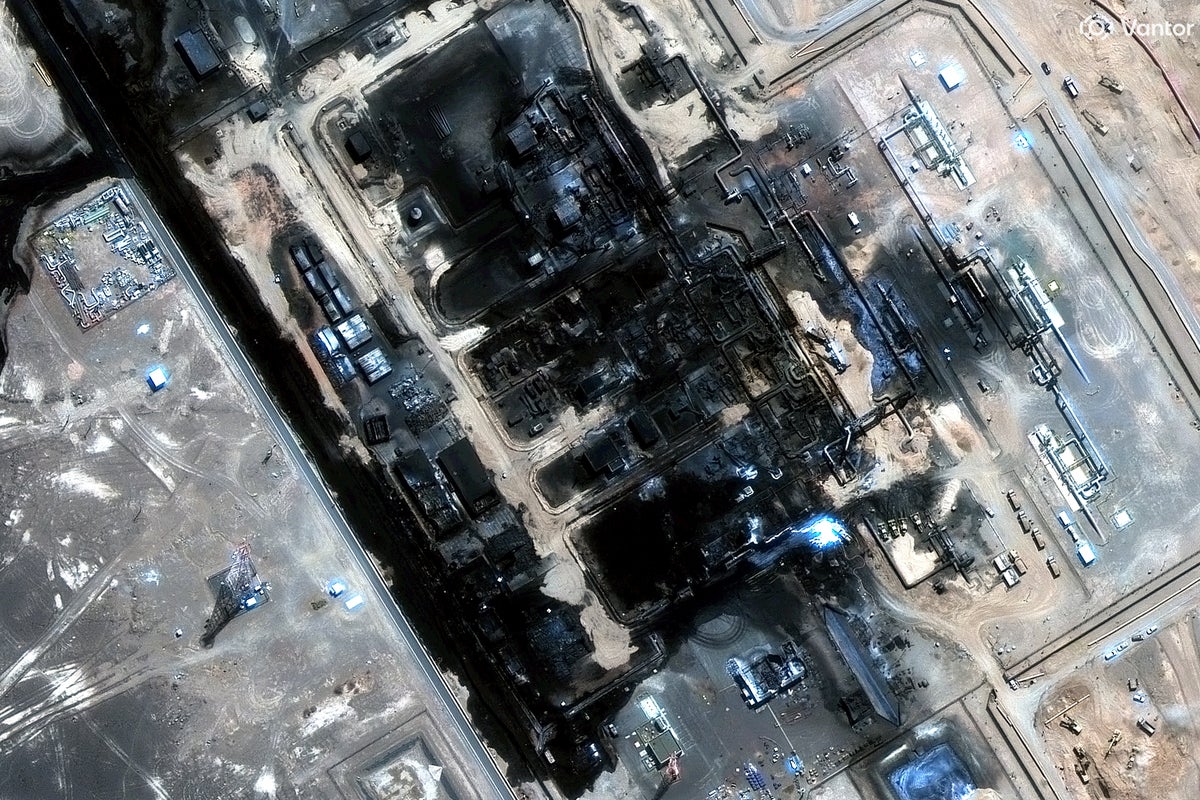
The Houthis escalated again on Tuesday, when spokesman Yahya Saree announced a direct ballistic missile hit on the defense ministry headquarters in Riyadh, along with attacks on Abha airport, Saudi mobilizations in Aden and two military transport jets at Najran airport and Khamis Mushait air base. Saudi forces said they intercepted a pair of missiles, though residents reported explosions and significant debris across central Riyadh. The movement also announced a strike on Ras Tanura, whose 550,000-barrel-per-day refinery and export terminal — together with Yanbu on the Red Sea — handle nearly all Saudi oil exports. The maritime security agency Vanguard reported a fire near the terminal that has been contained, with the impact on loading operations unclear. Saudi authorities have yet to confirm the attacks and have issued no damage assessment; the kingdom is typically slow to acknowledge strikes launched from Yemen.
The attacks have helped raise global energy prices. The pipeline struck on September 10 was built to move Saudi crude around the strait Iran is attacking. The satellites had been circling its pumping stations since July.