
Judge lets FlavaWorks subpoena Google Yahoo and Microsoft for torrent users' identities
Copyright suit against Gay-Torrents turns email providers into discovery machinery, Swiss ProtonMail users stay out of reach
Images
 Not a person
torrentfreak.com
 Email providers
torrentfreak.com
A US District Court judge has allowed adult entertainment company FlavaWorks to subpoena Google, Yahoo, Microsoft, AT&T, Cloudflare and Newfold Digital for the identities of users of the private torrent tracker Gay-Torrents.org. Judge John Robert Blakey's October 14 order requires the providers to hand over subscriber names, mailing addresses, phone numbers, recovery and two-factor email addresses, and the most recent IP address used to access each account since January 2025.
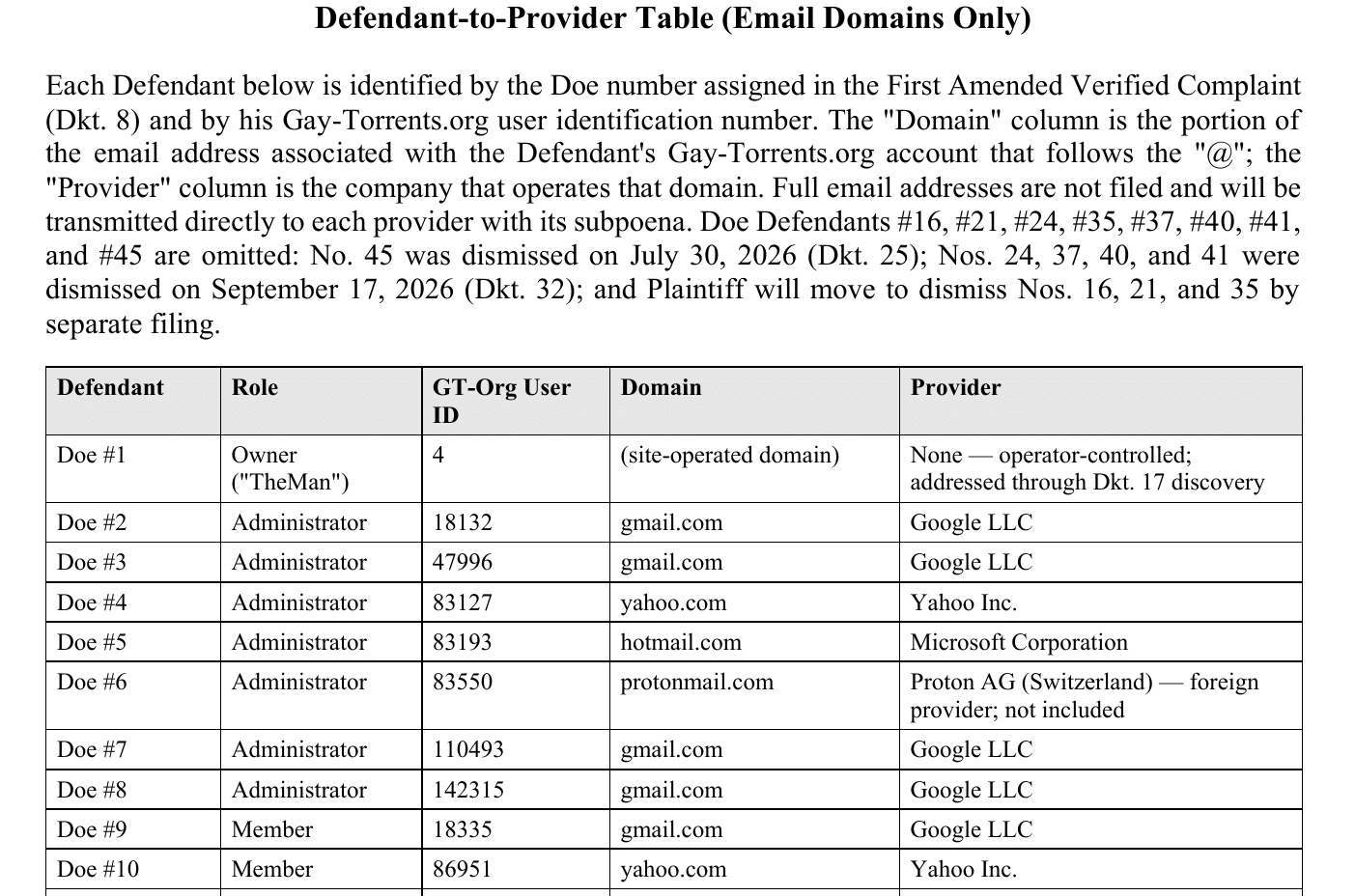
FlavaWorks sued the tracker's operators and hundreds of its users over copyright infringement. The site went offline shortly after the filing. The company narrowed its list of targeted users from 325 to 39, most of them anonymous John Does. According to TorrentFreak, 22 defendants are linked to Gmail addresses, 9 to Yahoo, 3 to Hotmail and 1 to AT&T, with two more using private domains registered through Cloudflare and Bluehost.
The selection method is what makes the case notable. FlavaWorks picked defendants because the email address on their tracker account matched an account on one of FlavaWorks' own sites, and a September status report indicated the company's own records already pointed to probable identities for many of them. The subpoenas are less about finding unknown infringers than about converting a civil hunch into legally admissible identification — using platform giants as a lookup service for a private litigation claim.
The court did trim the request. Billing names and addresses were excluded, as was a proposed subpoena to payment processor Stripe to identify the people behind a Bulgarian company linked to the site. Defendants and providers can still move to quash. One administrator who used a ProtonMail address escaped the list entirely: the Swiss provider sits beyond the reach of a US subpoena.
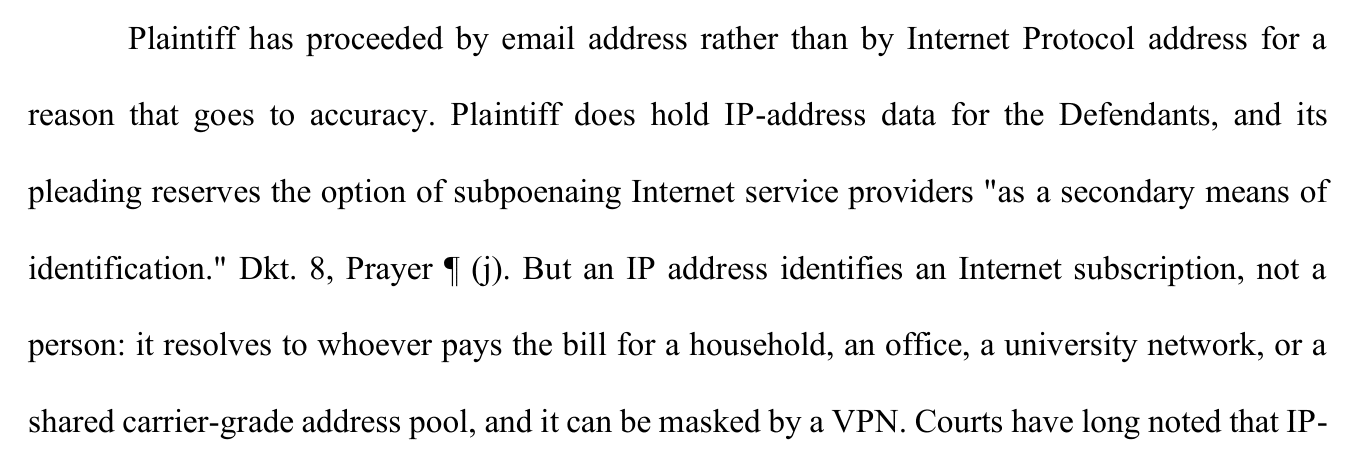
Google raised First Amendment concerns over a similar FlavaWorks subpoena in February targeting users of another private tracker, but a July filing noted the company had handed over subscriber data without objection in an earlier case in April. FlavaWorks itself argues that an IP address identifies an internet subscription, not a person — a defence argument repurposed as a discovery justification.
The template is now on file: platform-held account data is reachable by any rights-holder with a docket number, and the only users who stayed anonymous are the ones who paid for an account in a jurisdiction that doesn't answer US subpoenas.