
US military bans BYD vehicles from Kadena airbase in Japan
Restrictions cover private cars taxis and delivery vans at America's largest east Asian air facility, no specific threat identified while tariffs already keep the Chinese maker out of the US market
Images
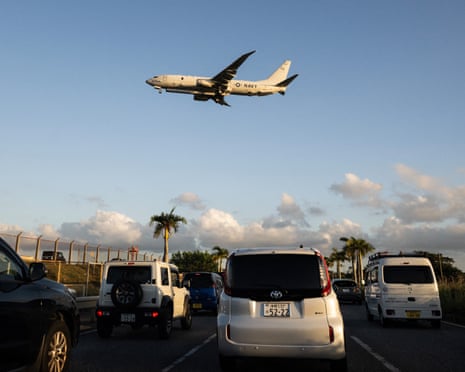 A US navy jet lands at Kadena air base in Okinawa, Japan. The US military has banned vehicles made by China’s BYD at the base. Photograph: Andrew Caballero-Reynolds/AFP/Getty Images
theguardian.com
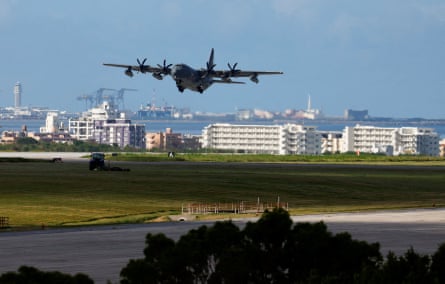 A US military plane takes off at Kadena air force base on Japan’s southern island of Okinawa. Photograph: Issei Kato/Reuters
theguardian.com
The US military has banned all vehicles made by Chinese electric carmaker BYD from Kadena airbase on Okinawa, one of America's largest overseas installations, with restrictions applying to privately owned cars, taxis and delivery vehicles alike. Security personnel at the base gates have been instructed to turn BYD drivers around. "These vehicles present an unacceptable and unmitigable risk to our personnel and our mission," said Lieut Col Alli Stormer, a spokesperson for the US air force 18th Wing, in a statement.
No specific threat has been identified. According to South Korea's Yonhap news agency, the concern is potential information leaks via vehicle-mounted cameras, sensors and GPS devices. The ban is part of a wider Western effort to restrict Chinese smart technology in cars, phones and other connected devices over espionage fears — a push that has already given BYD a place on a Pentagon list of 188 Chinese firms believed to have military ties, alongside the automaker Nio, Alibaba and Baidu.
The asymmetry is the story. Every connected Chinese product is presumed a listening device; American equivalents are treated as neutral infrastructure the rest of the world must accept — see Starlink's on-again, off-again chokehold on Ukrainian military connectivity, throttled and restored at Washington's discretion. China, for its part, barred Tesla vehicles from some government compounds in 2021 over camera concerns, then lifted the restriction in 2024 after an endorsement from the country's top auto industry association.
The ban costs the US military nothing: tariffs have already kept BYD out of the American market, so no American base in the continental United States had any meaningful number of BYD vehicles to ban. Costless security signaling doubles as industrial policy — and as a message to Tokyo, where BYD launched its Racco electric minicar in July, about which bloc Japanese consumers are permitted to shop in.
Kadena would be directly involved in any crisis involving China, Russia or North Korea. Its inventory includes the Typhon missile system, capable of firing Tomahawks as far as 1,600km, putting parts of China and Russia within range. BYD overtook Tesla as the world's biggest seller of battery-electric vehicles in 2025 and is expanding into Japan, the world's fourth-largest car market — a market the base's gate guards will now be policing one delivery van at a time.