
Korean farmer hosts eleven mating eyeworms
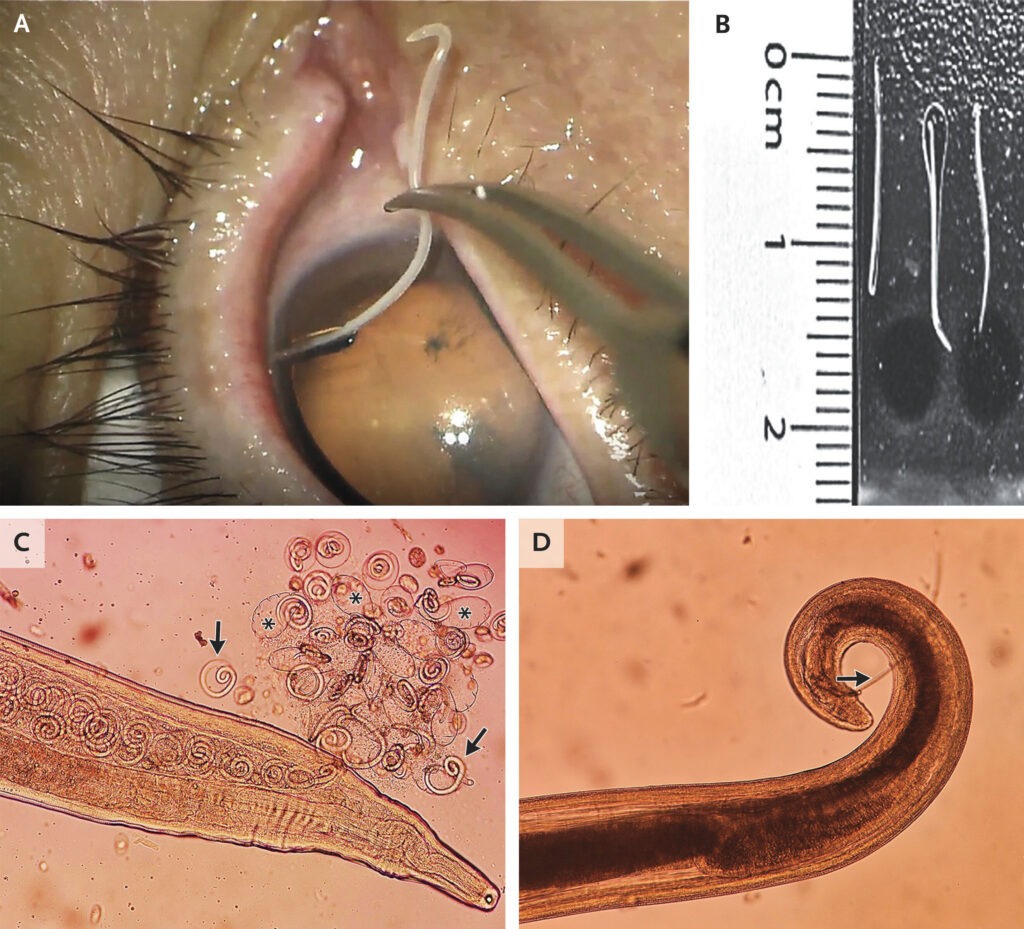
Thelazia callipaeda removed with forceps after two months of feeling them move, pregnant females burst larvae as doctors pluck them out
Images
 Credit:
New England Journal of Medicine, 2026
 Photo of Beth Mole
arstechnica.com
A 71-year-old crop farmer in South Korea spent two months feeling something stuck in both eyes before ophthalmologists found the cause: multiple whitish roundworms, moving freely across his eyeballs. The case, published in the New England Journal of Medicine, ended with doctors numbing his eyes and pulling out eleven adult worms with fine forceps — some of which were pregnant, their coiled larvae bursting out of the females' uteri as they left the eye.
The parasites were identified as Thelazia callipaeda, eyeworms that ordinarily infest cats and dogs but occasionally find their way into human eyes. The species is widespread across Asia and has established populations in parts of Europe, and its life cycle depends on flies that feed on tears. The fly ingests first-stage larvae from an infested eye, incubates them through two molts, and then deposits third-stage larvae onto the next watery eyeball it visits. One final molt later, the worms settle in as adults — and mate on the surface of the eye itself.
The patient's conjunctival blood vessels had enlarged enough to cause visible redness, and the corneal cells had begun eroding. Female T. callipaeda are ovoviviparous: embryos develop inside eggs within the mother's body, and the females release dense broods of coiled larvae intended for the next fly. Some of the worms removed from the farmer were plump with embryonated eggs; doctors watched larvae burst out of the extracted females.
There was no drug for it. The infection was resolved entirely by physically removing every adult worm, and no antiparasitic medication was required. A follow-up two months later confirmed the symptoms were gone and no worms remained.
The farmer's diagnosis, before anything else, was the sensation of the worms themselves moving in his eyes — the one symptom no laboratory test was needed to confirm.