
Brent crude falls more than 6 percent as Iran diplomacy gathers pace
Qatari mediators fly to Tehran while Houthi strikes on Saudi targets continue, 40 percent of Gulf crude now bypasses Hormuz by pipeline
Images
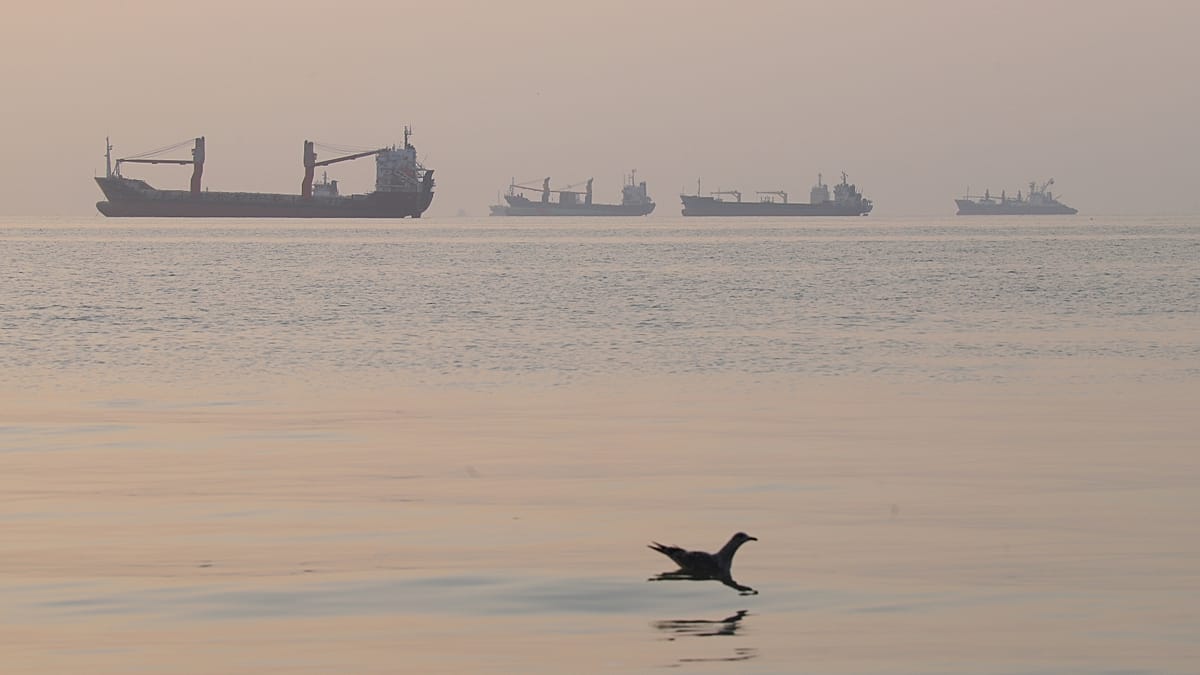 Oil plunges over 6% as Iran diplomacy seemingly gathers pace
euronews.com
Brent crude fell more than 6 percent on Monday morning, sliding from about $117 a barrel at Friday's close to around $110 as diplomatic traffic converged on Tehran. Friday's close had been Brent's highest since March 19 — roughly 2 percent below the $119.5 peak recorded in early March, when the war with Iran began.
The retreat recovers little of the ground the war added. Before the first strike, Brent traded near $72; the conflict lifted it by more than $40 a barrel at its height, and the collection of that premium has not been evenly distributed. American producers and the US Treasury have banked the difference — President Donald Trump has spent the war boasting that the United States is making a fortune from the prices it produced — while European importers and Asian refineries paid them. On Sunday, Trump was still framing the choice on Fox News — "do I make a deal with them, or do I finish them off?" — and defended his reasons for starting the conflict at a campaign stop in Port Huron, Michigan, where he cited the Wall Street Journal to claim that oil flowing out of the strait now exceeds pre-war levels.
The flows beneath the price have already restructured themselves. According to the ship-tracking firm Kpler, Gulf crude exports excluding Iran returned to pre-war levels in September, and around 40 percent of Gulf crude now bypasses the Strait of Hormuz through pipelines, against 17 percent before the conflict. The waterway that carried a fifth of the world's oil has lost nearly a quarter of its share to steel on land — a shift that outlasts whatever the talks produce.
Nor has the shooting stopped for the negotiations. The Houthis said they struck Saudi airports and energy facilities again over the weekend, and Riyadh reported shooting down further missiles and drones. Qatari mediators travelled to Tehran on Sunday in coordination with Washington, and Saudi Arabia's defence minister, Pakistan's army chief and Turkey's intelligence chief were due in the Iranian capital on Monday for regional security talks.
Equity markets read the traffic as de-escalation. The pan-European Stoxx 600 and the Euro Stoxx 50 rose more than 0.6 percent, Germany's DAX led European gains, and French assets drew added relief after Moody's unexpectedly kept France's Aa3 rating on Friday evening. The week ahead brings rate decisions from the Federal Reserve on Wednesday, the European Central Bank on Thursday and the Bank of Japan on Friday, with roughly one in three S&P 500 companies reporting earnings.
At around $110, Brent still trades more than 50 percent above the $72 it fetched before anyone fired a shot.