
Toothpaste fails as spot treatment
Menthol and sodium lauryl sulfate inflame skin and worsen scarring, dermatologist recommends azelaic acid and hydrocolloid patches
Images
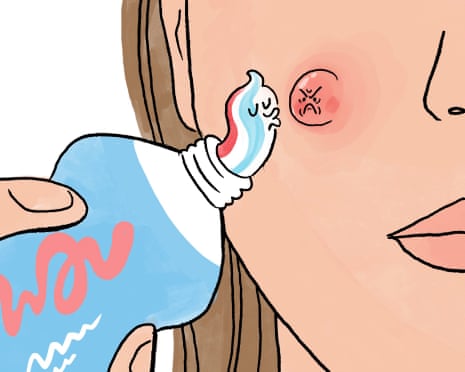 Illustration for 'Is it true' column Oct 24th 2026 Illustration: Edith Pritchett/The Guardian
theguardian.com
Toothpaste does not treat spots, and the ingredients relied on to dry a pimple out are the ones that inflame it. That is the verdict of Dr Rosalind Simpson, consultant dermatologist and associate professor at the University of Nottingham, settling a home remedy that has done the rounds for years.
A spot forms when a sebaceous gland becomes plugged and inflamed; acne develops from a combination of blocked pores, increased sebum production and changes in the bacterium Cutibacterium acnes. The case for toothpaste rests on the belief that baking soda or alcohol will dry a pimple until it appears smaller. Simpson confirmed that one or two ingredients can dry the skin temporarily — and that menthol and sodium lauryl sulfate, which produce the foam and the tingle, are highly irritating to the skin. Applied to the face, they can increase inflammation and worsen both scarring and pigmentary change.
The alternatives are less dramatic. Hydrocolloid acne patches reduce lesion size, redness and inflammation; a warm cloth on the affected area helps; and over-the-counter topical treatments such as azelaic acid do the job the toothpaste was borrowed for — though topical treatments typically require twelve weeks of use to reach their full anti-inflammatory effect. Simpson advised against picking or squeezing, which raises the risk of scarring, and recommended prevention through products that reduce inflammation and carry antibacterial properties. Where acne does not respond to simple skincare measures, she pointed to medical attention, with Acne Support and the British Association of Dermatologists as the places to start.
Something in the tube does dry the skin. It just travels with the ingredients that inflame it.