
Colombo has 15 public toilets for half a million daily commuters, 462-page development plan makes no mention of public toilets
Guard forfeits a day's pay rather than risk infection
Images
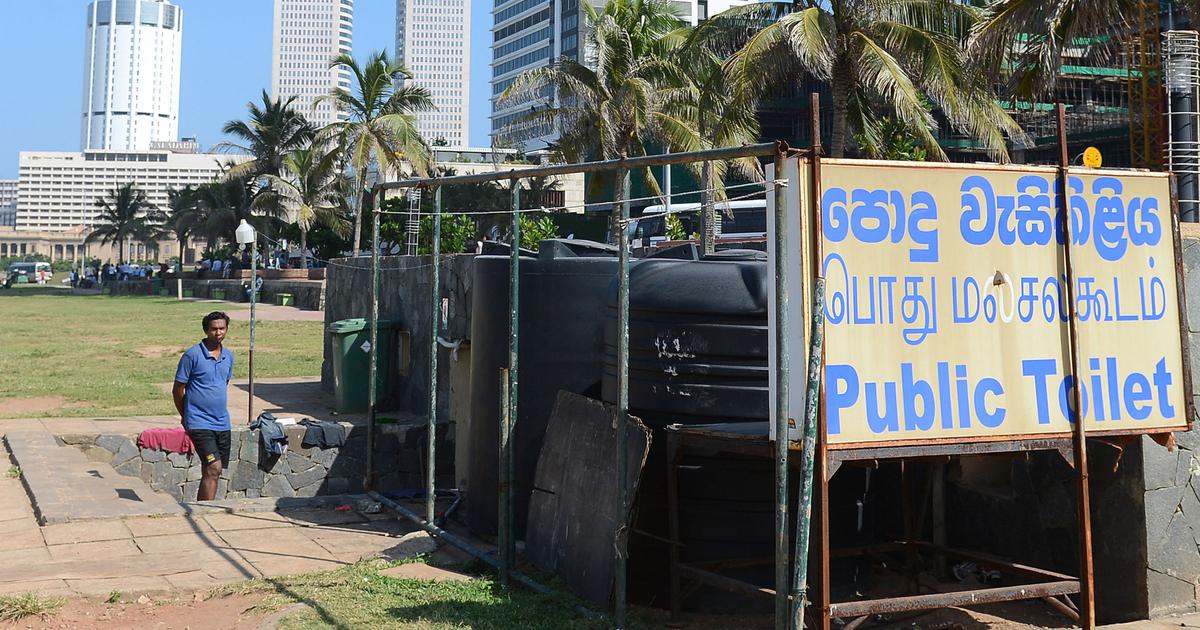 A Sri Lankan resident walks past a public toilet in Colombo in November 2017.
|
AFP
scroll.in
Sumithra Randenigala, a 26-year-old security guard in Colombo, calls in sick when she has her period, or forfeits a day's pay — not because menstruation makes her ill, but because between home and workplace there is no toilet she is allowed to use. "Menstruating monthly is not an illness," she told Scroll. The toilet on her two-hour train from Bentota is locked or blocked; at the Sri Lanka Tea Board, where she works, guards are not permitted to use the office toilet.
She is one of roughly 500,000 workers who commute into Colombo each day, according to the United Nations Food and Agriculture Organization, joining some 612,000 residents in a city of more than 13,000 people per square kilometre against a national average of 325. The Global Public Toilet Index counts 15 working public toilets for those commuters — about three per 100,000 people, against roughly 92 in Chiang Mai, the index's "global capital of public toilet access." Deciding how many should exist, and where, is split between the Colombo Municipal Council and the Urban Development Authority, a division that leaves no single organisation accountable. Mayor Vraie Cally Balthazaar, the city's second female mayor, says the 15 toilets have not been upgraded since 2019 and that she aims to improve them within the three years remaining in her term.
Researchers at the Colombo Urban Lab, Iromi Perera and Meghal Perera, describe what the headcount leaves out: under heat, women drink less water through the working day, or take time off to go home, rather than use facilities that are not there. Randenigala left school at 14, where she learnt about urinary tract infections in class; after several painful ones, she now forfeits a day's wage rather than risk the infection that would cost her a week of unpaid sick leave.
The city, meanwhile, is building. Port City's new marina stands on reclaimed land, where steel skyscrapers catch the setting sun; luxury condominiums tower over the colonial-era Fort, an area slated for urban regeneration. Asked what it planned for public toilets, the Urban Development Authority referred the question to its City of Colombo Development Plan for 2022 to 2031, a document promising streetscapes, promenades and "a safe and convenient sidewalk for pedestrians."
The plan runs to 462 pages. Public toilets are not mentioned.