
Elvis rights holders sue Anthropic over 274 songs used to train AI
Complaint says Claude still recreates the songs despite post-lawsuit guardrails, firm already paid authors 1.5 billion dollars in largest US copyright settlement
Images
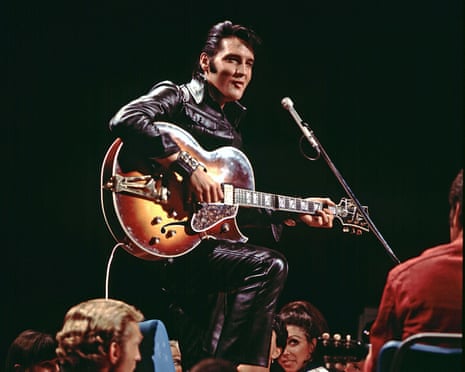 ‘The defendant … has built its entire business model based on copyright infringement at a scale never seen before,’ the lawsuit says. Photograph: Universal Pictures. All Rights Reserved./PA
theguardian.com
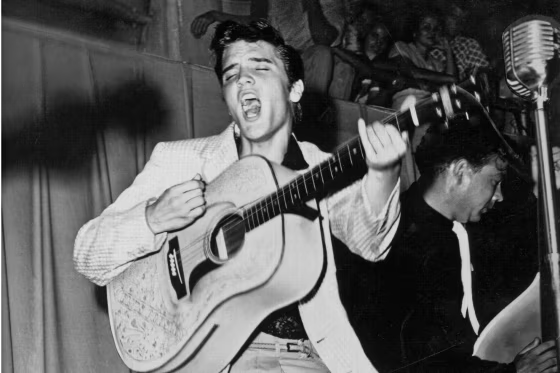 Elvis Presley performs in 1955.
nbcnews.com
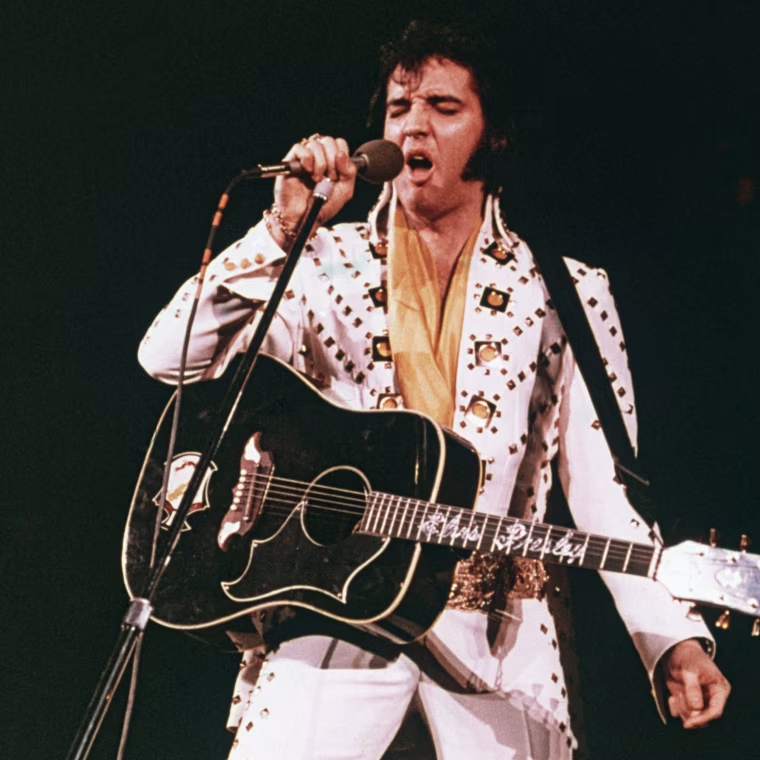 Elvis Presley performs circa 1975.Fotos International / Getty
nbcnews.com
Authentic Brands Group, the licensing company that controls Elvis Presley's name, likeness and music, sued Anthropic on Friday over 274 Presley songs — "Can't Help Falling in Love," "All Shook Up" and "Return to Sender" among them — that it says were used to train the Claude models without license or payment. The suit, first reported by Billboard and filed alongside other companies, trusts and individuals holding rights to the catalog, seeks up to $150,000 per work in statutory damages — $41.1 million in total — plus a permanent injunction and an order that all unauthorized copies be destroyed.
The filing describes Anthropic as having "built its entire business model on infringing copyrights at an unfathomable scale." Anthropic's response runs one sentence: "We disagree with the claims and intend to defend this case fully." The company has practice. Last year it agreed to a $1.5 billion settlement with authors over pirated books used in training, the largest in American copyright history — money, but no precedent. In January, Universal Music, Concord and ABKCO expanded their lyrics lawsuit against the firm; BMG, Sony Music Publishing and Warner Chappell filed their own this year; and the publisher Round Hill, represented by the same Richard Busch who leads the Presley case, has filed one of the newest complaints. In a statement, Busch called his clients' songs "some of the most iconic of all time."
What distinguishes this complaint is its evidence on the output side. Whether ingesting copyrighted works as training data constitutes infringement has yet to produce a definitive ruling — the cases that might have answered it keep ending in settlement. This filing documents what comes out: asked recently to re-create specific Presley songs "for a modern audience," Claude complied, producing, in the complaint's words, "same structure, same hooks reused with light rewording, and full sets of verses/choruses/bridges" — which the plaintiffs call edging "past 'inspired by' into reproducing the copyrighted song, even when the words are swapped out." They say it continued "even after the Defendant supposedly put up 'guardrails' after being sued."
The plaintiff is, in one sense, an ideal one. Presley died in 1977. The rights sit with a licensing platform that has no living artist to embarrass, no performances to protect and nothing at stake but rent on a catalog nearly half a century old. That cuts both ways. A win would turn training-data licenses into the next royalty line on dead men's catalogs, and every estate with a comparable songbook holds the same paper. A loss would strip the back catalog of its last moat against synthetic songs assembled from its own hooks.
For a defendant that has already paid once, $41.1 million at the statutory maximum is not the number anyone is watching. Presley has been dead for nearly fifty years. What remains is a catalog, a licensing company, and a complaint that a machine sings his songs on request.