
Yaoundé razes its green belt for housing and car parks
Wooded cover in Cameroon's capital fell from 28.6 to 5.4 percent as the city grew past five times its 1984 footprint, the park where a maths teacher fell in love is now a private car park
Images
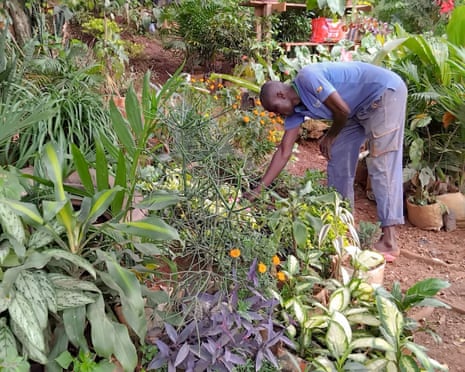 Jean-Baptiste Tchengang, a self-taught gardener, in his plot in Nkolbisson, on the outskirts of Yaoundé. The city’s green space has fallen from 28.6% to just 5.4%. Photograph: Christian Essimi
theguardian.com
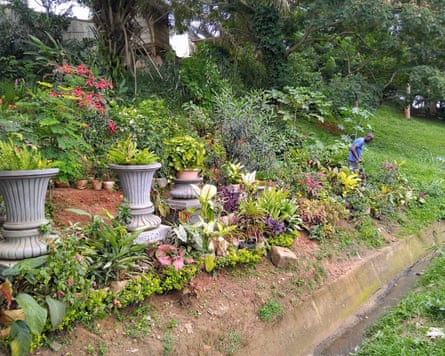 Jean-Baptiste Tchengang in his garden in Nkolbisson. Photograph: Christian Essimi
theguardian.com
Yaoundé's wooded cover has fallen from 28.6 percent of the city's land to 5.4 percent, and the public park in the Essos neighbourhood was razed last year to make way for a private car park. The Guardian reports from the Cameroonian capital on a city that has lost almost all of its canopy while its footprint multiplied more than five times.
A University of Yaoundé study traces the expansion: 85 square kilometres in 1984, more than five times that area by 2024. Cameroon's housing ministry estimated a national housing deficit of 2.5 million units in 2020, felt most acutely in the capital, and much of the growth has taken the form of informal settlements — built without permits across the valleys, wetlands and hillsides of the former green belt. The UN puts Yaoundé's population at 5.1 million.
What disappears with the trees is infrastructure. Jean-Marie Essoh, a climate specialist in the city, notes that the canopy absorbed rainwater, slowed runoff and held soil together, while cooling a city that concrete now bakes. Those functions do not vanish when the trees come down; they are transferred to whoever lives downhill or downstream.
Replacement runs largely through a 34-year-old self-taught gardener. Jean-Baptiste Tchengang grows ornamental plants and shrubs on a plot in Nkolbisson — species chosen because they multiply easily and fit into small yards — and has run community workshops on composting and local plant preservation since 2022. He says he has trained or helped about 300 people, ten of whom have built gardens on abandoned plots that now yield vegetables, medicinal plants and somewhere to meet. In July he gathered about 50 young conservation volunteers who wanted to learn his methods in order to argue their own case to the authorities. When funds allow, the city council buys his shrubs and pays him to plant and maintain them; the work is not regular. His summary of the conditions: no funding, plants get stolen, and access to land is the hardest part.
The people who used the old green spaces carry the cost of their removal. Sosthène Hugues Ngono, a 36-year-old mathematics teacher, used to come to the Essos park to clear his head, meet people and — in his words — fall in love, more than once. "It wasn't just a park," he told the Guardian.
The site now charges for parking.