
Nationwide cuts 275 jobs after Virgin Money takeover
Britain's largest building society follows June's 600 losses with back-office consolidation, 700-branch pledge survives while the mutual runs a bank's playbook
Images
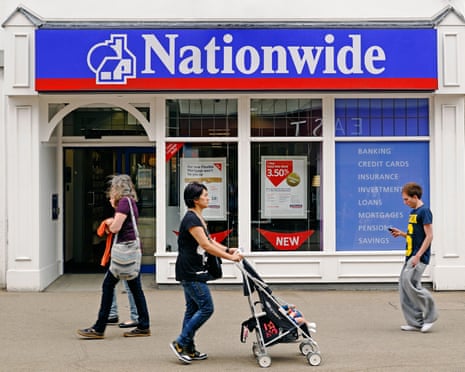 Nationwide said no customer-facing staff would be affected. The cuts are to fall across its retail division and are on top of the 600 job losses announced in June. Photograph: PhotoEdit/Alamy
theguardian.com
Nationwide told staff on Wednesday that another 275 jobs will go — the second round of cuts since the building society formalised its £2.9bn takeover of Virgin Money in late 2024, and the follow-up to 600 losses announced in June. None of the affected roles are customer-facing. All sit inside the retail division, spread across mortgages, HR, the chief operating officer's office, customer operations, communications and finance.
The stated purpose is to "simplify" operations and "remove duplication" — the standard vocabulary of any post-merger integration. When the takeover completed, Virgin Money brought more than 7,000 staff into a society of roughly 18,000; the combined workforce is now estimated at about 27,000, after the 875 job losses announced so far. Executives had already confirmed in 2024 that there would be "limited workforce changes" to address overlapping roles. A spokesperson said the current cuts are not linked to the growing use of AI. Separately, Barclays disclosed 5,000 job cuts as part of cost-saving plans driven by advances in AI.
Nationwide is Britain's largest building society, owned by its members and long marketed as the alternative to shareholder banks. The distinction has always lived on the high street: the society has pledged to keep its 700 branches open until at least 2030, even as it removes duplication everywhere the customer cannot see. But a mutual that buys a listed bank inherits the bank's logic. Once the balance sheet carries a credit-card book and a takeover's worth of overlapping head offices, "for the benefit of members" converges on ordinary bank behaviour. Sweden's savings banks walked the same road — the mergers that produced FöreningsSparbanken ended in Swedbank, a listed bank like any other. Ownership structure buys customers a press release; the organisation chart does the rest.
The society says it is supporting affected staff through retraining and redeployment, and that no customer-facing colleagues are at risk. Half-year results arrive on November 19. The 700 branches stay open until at least 2030 — the jobs behind them are being simplified.