
Ultra-Orthodox draft exemptions shape Tuesday's Israeli election
Netanyahu depends on Haredi parties to stay in power, study stipends cost 35 billion shekels a year as military police arrest draft dodgers
Images
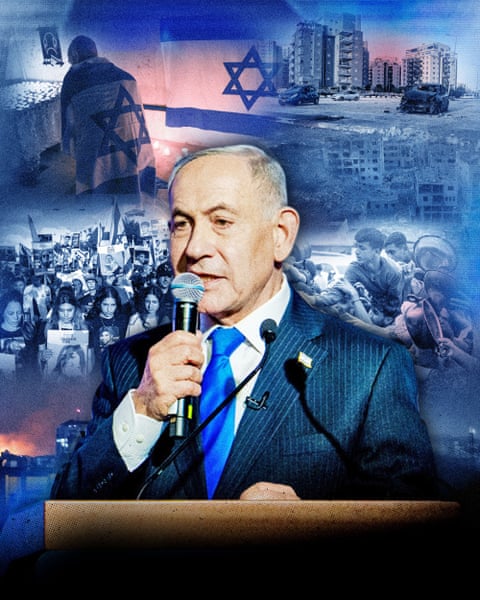 Benjamin Netanyahu first become prime minister 30 years ago and has held the office for more than 19 years. Composite: Guardian Design/Getty Images/AFP
theguardian.com
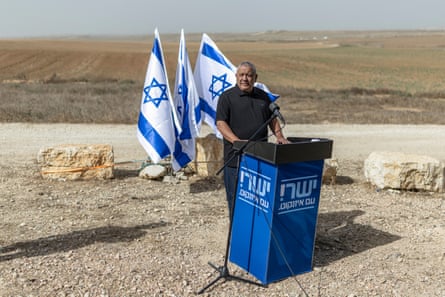 Gadi Eisenkot, a former army chief of staff and head of the Yashar party, delivers an address on the campaign trail. In an obvious reference to Benjamin Netanyahu, he has called for a ‘country without lies’. Photograph: Ilia Yefimovich/AFP/Getty Images
theguardian.com
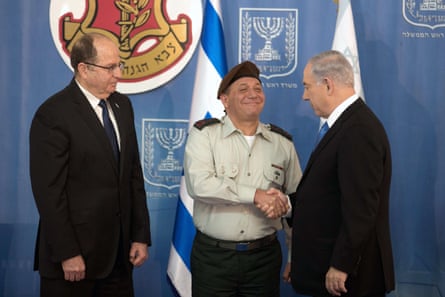 Eisenkot shakes hands with Netanyahu at a swearing-in ceremony in Jerusalem in 2015 attended by the then defence minister, Moshe Ya’alon. Eisenkot has pledged to wipe out Hamas. Photograph: Menahem Kahana/AFP/Getty Images
theguardian.com
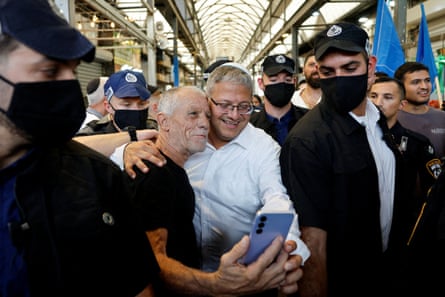 Itamar Ben-Gvir, centre, the leader of the Jewish Power party, on the campaign trail in Ramla. The far-right politician is calling for more Jewish settlements in the West Bank and harsh measures against Palestinians. Photograph: Amir Cohen/Reuters
theguardian.com
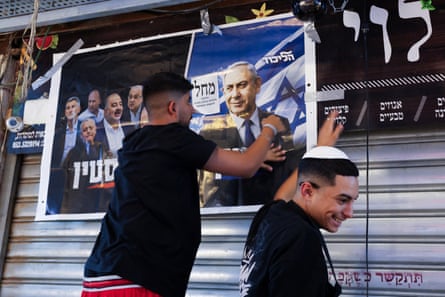 Netanyahu campaign posters are put on display in Jerusalem. The prime minister is pitching the election as a choice between himself and the Arabs. Photograph: Kevin Coombs/Reuters
theguardian.com
 Sebastian Usher
bbc.co.uk
 Image caption, Ultra-Orthodox Jews have staged many protests against being drafted into the military
bbc.co.uk
 Image caption, The Haredi birth rate is higher than in the rest of Israeli society
bbc.co.uk
 Image caption, Protesters have blocked key highways
bbc.co.uk
 Image caption, Benjamin Netanyahu is relying on Haredi support which may not materialise
bbc.co.uk
Israel votes on Tuesday in an election that no alliance is expected to win outright, and the ultra-Orthodox parties are positioned to decide who governs. Beneath the coalition arithmetic sits the state's oldest bargain: exemption from military service for the Haredim, sustained today by religious-study stipends that cost the government 35 billion shekels — £8.4 billion — a year.
Benjamin Netanyahu, who first became prime minister three decades ago and has held the office for more than 19 years, needs the ultra-Orthodox parties to remain in power. His lead challenger is Gadi Eisenkot, a former chief of staff of the Israel Defence Forces and the son of working-class Moroccan Jews, who entered politics four years ago and leads the Yashar party on a call for "a country without lies" and US-style term limits for the premiership.
The schism has reached the streets. In early October, military police came to Modi'in — the city halfway between Jerusalem and Tel Aviv where Eisenkot held his campaign rally — to arrest a young Haredi man who had failed to report for duty, and ultra-Orthodox men in white shirts, black fedoras and long frock coats clashed with the officers. Until recently the community was exempt outright. The rabbis' argument is survival: army service would expose yeshiva students to influences that draw them away from the community, and fidelity to its traditions is, in their telling, vital to the survival of Israel and the Jewish people.
The arithmetic runs the other way. The ultra-Orthodox are about 14 percent of the population and have a higher birth rate than other Israelis. Many are outside the workforce, taught in a separate school system built on the Torah and the Jewish Bible. The community sees its social contract with the state as under pressure — while the war in Gaza remains unresolved, settler violence rises in the West Bank, and national security and the economy top the electorate's concerns, with the smaller parties expected to determine who governs.
The exemption dates to the state's founding, when the Haredim were a small community of Holocaust survivors. On current birth rates, they will make up a third of Jewish Israelis by 2050.