
Musk says Ukraine broke Starlink terms with offensive drone strikes
Kyiv declares stable connection ten days after speed limits, each party blames another for what Zelenskyy calls a planned operation
Images
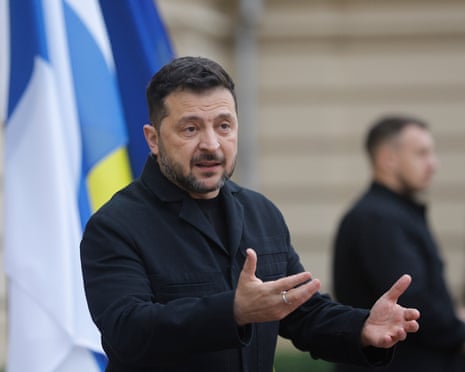 Ukraine’s president, Volodymyr Zelenskyy, previously warned any restriction to Starshield system would ‘bring a lot of human losses’. Photograph: Sergey Dolzhenko/EPA
theguardian.com
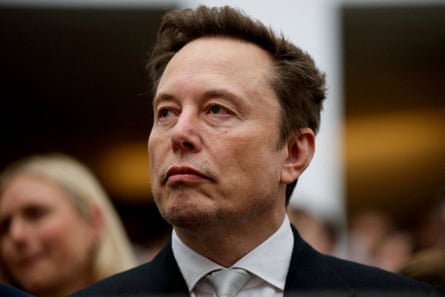 Musk blamed the limits on Starshield on the Trump administration, writing on X that the systems were ‘owned and controlled by the US government’. Photograph: Evan Vucci/Reuters
theguardian.com
Ukraine's military has announced a "stable connection" to Starlink, ten days after sudden speed restrictions failed several combat missions, hampered the interception of Russian attack drones and forced the cancellation of strikes behind enemy lines. The restrictions now have an explanation. Elon Musk, whose SpaceX produces the terminals, wrote on social media that Ukrainian forces "violated Starlink terms of service and used it for offensive drone strikes to kill people. That loophole was closed last week."
According to the Guardian, the limits capped the terminals' operations at speeds of 160km/h (99mph). Several combat missions failed earlier this month as a result, and some operations to strike behind Russian lines were cancelled. The cuts coincided with Donald Trump's announcement of a US deal to buy Russian diesel — and with Russian ballistic missiles reaching Ukraine without advance warning from Washington.
Who imposed them is a question every participant answers with a different name. Trump: "I don't know if it was anybody, but it wasn't me, and I don't think it was Elon." Secretary of state Marco Rubio: the president "has nothing to do with the decisions that are made by Starlink and Starshield and by Mr Musk," and "can't direct that company to do anything." Musk, in the other direction, wrote that the systems are "owned and controlled by the US government" and that "any limits on speed or usage are decided by the US military and ultimately Potus." Vice-president JD Vance backed him, saying Musk "doesn't want to get in the middle of what is a war between two state actors without the United States government effectively directing him on what to do."
Volodymyr Zelenskyy declined to pick one: "It was a message from [the] American government to limit the speed... And technically, SpaceX did it." The terminals — produced by SpaceX, managed by the US government under the Starshield programme — are a key component of Ukraine's military operations; its drone interception and long-range strikes run on them. Rubio's assurance that no president can direct the company means no electorate can either. A private company's terms of service now decide what one belligerent may target.
The stability announcement has a companion statement. Serhiy Beskrestnov, a Ukrainian presidential adviser, said Ukraine is now "physically unable" to use Starlink for long- and medium-range attack drone operations. Both statements can hold at once: the link works, and the offensive functions are closed. Zelenskyy has warned the restrictions would "bring a lot of human losses... of course people would die."
The speed limits, he noted, apply only to Ukrainian terminals. Starshield terminals in EU countries face no such restrictions. "In other words," Zelenskyy said, "this is a planned operation."