
Indian border police chief Kapur says face-offs with Chinese troops continue in Arunachal
Patrol friction persisted through three rounds of talks and Xi's September BRICS visit, foreign ministry blames occasional disturbances on Chinese forces leaving patrolling patterns
Images
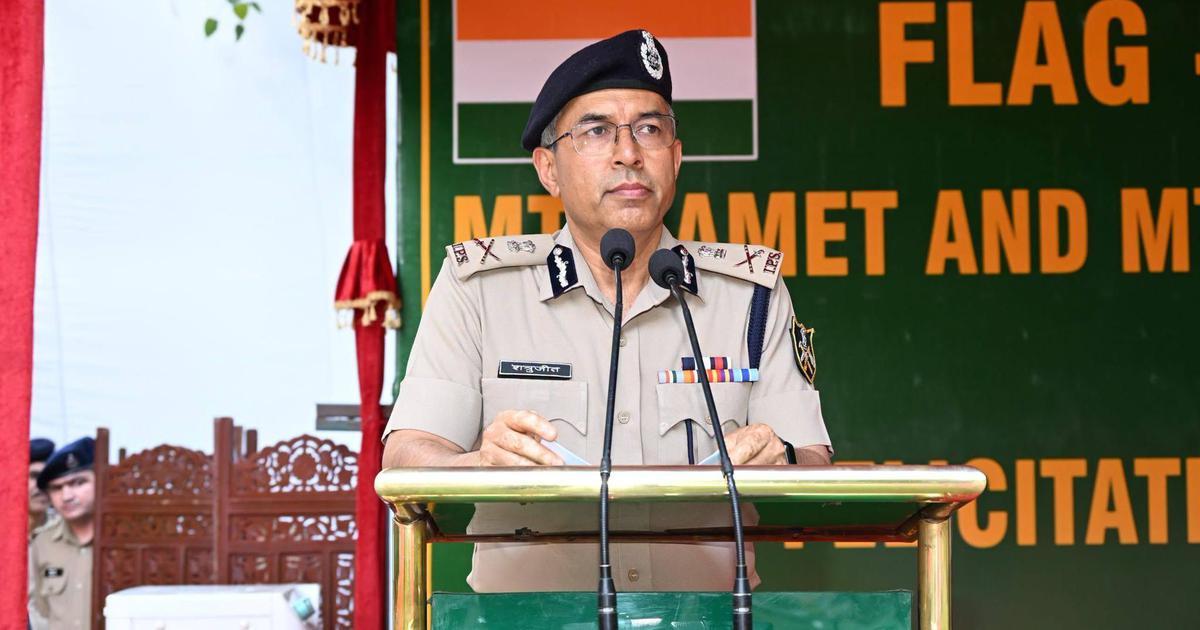 File image of Indo-Tibetan Border Police Director General Shatrujeet Singh Kapur
|
ITBP/Facebook
scroll.in
Face-offs between Indian and Chinese troops have taken place at several locations along the Arunachal Pradesh border in recent days and "still continue," according to Shatrujeet Singh Kapur, director general of the Indo-Tibetan Border Police, the central force that guards the 3,488-kilometre Line of Actual Control. Speaking on Thursday at an event in Alwar, Rajasthan, Kapur gave official confirmation to friction the Indian military and the Union government had declined to comment on since it was first reported in July.
Those July reports described a stand-off near Taksing in Upper Subansiri district, where a routine Indian patrol met Chinese troops near Maja. After a brief confrontation both sides withdrew, and days later the People's Liberation Army returned in larger numbers and pitched tents six to seven kilometres inside India's perception of the line. In August the foreign ministry said only that peace and tranquillity along the border was of "utmost importance" and that the "state of border affairs" would affect bilateral relations in general.
The confirmation landed in the middle of a thaw. India and China have held three rounds of high-level border talks since July, and Xi Jinping visited Delhi for the BRICS summit in September — a trip that capped the easing underway since 2024 after years of military stand-off in Ladakh. Defence journalist Rajat Pandit noted that the face-offs, including at Taksing, were under way while Xi was in the capital. On Friday the Congress party accused the BJP-led government of "suppressing" reports of skirmishes since July, complaining that Prime Minister Narendra Modi "was seen joking around" with the Chinese president at the summit rather than acting.
The foreign ministry's own account, delivered on Friday by spokesperson Randhir Jaiswal, was carefully bounded. The situation along the border "gets disturbed from time-to-time when Chinese forces diverge from established patrolling patterns," he said, and both sides rely on "existing diplomatic and military mechanisms," having agreed to discuss ways to "improve understanding of the LAC in appropriate areas."
The patrolling patterns are being rewritten by construction. In June the Arunachal Times quoted the Nah Welfare Society alleging that Chinese soldiers were occupying areas near the line, building roads and military camps, and taking over grazing grounds; more roads mean the two sides' patrols meet more often, not less. China claims most of Arunachal Pradesh as "South Tibet," calls it Zangnan and has long renamed its places, a practice India rejects.
Kapur said his force is stepping up preparations for modern warfare, with drones, specialised commandos and new underground shelters. The ministry speaks of improving understanding along the Line of Actual Control; the force that patrols it is digging in.