
Colombia teaches Gaza to search for its missing without waiting for the war to end
Unit born of the 2016 peace accord exports extrajudicial methods honed on over 100,000 disappeared, families accept truth without seeing perpetrators go to prison
Images
 Colombia teaches Gaza to search for its missing without waiting for the war to end
english.elpais.com
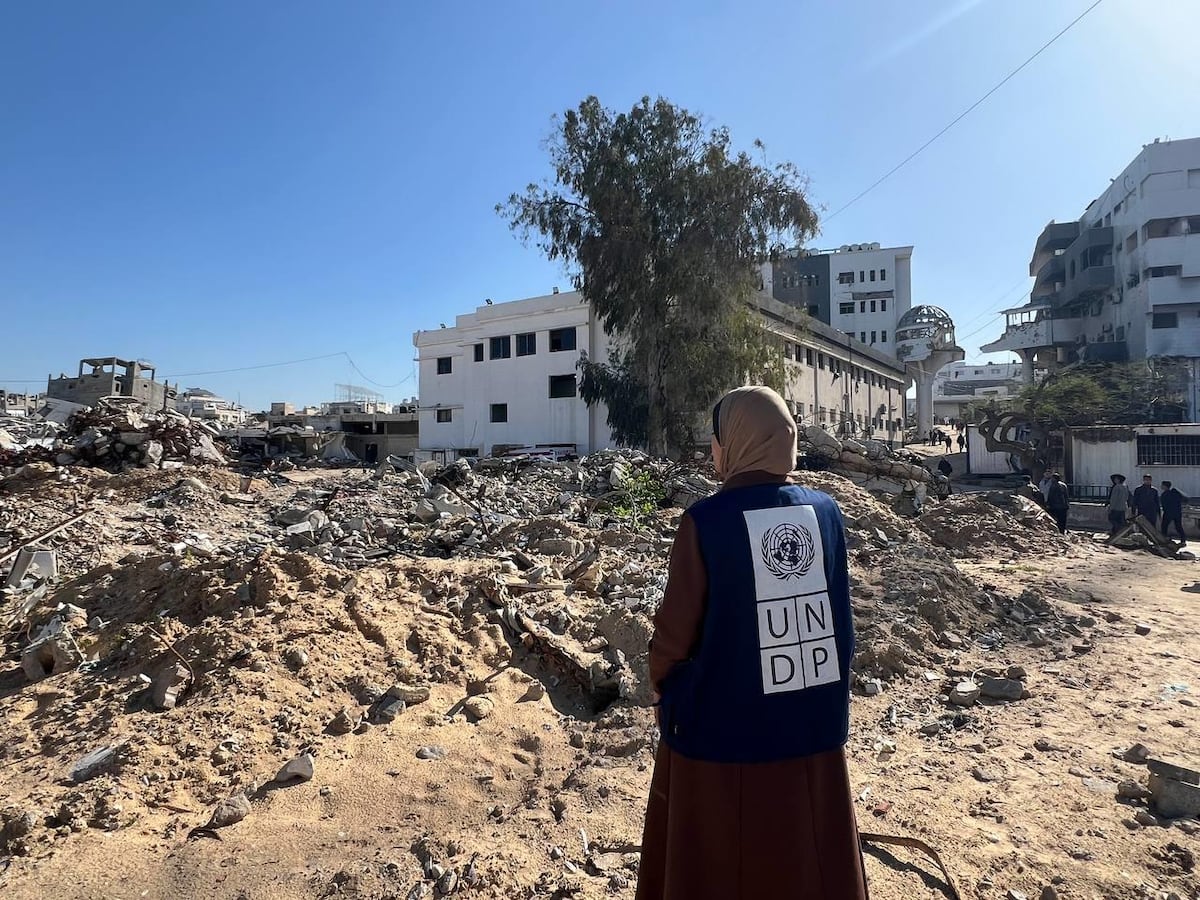
At a symposium in Bogotá marking ten years of Colombia's peace accord, the country's search unit for the disappeared has been teaching Palestinian counterparts how to look for the missing without waiting for the war to end. The Palestinian National Team for Monitoring Missing Persons estimates more than 10,000 people are missing in the Gaza Strip and believes over 8,000 lie under the rubble; it has individually documented more than 9,500 cases, 4,700 of them women and children.
Colombia's Unit for the Search for Persons Declared Missing (UBPD) was created by the 2016 accord as a humanitarian, extrajudicial body. Because it does not set out to determine criminal responsibility, its searches advance without waiting on courts — a design tested against a conflict that left more than 100,000 people disappeared. Omar Al-Assouli, strategic adviser to the UN Development Programme in Palestine, was in Bogotá for the anniversary meeting. "The first time we talked about this issue it was almost impossible to start the work," he told El País, "because people always think you have to end the war or have a peace agreement before starting the process of searching for the missing. But contact with the UBPD gave us the key."
What travels is a trade-off as much as a technique. Because the unit assigns no blame, it can move while the shooting continues, and the families it serves accept information without prosecution. "They do not need to see the people who made their relatives disappear go to prison," Al-Assouli said of Gaza's families. "What they are seeking immediately is the truth and information about them."
The practical lessons are mechanical. In Gaza, families hand the same testimony to different organizations and agencies, a repetition that wears on the searchers and scatters the record; the Colombian unit centralizes what it gathers. In Colombia the searchers are mostly women, operating under their own protection and accompaniment law, and the unit has built on their work rather than replacing it. What Gaza still lacks, according to Al-Assouli, is coordination, technical support and mechanisms to preserve information long enough for recovery to begin.
Colombia's accord turned ten this month and the caseload of its search unit is still open. In Gaza, the work possible now is testimony; the digging waits for the bombing to stop.