
Most UK levelling-up projects still unfinished years after funding allocated
Guardian review finds 821 of 1,347 schemes not finalised and 73 councils without a single completed project, Grimsby begins spending a fresh £20m on a town centre still in scaffolding
Images
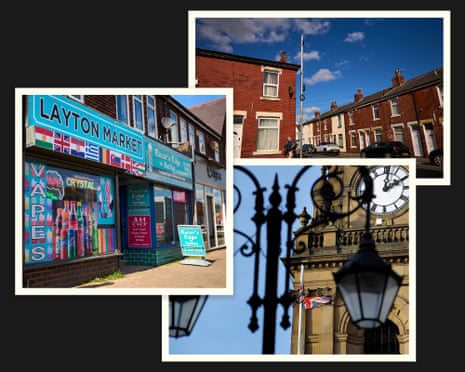 Data reviewed by the Guardian found 821 levelling up projects out of 1,347 were yet to be finalised as of May 2026. Composite: Guardian Design
theguardian.com
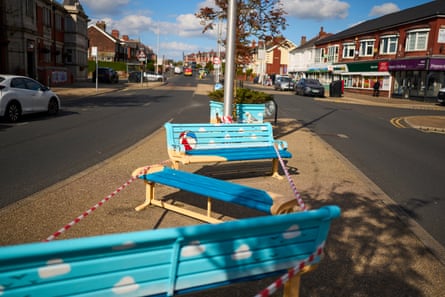 Layton in Blackpool was one of the areas earmarked for increased funding. Photograph: Christopher Thomond/The Guardian
theguardian.com
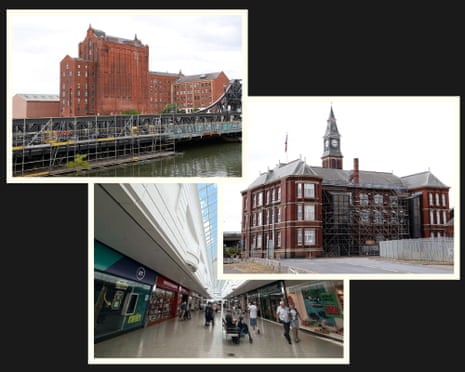 Alexandra Dock in Grimsby, inside the Freshney shopping centre, and a building near the docks. Composite: Guardian Design
theguardian.com
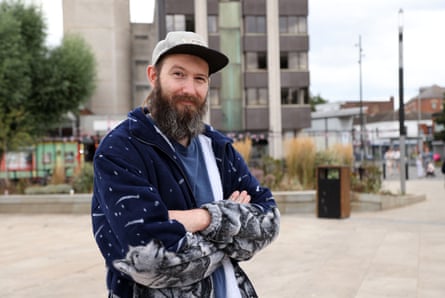 Jack Vincent, 35, says: ‘It is nice to see something happening for once.’ Photograph: Paul Marriott/The Guardian
theguardian.com
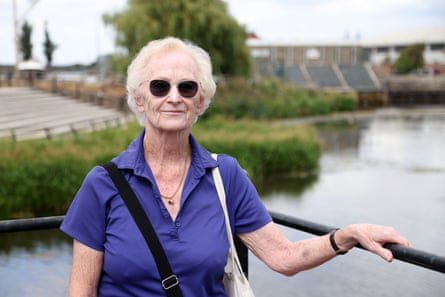 Resident Linda Hooper, 75, says the town has a good shopping centre. Photograph: Paul Marriott/The Guardian
theguardian.com
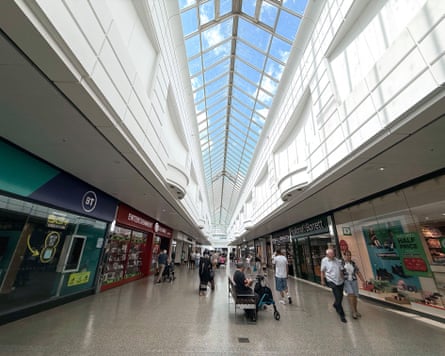 The Freshney shopping centre, part of which is being converted to house leisure facilities including a cinema and a food market. Photograph: Paul Marriott/The Guardian
theguardian.com
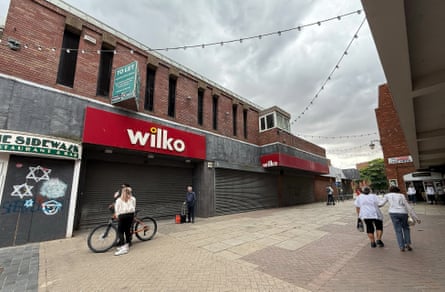 Despite regeneration efforts in Grimsby, many large commercial buildings including a former Wilko remain empty. Photograph: Paul Marriott/The Guardian
theguardian.com
Of the 1,347 projects funded through Britain's three main levelling-up funds, 821 had not been finalised as of May 2026, according to a Guardian review of programme data, and 73 council areas with accepted bids have yet to see a single project completed. The figures cover the Future High Streets Fund, launched in 2018 and due to complete in March 2024, the Town Deals of 2019 and the Levelling Up Fund of 2021, whose official deadline for spending the money passed in March this year.
Boris Johnson's government won the 2019 election promising to revive left-behind towns, with Michael Gove running the agenda. Under Labour the remaining funds were consolidated into a Local Regeneration Fund with a new deadline of March 2028, and the Guardian could identify only 59 projects completed since its data was collected. Wales, Scotland and Northern Ireland have seen slower delivery despite having fewer projects, while the north-west and Yorkshire — the two regions allocated the most — show low completion rates.
The successor, "pride in place", is a £5.8bn programme offering 284 deprived communities up to £2m a year for a decade, with local boards deciding how it is spent instead of councils competing for grants. Andy Burnham made reviving town centres a priority on becoming prime minister, and communities secretary Angela Rayner framed the change as an end to "Whitehall knows best". Jack Shaw, director of Groundwork Research, which supplied the data, called the ten-year certainty a step forward while noting that too many one-off commitments "have failed to translate into substantive improvements in communities or local economies". A month ago the government announced a further £210m to turn boarded-up shops into community spaces, and hopes of more ride on chancellor John Healey's first budget on 28 October.
Grimsby is the ground test. North East Lincolnshire council has drawn £59m in government-backed regeneration funds since 2021, the lion's share spent on the town centre, and is now beginning to spend a further £20m from the new programme. In June, King Charles opened a youth centre in a formerly derelict Victorian warehouse and a charity drop-in centre in a vacant bank; scaffolding still shrouds one end of the Freshney shopping centre, where part of the mall is being converted into a cinema and a food market. The town was once the world's largest fishing port; the trawler fleet has been shrinking since the 1950s, household names such as Debenhams have collapsed, shoplifting is rising, and more people now shop and bank online. "It is nice to see something happening for once," resident Jack Vincent told the Guardian.
Hopes of further regeneration money rest on the 28 October budget. In Grimsby, the scaffolding is still up.