
Sodium batteries line up to undercut lithium in stationary storage
China accounts for over 95 percent of installed or announced capacity for 2030, data centers and home storage become the first markets where weight stops mattering
Images
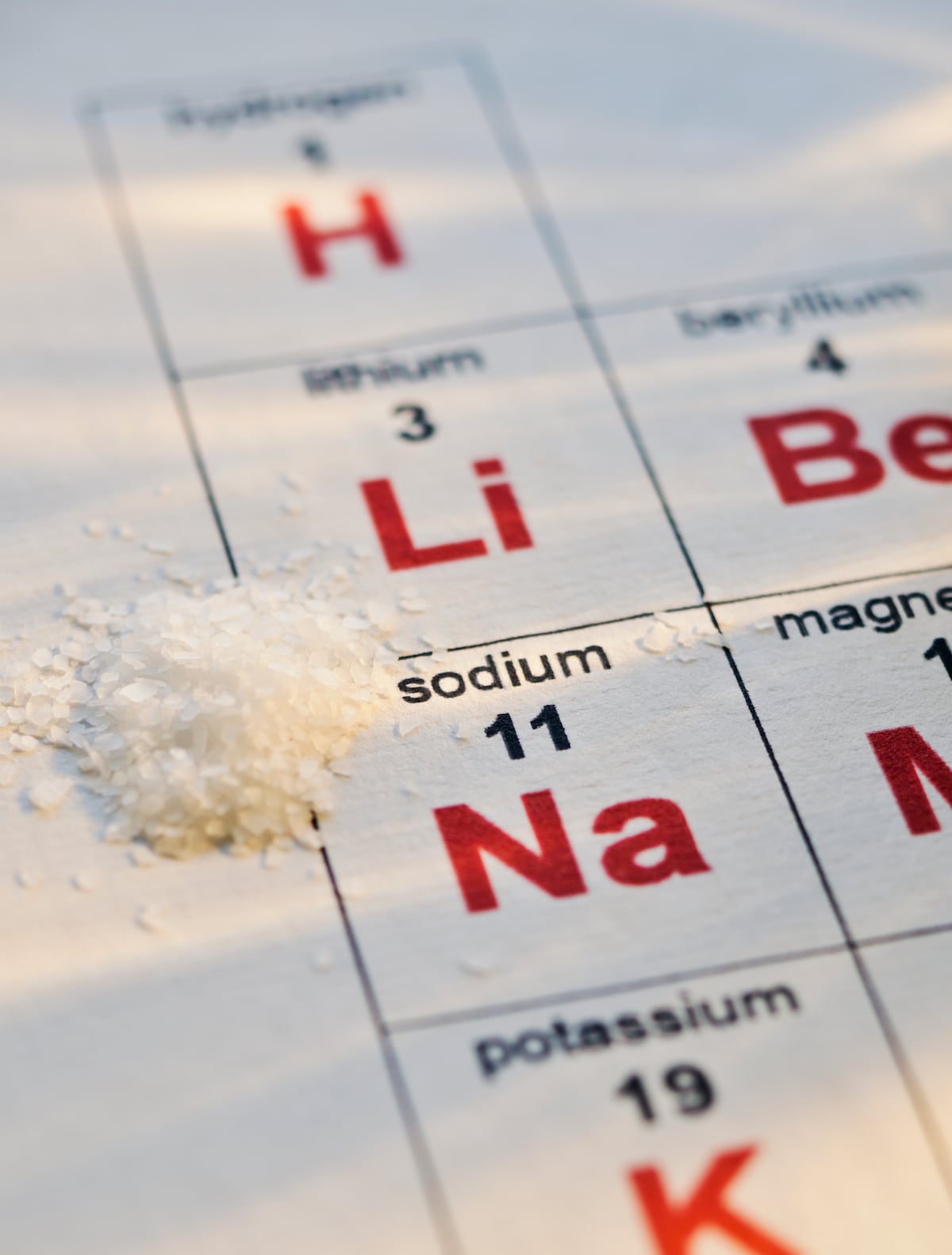 Sodium, the new white gold?
english.elpais.com
Sodium makes up about 2.8 percent of the Earth's crust. Lithium, the element the battery industry calls white gold, barely reaches 0.002 percent — and the boom built on that scarcity, with its soaring prices, fragile supply chains and geopolitical dependence, is now meeting an alternative made from one of the commonest elements on the planet.
According to the International Energy Agency, China accounts for more than 95 percent of installed or announced sodium battery capacity for 2030. Researchers at Spain's CIC energiGUNE and CIEMAT list sodium's advantages over lithium: fast charging and discharging, full discharge for easier transport and handling, a higher number of cycles, greater intrinsic safety, a wider operating temperature range, no dependence on critical elements, and a lower projected cost per unit of energy once factories reach scale.
Lithium keeps one decisive edge. It is light and small, allowing high-voltage, high-energy-density cells, as José Luis Tirado, professor of inorganic chemistry at the University of Córdoba, notes — and sodium batteries are heavier for the same stored energy. That rules them out of mid- and high-range electric cars, aviation, drones and smartphones. The niche where weight stops mattering is stationary storage: home renewable systems, industrial facilities and, above all, data centers, where sodium performs better at low temperatures, lasts more cycles and costs less, says Jon Ajuria, head of Sodium Technologies Research at CIC energiGUNE.
Marcos Lafoz of CIEMAT observes that some of today's lithium applications deliver performance 'likely excessive for the task,' and that a sufficiently mature, cheaper alternative 'will undoubtedly be used as a substitute when available.' All the experts consulted expect the two technologies to coexist rather than replace each other, and Ajuria cautions that sodium's competitiveness and its cost at market scale have not yet been proven.
For governments worried about dependence, the abundance is the point: because sodium is everywhere, more countries can produce it and reduce the vulnerability of their supply chains. But geology is not manufacturing, and the announcement pipeline runs overwhelmingly through one country.
The element is available almost everywhere. The factories that turn it into batteries are not.