
WSU vets perform root canal on 500-pound grizzly bear, Adak broke his canine tooth wrestling with his sister
While anesthesia remains the riskiest part of bear dentistry, tooth problems rank first among captive bear health complaints
Images
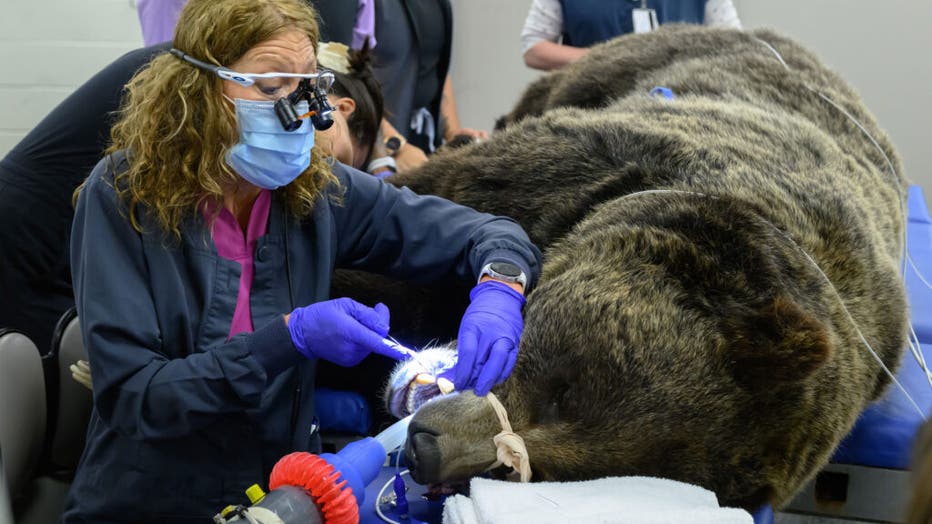 WSU Grizzly Bear Root Canal
fox13seattle.com
Veterinary specialists at Washington State University performed a two-hour root canal on Adak, an 11-year-old grizzly bear weighing 500 pounds, at the university's Veterinary Teaching Hospital in Pullman.
Adak lives at WSU's Bear Research, Education, and Conservation Center, where staff noticed his chipped canine tooth and suspected he broke off the tip while wrestling with his sister. "We recognized that this was a serious issue and immediately contacted the campus veterinarian," said Chelsea Davis, the Bear Center's animal care facilities manager. An examination found the tooth's pulp was exposed, and a specialist team was assembled.
The procedure itself was conventional dentistry at unconventional scale: anesthesia, an x-ray of the root, a drilled hole and a filling to seal it. Veterinary dentist Tammy Renteria, an adjunct faculty member at WSU's College of Veterinary Medicine, performed the work. Adak was then returned to his den to wake up with numbing medication, pain relievers and antibiotics, and the team will monitor him as he returns to normal activities.
The interesting part is what captivity does to bear teeth. Davis said tooth issues are the number one health problem for bears — sparring and chewing on enrichment items like bones and logs wears teeth down in ways wild bears, eating differently, rarely experience. A root canal is also not something the Bear Center can do itself; the partnership with the vet hospital exists precisely because the animal cannot be transported to a human-style dental clinic, and because the dangerous phase of operating on a bear is not the drilling but the anesthesia of a predator that outweighs the dental chair.
Caught early, a broken tooth can be preserved and the rest of the animal's dental future protected, Davis said — which is why staff at the center check teeth at all.