
Nasa promises Moon landings by 2028 and a base by 2032
Isaacman adopts Apollo urgency while meteorite hazard dictates where the outpost may stand, tanker-launch math still separates Musk from his own safety panel
Images
 Credit:
NASA
 Credit:
NASA
 Photo of Eric Berger
arstechnica.com
 The proposed lunar outpost would provide a continual human presence on the moon (Nasa) (PA Media)
PA Media
 NASA adopting Apollo’s urgency to build a moon base and land astronauts within two years
independent.co.uk
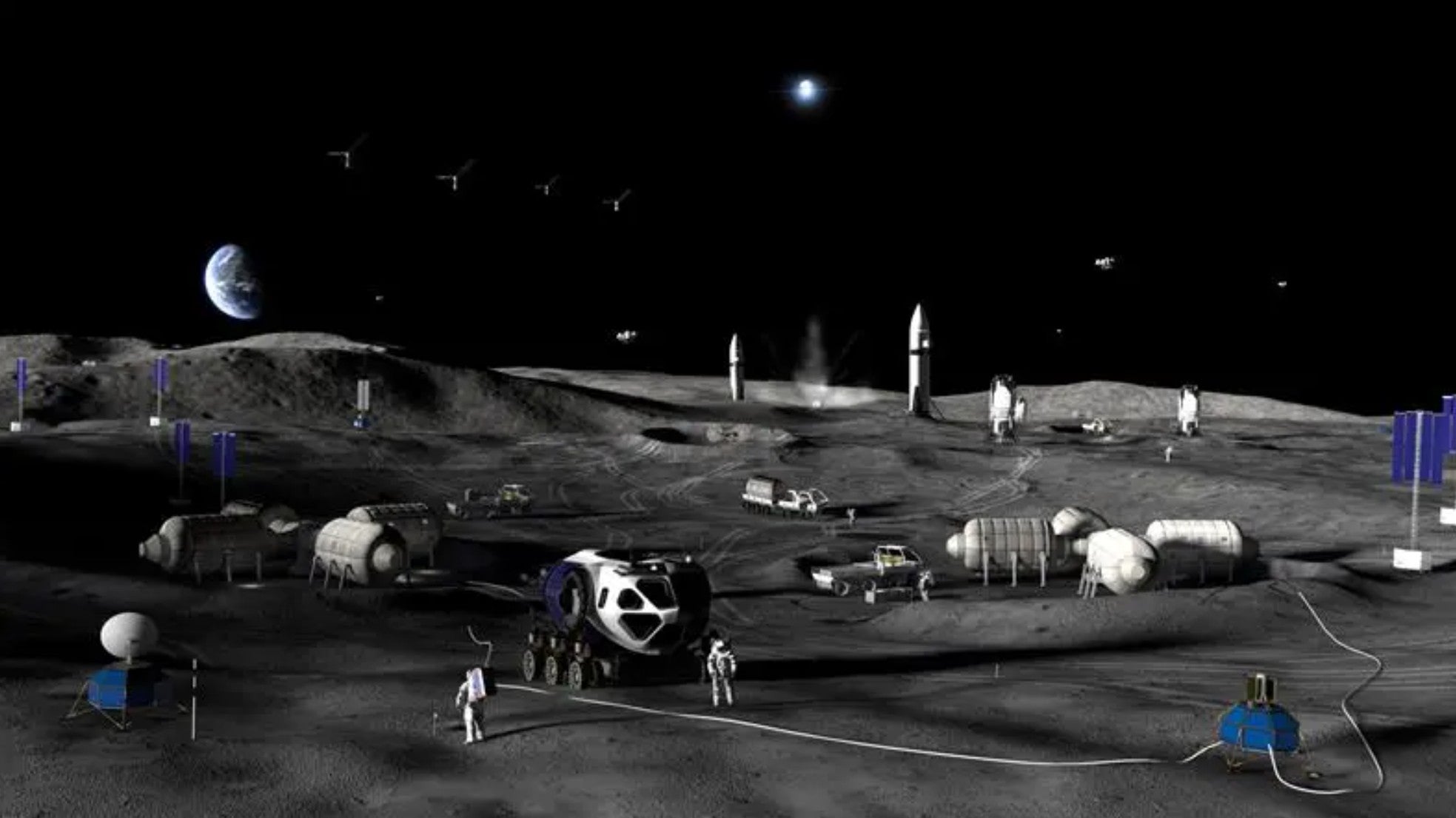
Nasa held a lengthy news conference at Kennedy Space Center on Friday, laying out in detail for the first time its plan to return astronauts to the lunar surface as soon as 2028 and to have a Moon base operating by 2032 with routine crew rotations.
Administrator Jared Isaacman framed the schedule as a return to a playbook the agency already knows: the Apollo period from 1968 to 1972 sent 24 astronauts to the Moon and landed twelve of them, and the same program went from Apollo 7 splashdown to Apollo 11 in nine months. "It's about our own history," Isaacman said, insisting the acceleration is neither "tech industry pixie dust" nor a management fad. He described the new space race as one against China, and conceded it will be "much closer than it ever needed to be" because of slow going in past years. The Artemis III mission, now targeted for next summer, will be a two-week orbital docking exercise with landers from both SpaceX and Blue Origin; Artemis IV would be the first crewed landing since Apollo.
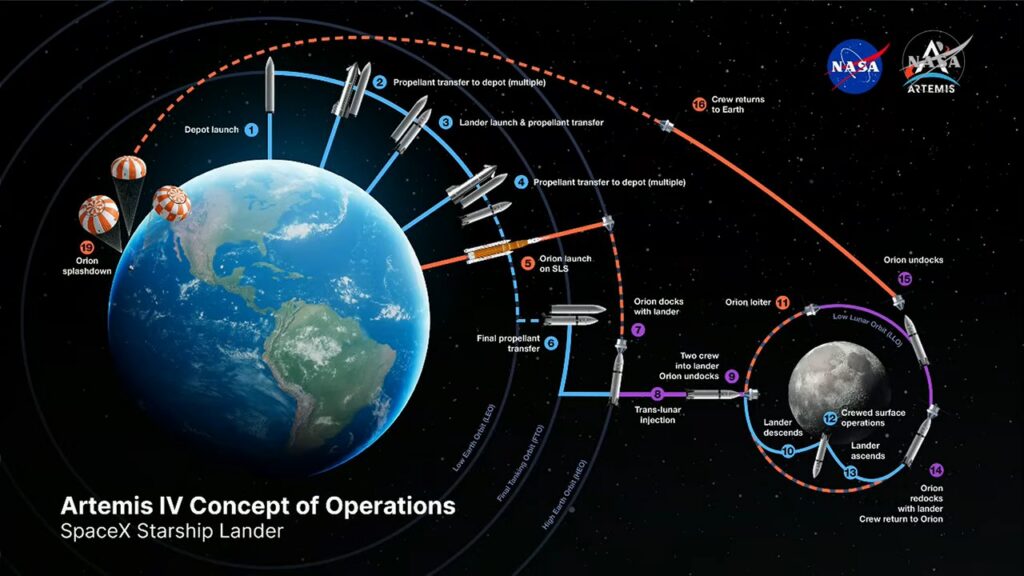
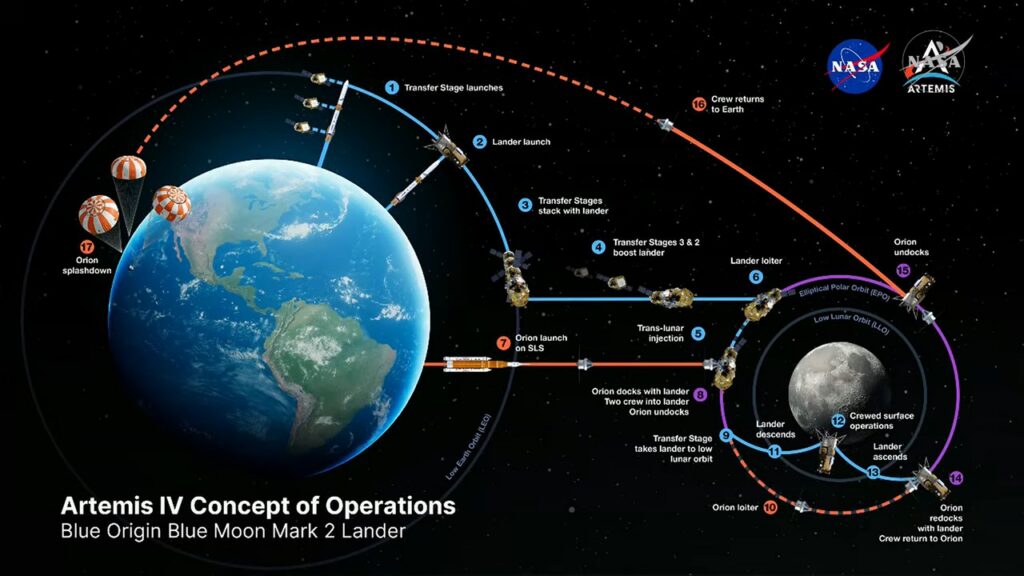
The architecture has changed substantially. Nasa canceled the Lunar Gateway earlier this year, which removed the requirement for SpaceX's Starship to dock with Orion in a near-rectilinear halo orbit — a demand SpaceX engineers had flagged as their biggest problem in early 2026 meetings. Under the revised plan, Starship will be fueled in low-Earth orbit before docking with Orion in high-Earth orbit. Blue Origin's concept avoids spacecraft-to-spacecraft refueling entirely: three "transfer stages" modeled on the Blue Moon Mark 1 lander would push the Mark 2 lander to the Moon, with four New Glenn launches per mission. Blue Origin's role matters because the base plan leans heavily on New Glenn — the rocket that detonated during an engine-firing test at the end of May. Isaacman praised the company's pace anyway: "Whether they hit December or they wind up in January, they're breaking everyone's records."
The refueling arithmetic remains contested. A Nasa safety panel reported the current estimate for tanker launches needed to top off a Starship at "about 22." Elon Musk called that wrong and put the real figure at six to eight. Nasa officials declined to pick a number; Isaacman said Musk's figure was possible but represented the "ultimate potential end state" of the vehicle. Uncertainty persists in Starship's lift capacity, in cryogenic boil-off in orbit, and in how efficiently propellant can be moved between ships.
The base itself has a constraint no schedule can negotiate away. A comet or asteroid the size of a six-storey building struck the Moon in 2024, leaving a crater roughly 728 feet wide and 141 feet deep — an event scientists describe as once-a-century. Isaacman called that fortunate by comparison: "There are much smaller meteor strikes that will happen on the lunar surface with greater frequency." The lunar surface has no atmosphere to burn up incoming rocks, and the Artemis II crew observed flashes from meteoroid impacts while passing the far side. Isaacman said rover fleets will map the surface before habitation module designs are locked in — "I guarantee you we're going to need surface improvement."
Asked whether he would put money on a 2028 landing, Isaacman answered: "We are putting taxpayer money on it."