
Europe's deadliest summer on record claims 50 000 lives
Imperial College study attributes two-thirds of urban heat deaths to man-made warming, toll is a modelled reconstruction because heat rarely appears on death certificates
Images
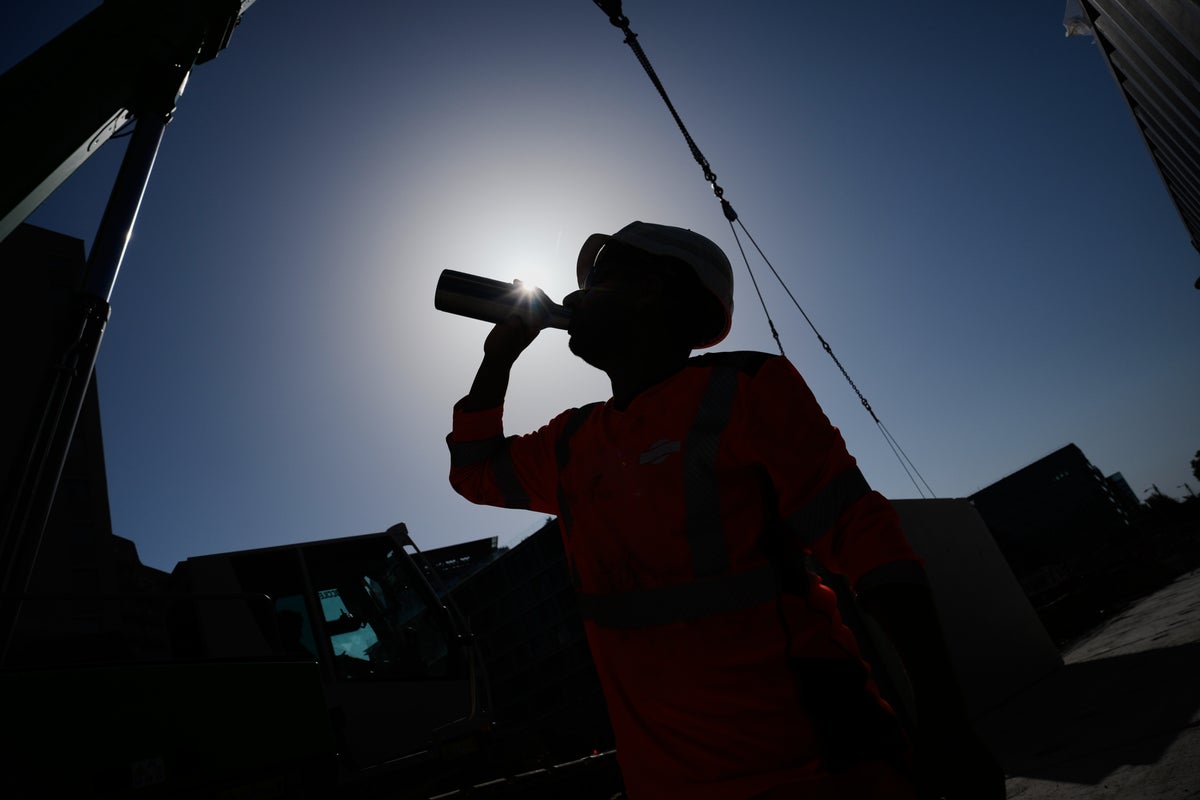 Europe's killer heat this summer claims 50,000 lives. Climate change blamed for two-thirds of deaths
independent.co.uk
 The UK had as many as five heatwaves over the summer (Getty)
Getty
 The hot weather caused issues across Europe (Getty)
Getty
 People take shelter from the sun under umbrellas while sunbathing in London (AFP/Getty)
AFP/Getty
More than 50,000 people died from heat in Europe's cities this summer, researchers at Imperial College London and the London School of Hygiene and Tropical Medicine estimate — the deadliest summer on record, 71 percent above the previous deadliest summer of 2022. Of the 50,391 deaths the team modelled across 854 cities, 32,619 were attributed to the additional warming caused by burning coal, oil and gas.
The study, due in Nature Health, covers urban areas home to roughly 40 percent of the EU, British, Norwegian and Swiss populations, during heat waves in June, July and August. The method: simulate the same summer in a world without man-made climate change, and count the difference. That difference came to about two-thirds of the dead — a share that has grown from roughly 45 percent in the early 2000s to 65 percent today.
The figure is a reconstruction, not a body count. Heat deaths are underreported and rarely recorded on death certificates, so the team derived its totals from temperature logs and historical mortality patterns. The authors call their own numbers underestimates: they exclude a deadly heat wave in May and everyone outside the 854 cities studied. Howard Frumkin, a former director of the US National Center for Environmental Health who was not involved, observed that summers are getting hotter while the tools for attributing deaths to heat grow more accurate — together, he said, the trends "yield increasingly high and increasingly accurate counts."
Italy, France, Spain and Germany recorded the highest tolls, with more than 13,000 dead in Italy alone. Rome has posted the highest heat-death total of any European capital from 2000 to 2025, according to the same team's earlier work. One-third of this summer's deaths came in the fortnight between June 17 and July 1, when continental temperatures ran more than five degrees above average and some cities saw days twelve degrees above normal. Britain issued a rare red warning in late June and recorded around 4,500 excess urban deaths. More than half of the dead were 85 or older; roughly 6,000 were under 65, including more than 800 between 20 and 44.
Lead author Clair Barnes, a climate scientist at Imperial, said infrastructure across much of Western and Northern Europe "is just not designed to cope" with the temperatures now occurring — the deaths tracked housing and health systems as much as thermometers. Europe is the fastest-warming continent, 2.5 degrees above pre-industrial times, and for many people, Barnes said, that extra warming is "what's going to tip those temperatures from uncomfortable to dangerous and potentially deadly."
The counterfactual summer — identical in every respect except fossil-fuel emissions — would have killed 32,619 fewer people.