
Canada and Turkey sign strategic partnership in Ankara, first Canadian PM visit builds trade lanes around US tariffs
Two NATO members hedge against Washington the same week Turkey signs defense pact with Pakistan Qatar and Indonesia
Images
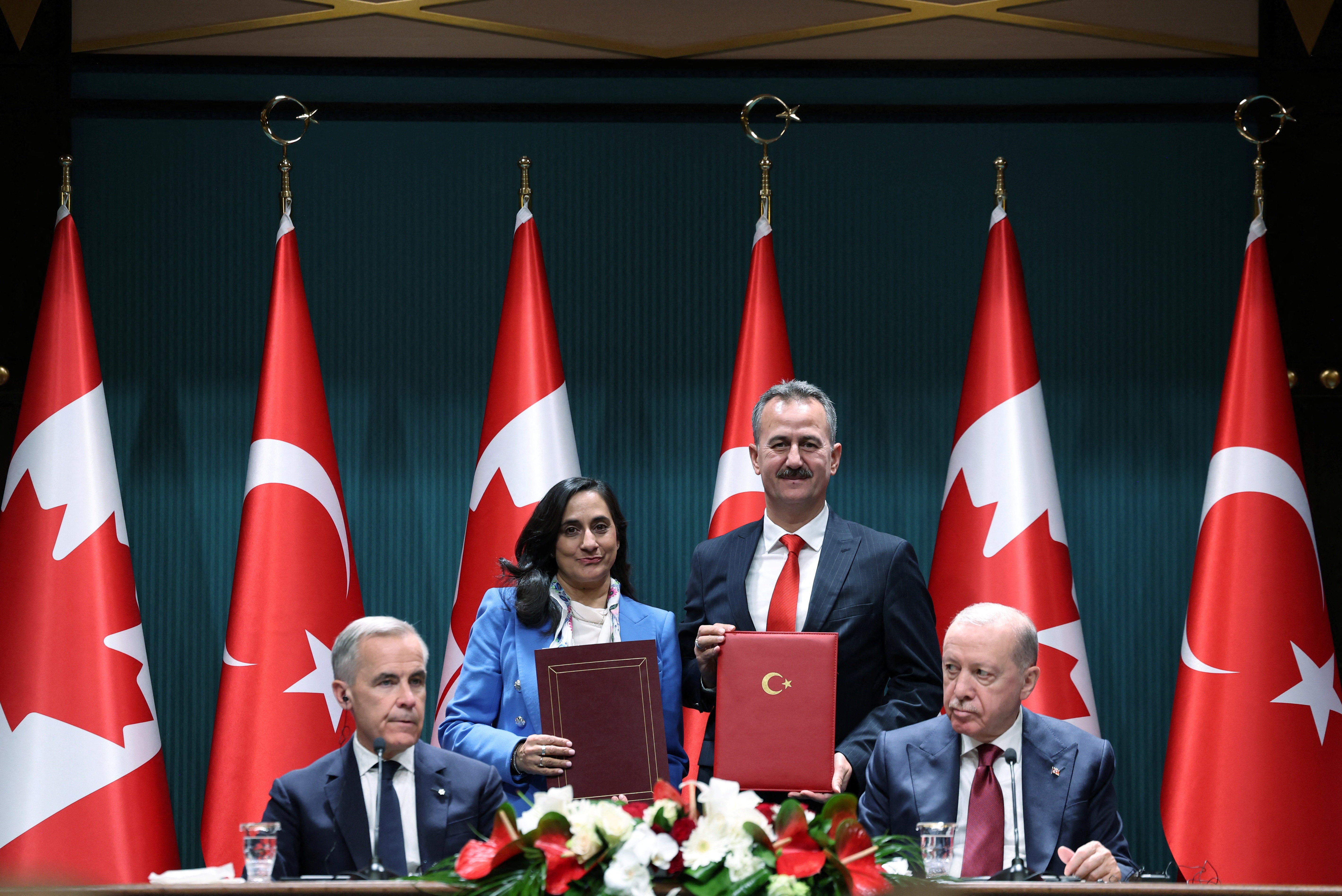 Reuters
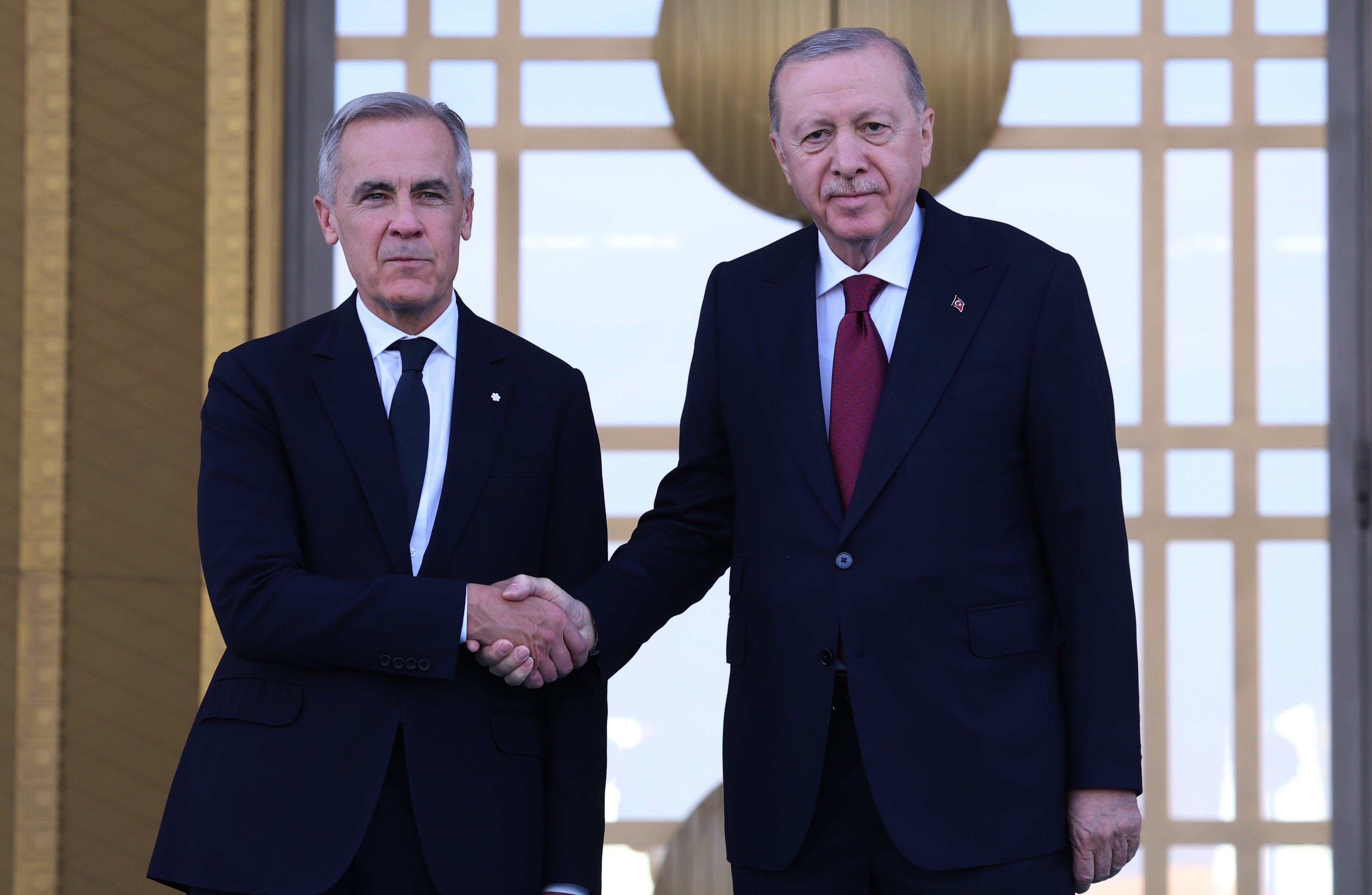 Turkish President Recep Tayyip Erdogan shakes hands with Canadian Prime Minister Mark Carney (AP)
independent.co.uk
Canada and Turkey signed a formal "strategic partnership" in Ankara on Thursday, during the first official visit by a Canadian prime minister to Turkey. Prime Minister Mark Carney and President Tayyip Erdogan concluded the accord across four areas — trade and investment, defense and security, energy, and social ties — with ministers finalizing cooperation agreements covering energy, defense, and air transportation at the ceremony.
Neither leader mentioned the United States by name. Neither had to. Carney is pursuing a broader trade push designed to shield Canada from disputes with Washington, where President Donald Trump has introduced broad tariffs and raised questions about Canadian sovereignty itself. Roughly 70 percent of Canadian exports go to the U.S. market; Turkey accounts for under 0.3 percent of Canada's total trade, valued at C$4.34 billion. Bilateral trade has grown nearly 50 percent over five years, and Erdogan said both nations intend to expand the volume from $3 billion to $5 billion and eventually $10 billion, with no timeline specified.
The partnership arrives the same week Turkey signed a defense pact with Pakistan, Qatar and Indonesia in Doha — a NATO member building military production lanes that bypass alliance suppliers. Canada, meanwhile, has concluded more than 20 trade agreements over the past year as part of Carney's strategy to double non-U.S. exports within a decade. Export Development Canada and Turkey's Eximbank will sign an agreement supporting joint corporate projects in third-party countries, and free trade negotiations open in Ankara next month.
The ties were previously strained by Canadian concerns over human rights and a past ban on arms shipments to Turkey — concerns that did not appear in Thursday's ceremony. Erdogan, who has governed Turkey for 23 years, commended Carney as a leader showing "common-sense and acumen" on the international stage. Bessma Momani, a political science professor at the University of Waterloo, called the trip "part of the geopolitical necessity of signalling to Americans that we are not sitting around waiting for them."
Carney framed the deal against a global "rupture" and an emerging "new world order." A NATO member courting Ankara to hedge against Washington is a fair description of one.